Victorian Dining Room Designs: 20 Elegant Inspirations for a Timeless Home
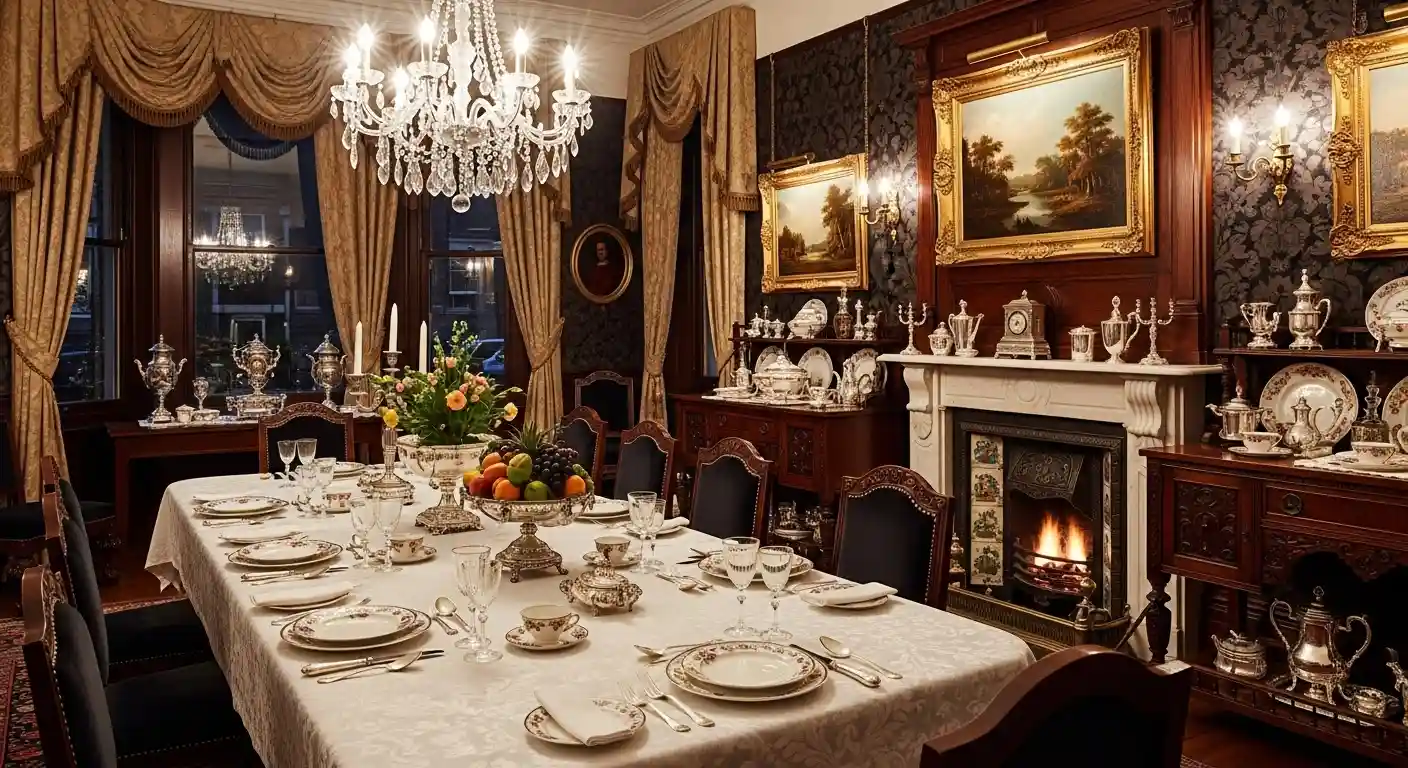
Victorian dining rooms are known for their timeless elegance, intricate details, rich colors, and luxurious atmosphere. Inspired by the interiors of the Victorian era, these spaces combine beautiful furniture, decorative architectural features, dramatic lighting, and carefully selected accessories to create rooms that feel both grand and inviting.
Whether you live in a historic house or a modern home, Victorian dining room designs can bring a sense of character and sophistication to your interior. You do not need an antique mansion or an unlimited decorating budget to achieve the look. With the right combination of furniture, colors, lighting, and decorative accents, you can create a dining room that captures the beauty of Victorian style while remaining comfortable for everyday living.
Traditional Victorian interiors often feature dark wood furniture, ornate chandeliers, patterned wallpaper, elaborate moldings, and elegant dining chairs. However, modern interpretations can incorporate softer colors, contemporary lighting, and simplified decorative details without losing their classic charm.
If you are looking for inspiration for a formal dining room, a cozy family gathering space, or a luxurious entertaining area, these 20 Victorian dining room designs will help you discover beautiful ways to bring historic elegance into your home.
1. Classic Victorian Dining Room with Dark Wood Furniture
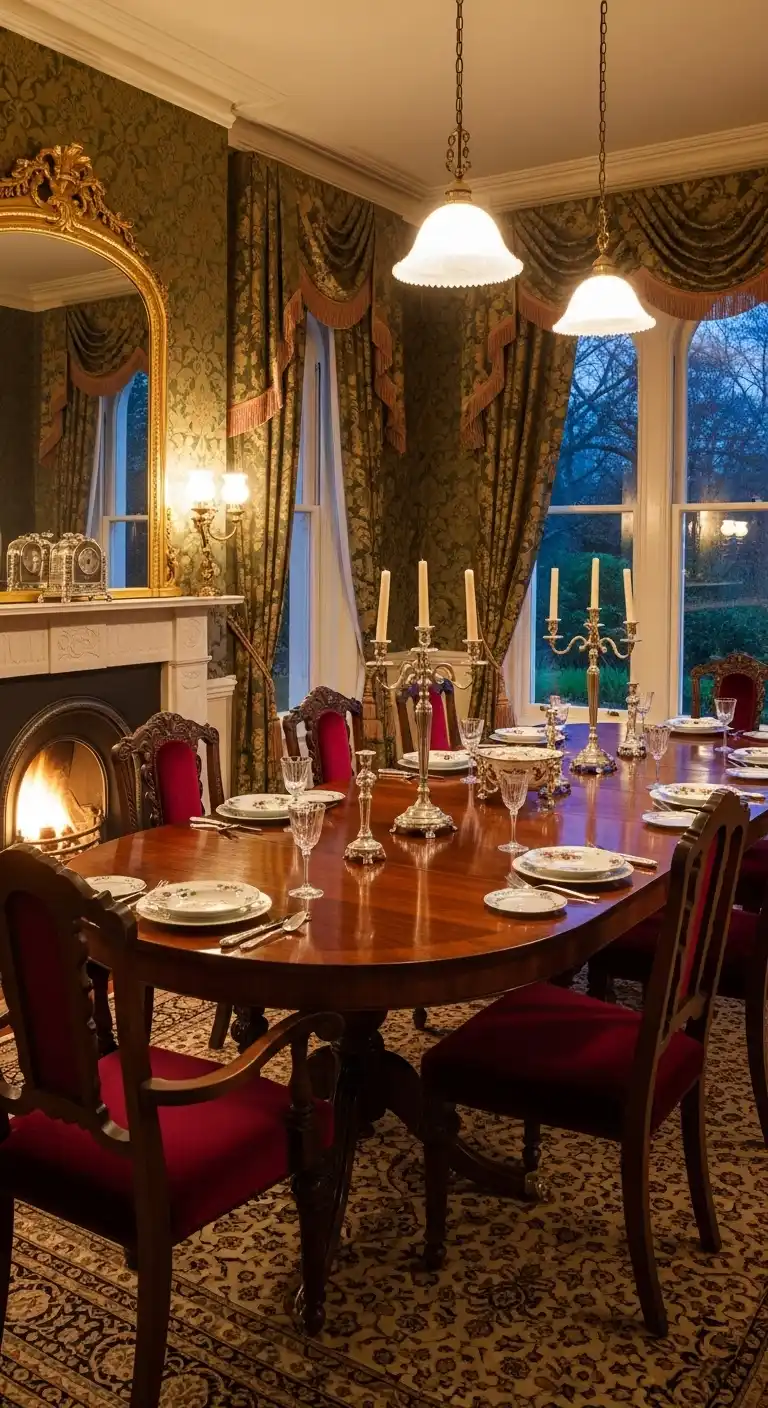
Dark wood furniture is one of the defining features of a traditional Victorian dining room. Rich finishes such as mahogany, walnut, and dark oak create a sense of depth and sophistication that works beautifully in formal dining spaces.
Start with a substantial wooden dining table featuring carved legs or decorative detailing. Pair it with matching or complementary dining chairs upholstered in a rich fabric. A coordinating sideboard or china cabinet can complete the arrangement while providing useful storage.
To prevent the dark furniture from making the room feel too heavy, introduce warm lighting, elegant curtains, and carefully selected wall decor. Cream-colored accessories and reflective surfaces can help balance the deeper wood tones.
A patterned rug beneath the dining table adds softness and helps define the seating area. Choose a traditional design with muted reds, golds, or earthy greens to reinforce the historic atmosphere.
Styling tip: Keep the tabletop relatively simple with a floral arrangement, decorative bowl, or elegant candlesticks so the craftsmanship of the furniture remains the main attraction.
2. Elegant Victorian Dining Room with a Crystal Chandelier
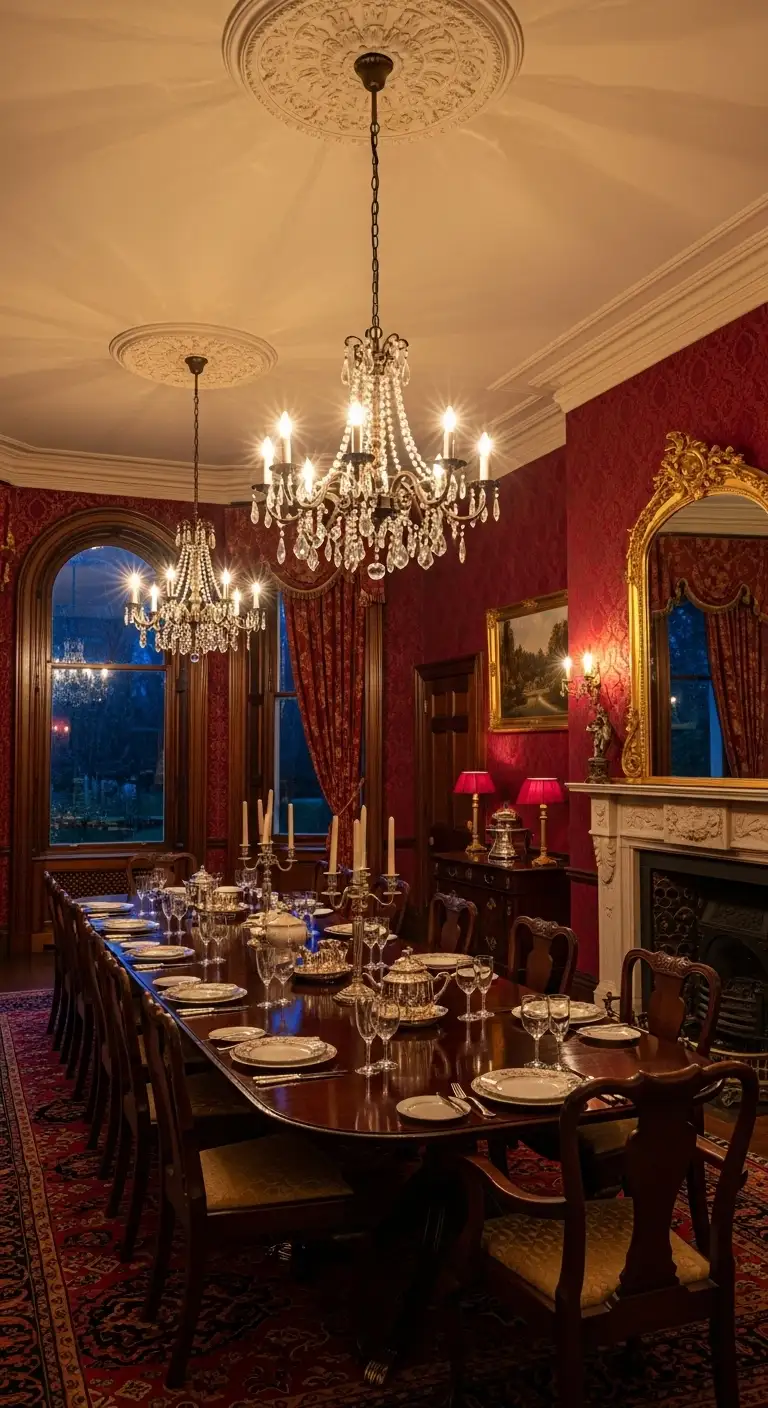
A crystal chandelier can instantly give a dining room a more luxurious and traditional appearance. Its reflective surfaces catch the light and create a beautiful focal point above the dining table.
For a classic Victorian-inspired interior, choose a chandelier with multiple arms, decorative metalwork, and crystal drops. Antique brass, aged gold, and polished finishes can all work depending on the room's overall style.
Position the chandelier above the center of the dining table to establish a balanced arrangement. Make sure it is proportionate to the table and ceiling height, and that it does not obstruct the view across the room.
Complement the lighting with wall sconces or lamps on a sideboard. Multiple light sources create a softer atmosphere than relying on a single overhead fixture.
For evening dinners, warm-white bulbs and a dimmer switch can make the room feel especially inviting.
Styling tip: Pair a crystal chandelier with dark wood furniture, upholstered chairs, and traditional artwork for a dining room that feels elegant without becoming overly decorative.
3. Victorian Dining Room with Burgundy and Deep Red Walls
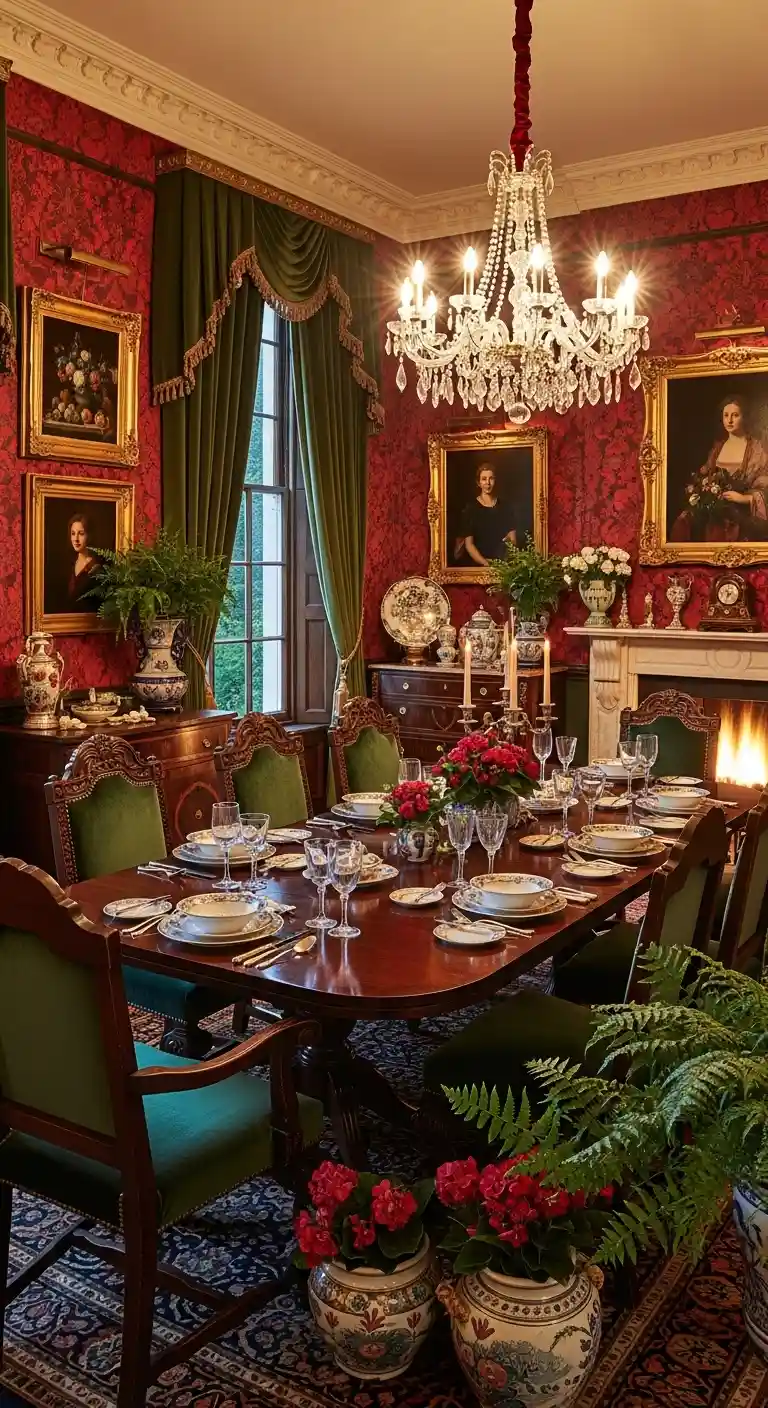
Rich red tones are a striking choice for Victorian-inspired interiors. Burgundy, wine red, and deep crimson can create an intimate atmosphere that feels especially suitable for formal dinners and evening entertaining.
These colors work well with dark wood furniture, antique-style mirrors, gold accents, and traditional decorative details. They also provide a dramatic backdrop for artwork and crystal lighting.
If painting every wall in a deep shade feels overwhelming, consider using burgundy on a single accent wall or combining it with cream-colored architectural molding.
Balance the rich wall color with warm lighting and carefully chosen textiles. Heavy curtains can reinforce the traditional appearance, while lighter upholstery helps prevent the room from feeling too dark.
The final result should feel layered rather than crowded. Allow some areas of the room to remain visually quiet so the deeper color can stand out.
Styling tip: Combine burgundy walls with walnut furniture, antique gold accents, and ivory table linens for a sophisticated Victorian color palette.
4. Victorian Dining Room with Ornate Wallpaper
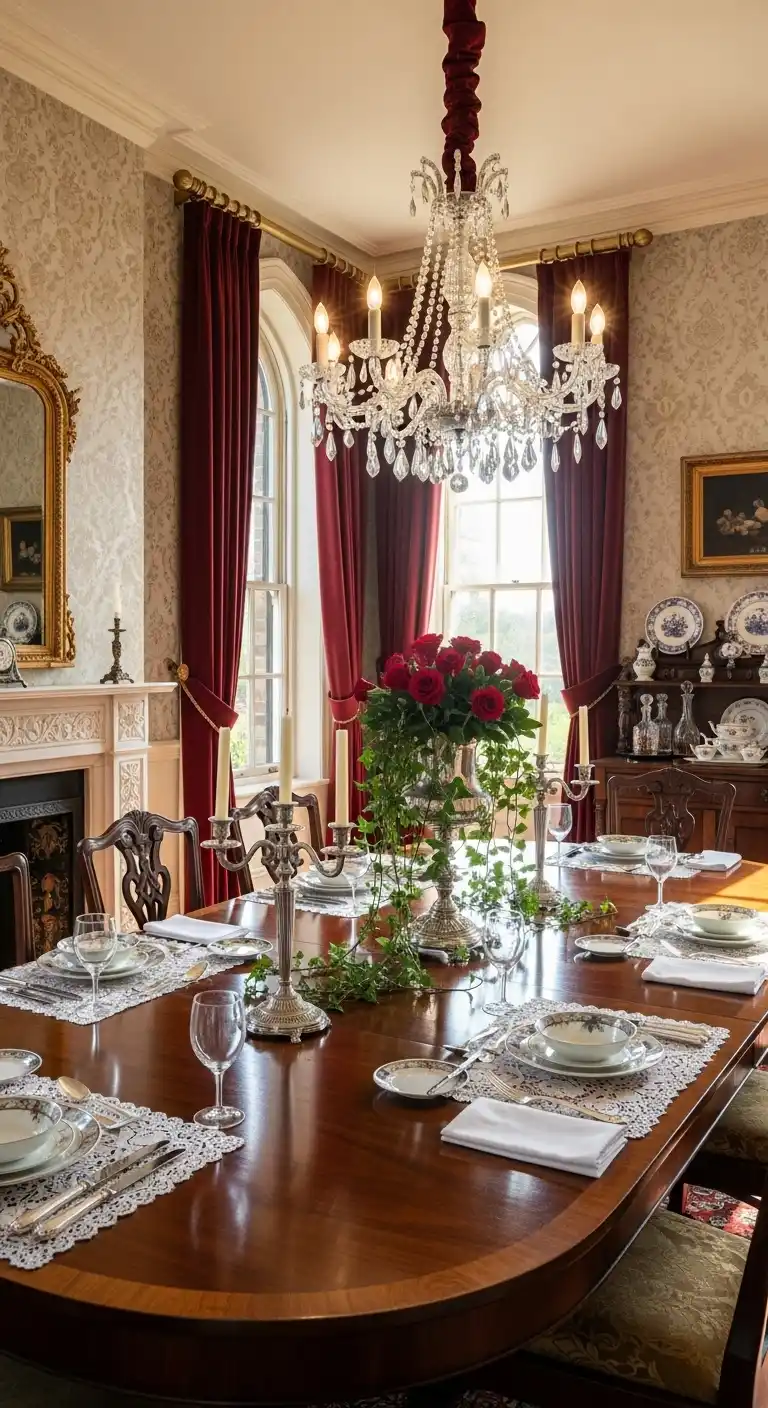
Patterned wallpaper is an excellent way to introduce historic character into a Victorian dining room. Traditional designs often feature botanical motifs, damask patterns, repeating florals, or decorative geometric details.
Wallpaper can make a large dining room feel more intimate and give a smaller room a distinctive personality. The right pattern depends on the amount of natural light, the size of the walls, and the furniture already in the space.
For a dramatic interior, choose a dark botanical or damask wallpaper with warm metallic details. For a softer appearance, consider muted sage, dusty rose, cream, or faded blue patterns.
If the wallpaper is particularly elaborate, keep the surrounding accessories relatively restrained. Too many competing patterns can make the room feel visually busy.
You can also use wallpaper above decorative wall paneling to create a layered, traditional look.
Styling tip: Coordinate the wallpaper's main colors with the dining chairs, curtains, or rug rather than trying to match every element exactly.
5. White and Cream Victorian Dining Room
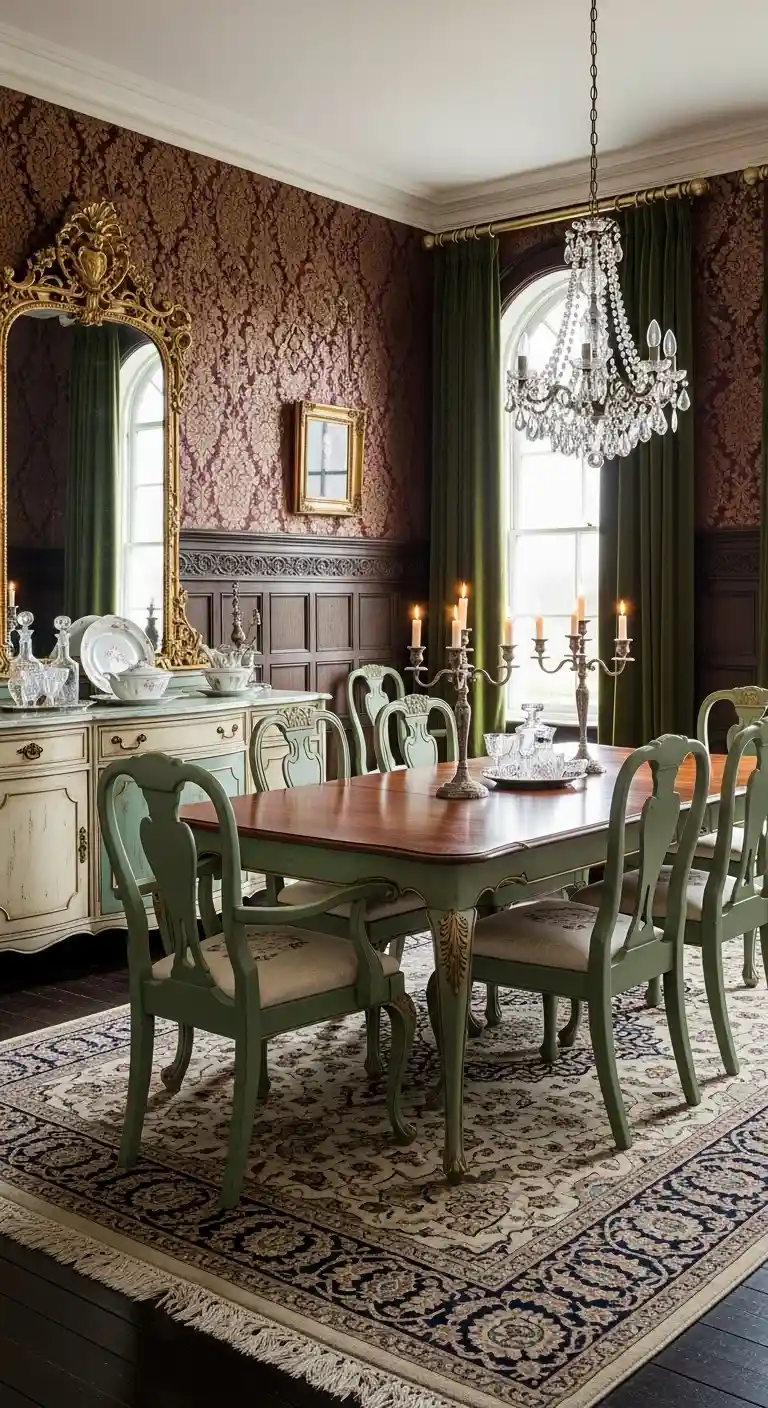
Although Victorian interiors are often associated with dark wood and rich colors, a white and cream palette can create a lighter interpretation of the style.
This approach works especially well in homes with limited natural light or in spaces where you want traditional architectural details to remain visible without making the room feel heavy.
Choose a cream dining table or a dark wooden table against pale walls. Add upholstered chairs, decorative molding, and a traditional chandelier to introduce classic elegance.
White-painted paneling, delicate floral arrangements, and light curtains can further brighten the space. A patterned rug in muted beige or pale blue adds depth without disrupting the calm atmosphere.
To keep the design from looking too contemporary, incorporate a few distinctly traditional elements, such as carved furniture, an antique-style mirror, or decorative candlesticks.
Styling tip: Use several related shades of white, ivory, and beige to create a layered look rather than relying on a single flat color.
6. Victorian Dining Room with Antique Furniture
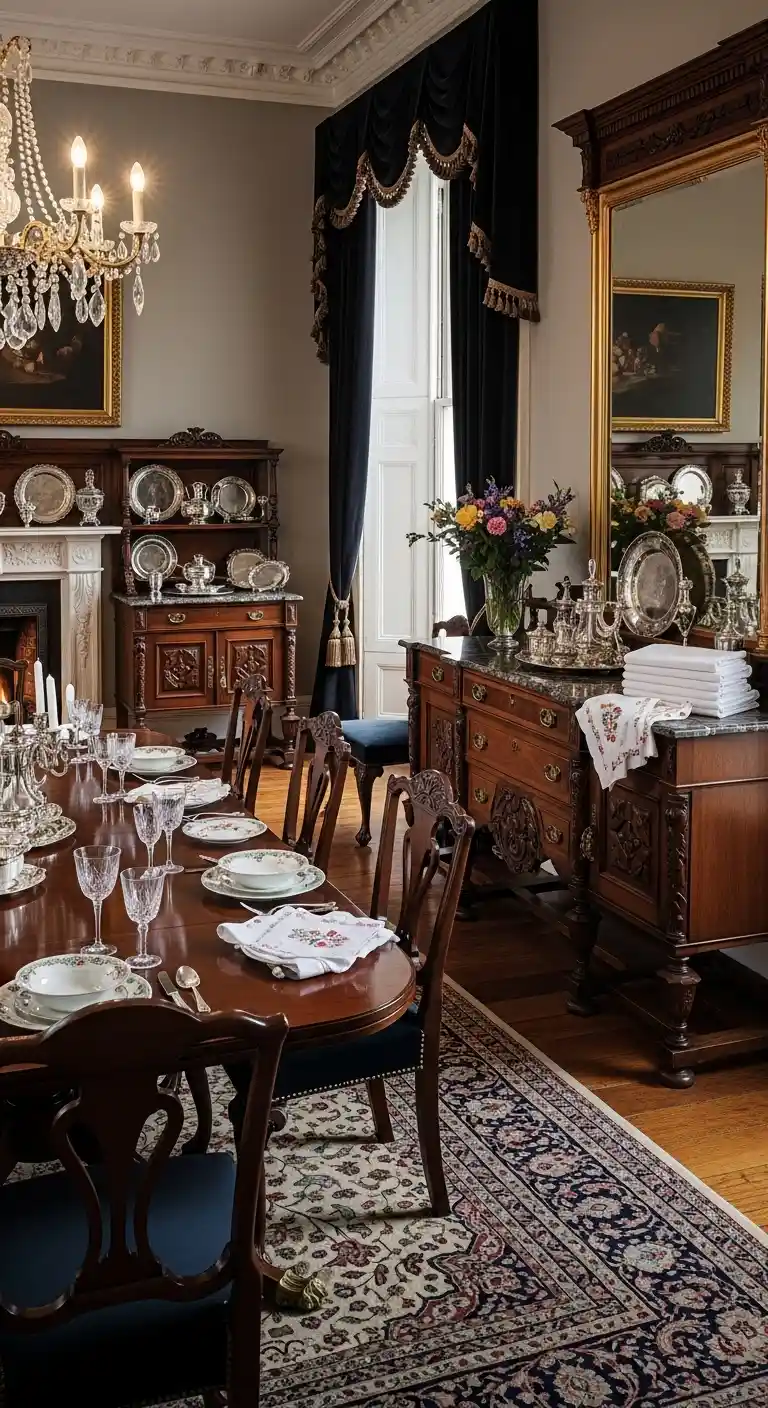
Antique furniture brings authenticity and individuality to a Victorian-inspired dining room. Original or vintage pieces often feature craftsmanship and detailing that are difficult to replicate in modern mass-produced furniture.
Look for a wooden dining table with turned legs, carved edges, or an elegant pedestal base. A vintage sideboard, display cabinet, or set of traditional dining chairs can help complete the room.
You do not need every piece to come from the same period. Combining a few antique items with practical modern furniture can make the space feel more personal and livable.
Before purchasing vintage furniture, inspect its structural condition, joints, upholstery, and finish. A well-made piece may be worth restoring, but restoration costs should be considered as part of the budget.
Decorative accessories such as framed prints, brass candlesticks, and vintage serving dishes can reinforce the historical atmosphere.
Styling tip: Let one or two beautiful antique pieces take center stage instead of filling the room with furniture that competes for attention.
7. Victorian Dining Room with Emerald Green Accents
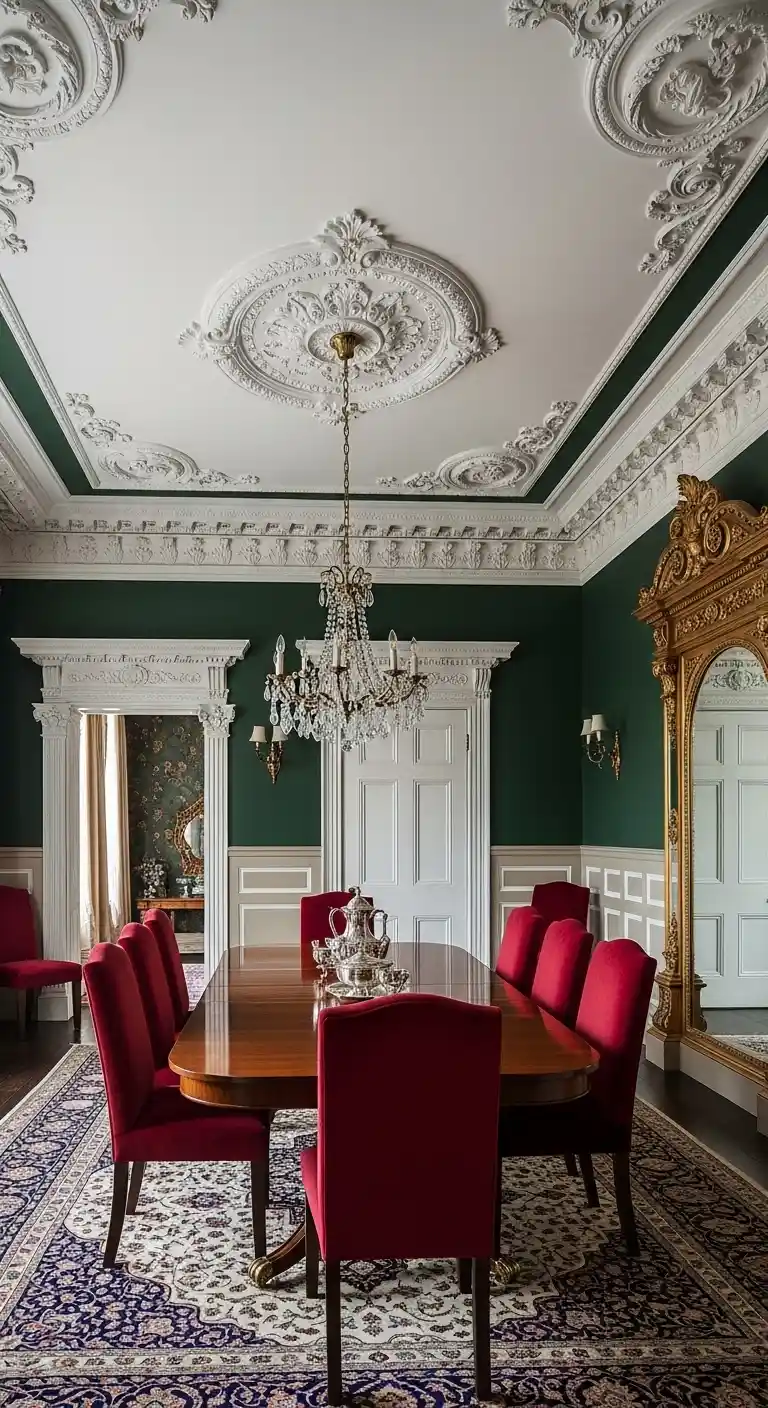
Emerald green and deep forest green are excellent choices for creating a rich, sophisticated Victorian dining room. These colors complement dark wood, antique brass, traditional artwork, and luxurious textiles.
You can introduce green through painted walls, upholstered dining chairs, curtains, or a patterned rug. If you prefer a more subtle approach, use green in decorative accessories and floral arrangements.
For a dramatic look, combine deep green walls with a walnut dining table and a warm metallic chandelier. Cream upholstery can provide contrast and prevent the overall palette from feeling too dark.
Botanical artwork and natural greenery can also complement the color scheme while adding a fresh element to the room.
Lighting is especially important when using deep green. Test paint samples in both daylight and evening lighting to understand how the color changes throughout the day.
Styling tip: Pair emerald green with walnut, antique gold, and cream for a classic palette that feels luxurious and balanced.
8. Victorian Dining Room with Decorative Wall Paneling
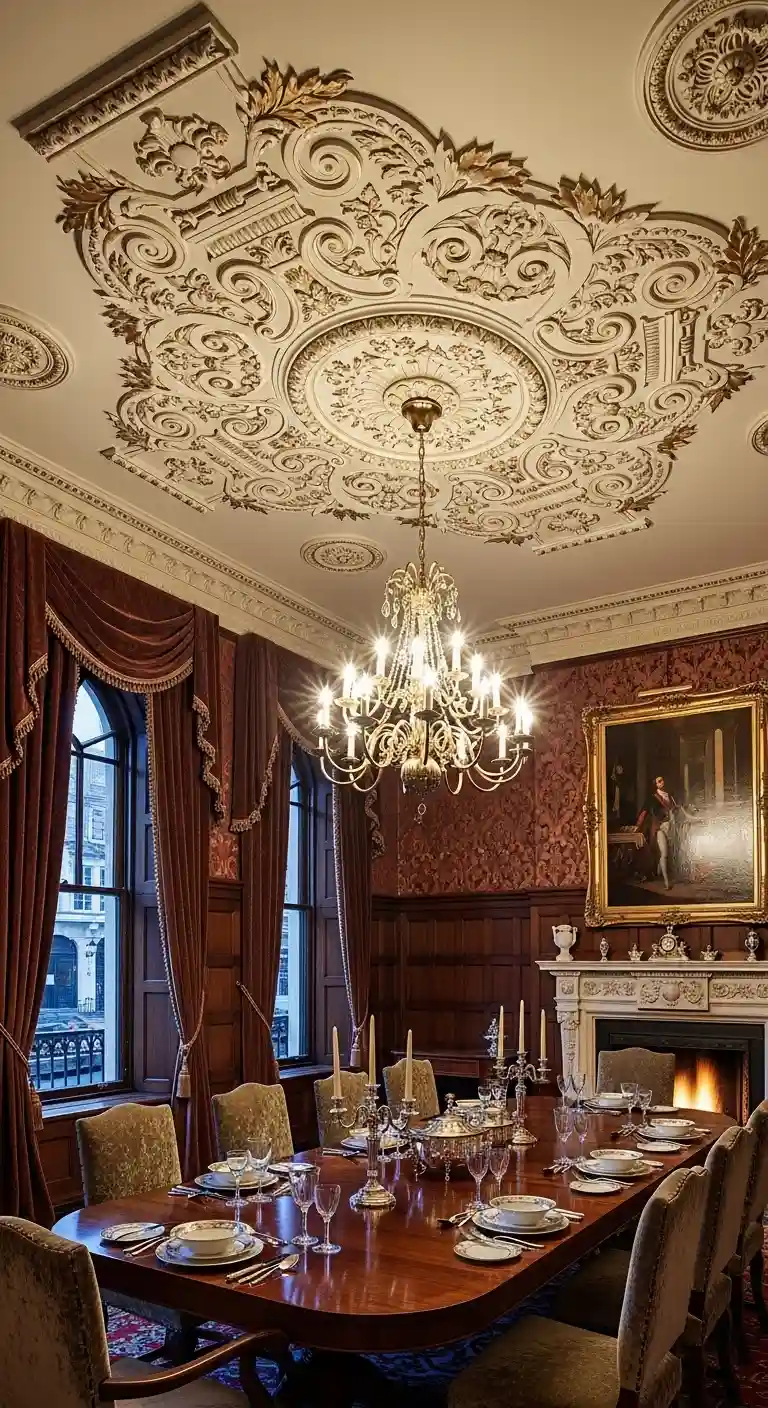
Wall paneling can add architectural depth and elegance to a Victorian dining room. Raised panels, decorative molding, and carefully proportioned wall sections help create the layered appearance associated with traditional interiors.
For a formal room, consider painted paneling in cream, muted gray, deep green, or navy. Natural wood paneling can create a warmer and more traditional atmosphere.
Paneling is particularly effective behind the dining table or along the lower portion of the walls. It provides a structured background for artwork, mirrors, and decorative furniture.
If you are decorating a modern house, simple rectangular molding can introduce a Victorian-inspired detail without requiring a complete architectural renovation.
Pay attention to scale. Oversized molding can overwhelm a small room, while very narrow panels may appear insignificant on a large wall.
Styling tip: Paint the paneling and the wall above it in complementary shades to create depth while maintaining a cohesive appearance.
9. Luxurious Victorian Dining Room with Velvet Chairs
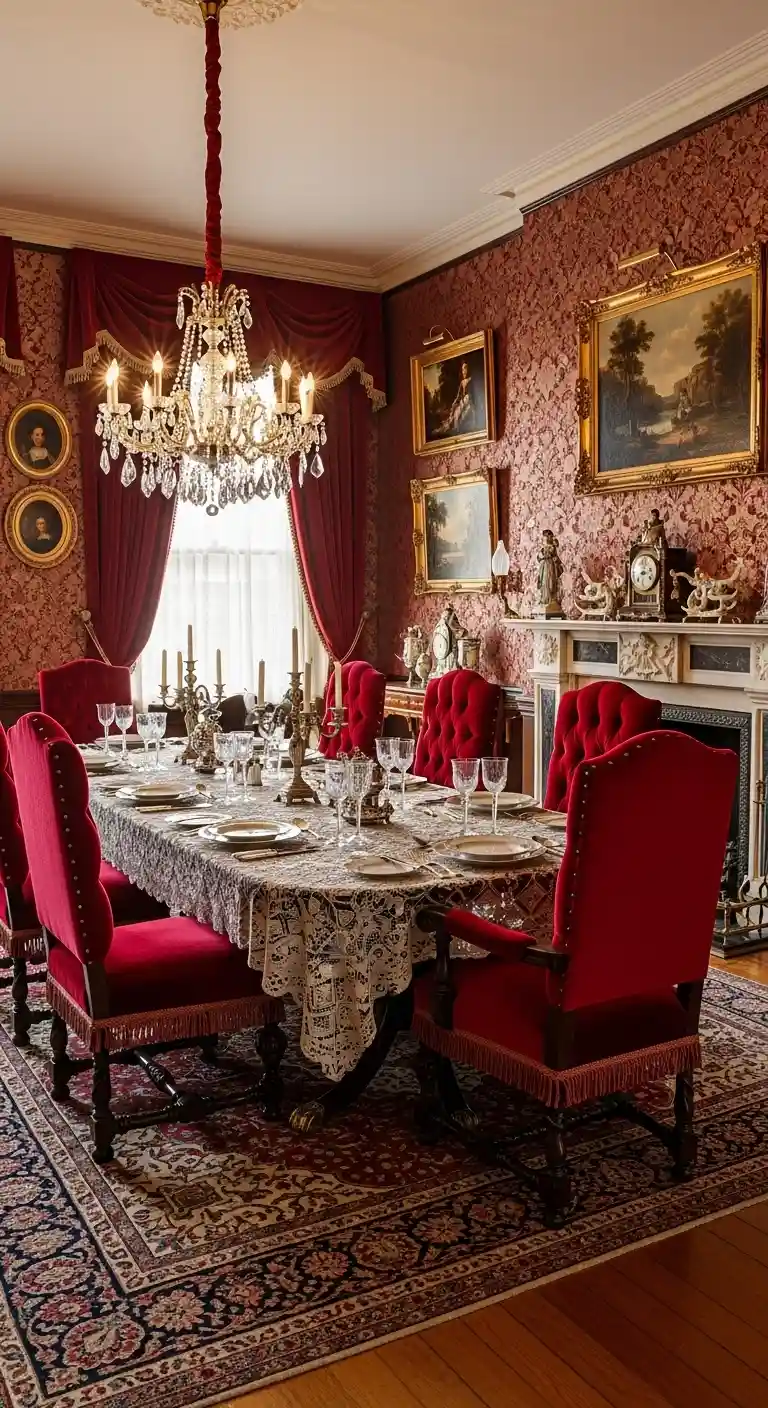
Velvet upholstery brings softness and richness to a traditional dining room. Its textured surface catches the light beautifully and pairs well with carved wood furniture, crystal lighting, and ornate decorative accents.
Deep burgundy, forest green, navy, and warm brown are excellent options for a dramatic Victorian look. For a lighter interpretation, consider dusty rose, taupe, or muted sage.
Choose chairs with curved backs, carved wooden frames, or traditional proportions to complement the upholstery. Comfort is important, particularly if your family regularly spends long periods around the dining table.
Velvet-look performance fabrics may be practical alternatives for busy households. Always check the cleaning instructions before purchasing upholstered furniture.
Balance the richness of the chairs with a relatively simple table arrangement and a complementary rug.
Styling tip: Use velvet chairs as the room's main statement and let the chandelier and wood furniture provide supporting details.
10. Small Victorian Dining Room with Traditional Charm
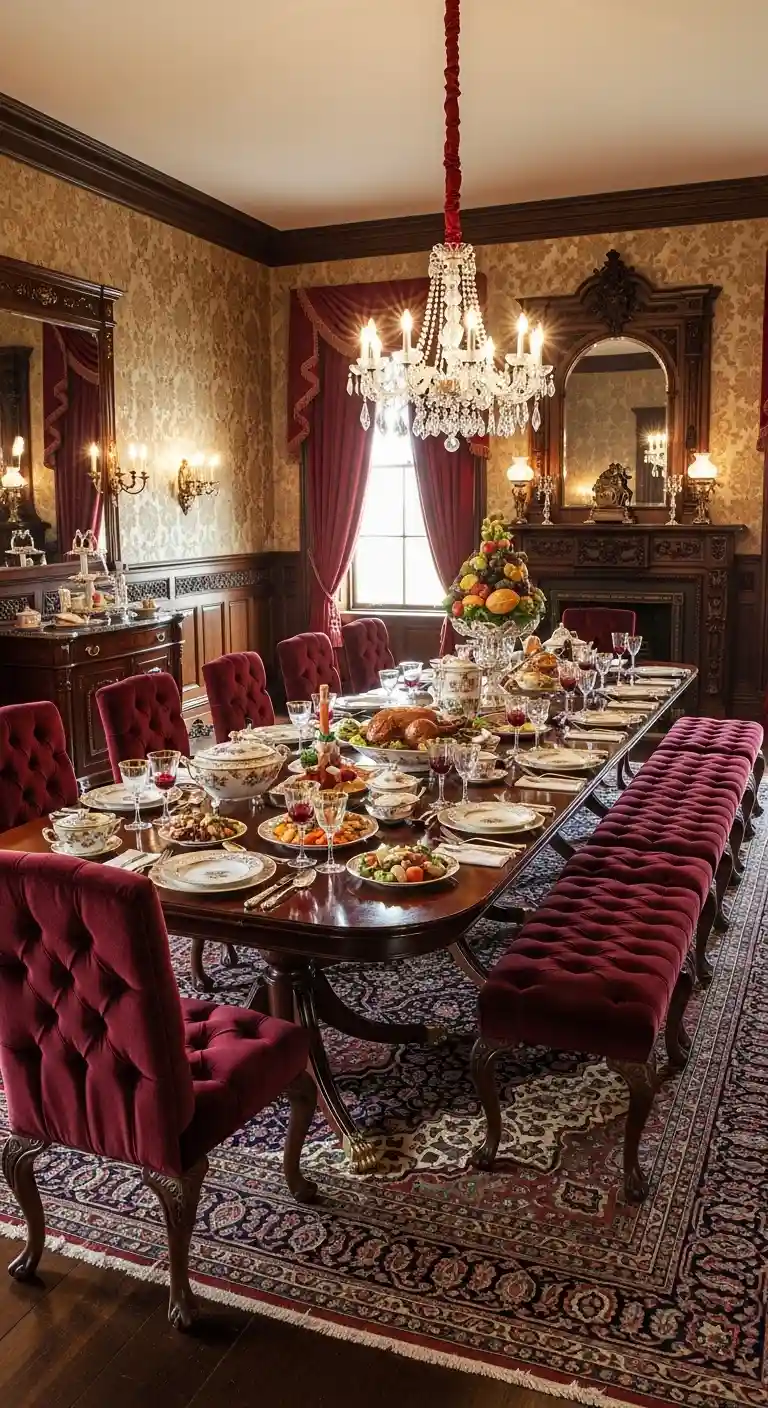
A Victorian-inspired dining room does not need to be large to feel elegant. In a compact space, thoughtful furniture choices and a restrained color palette can create the same sense of character without overcrowding the room.
Choose a smaller wooden dining table with traditional detailing and chairs that can be moved easily. A round or oval table may improve movement in some layouts, although the best shape depends on the room's dimensions.
Use mirrors to reflect natural light and make the space feel more open. Wall-mounted lighting can save surface space, while a narrow sideboard provides storage without dominating the room.
Instead of using several elaborate decorative pieces, select a few meaningful items, such as a traditional mirror, a framed print, or a small chandelier.
Lighter wall colors can help the room feel airy, while dark furniture introduces the traditional Victorian character.
Styling tip: Combine a compact dark wood table, cream walls, an antique-style mirror, and warm lighting for a small dining room that feels inviting and refined.
11. Victorian Dining Room with a Traditional Persian-Style Rug
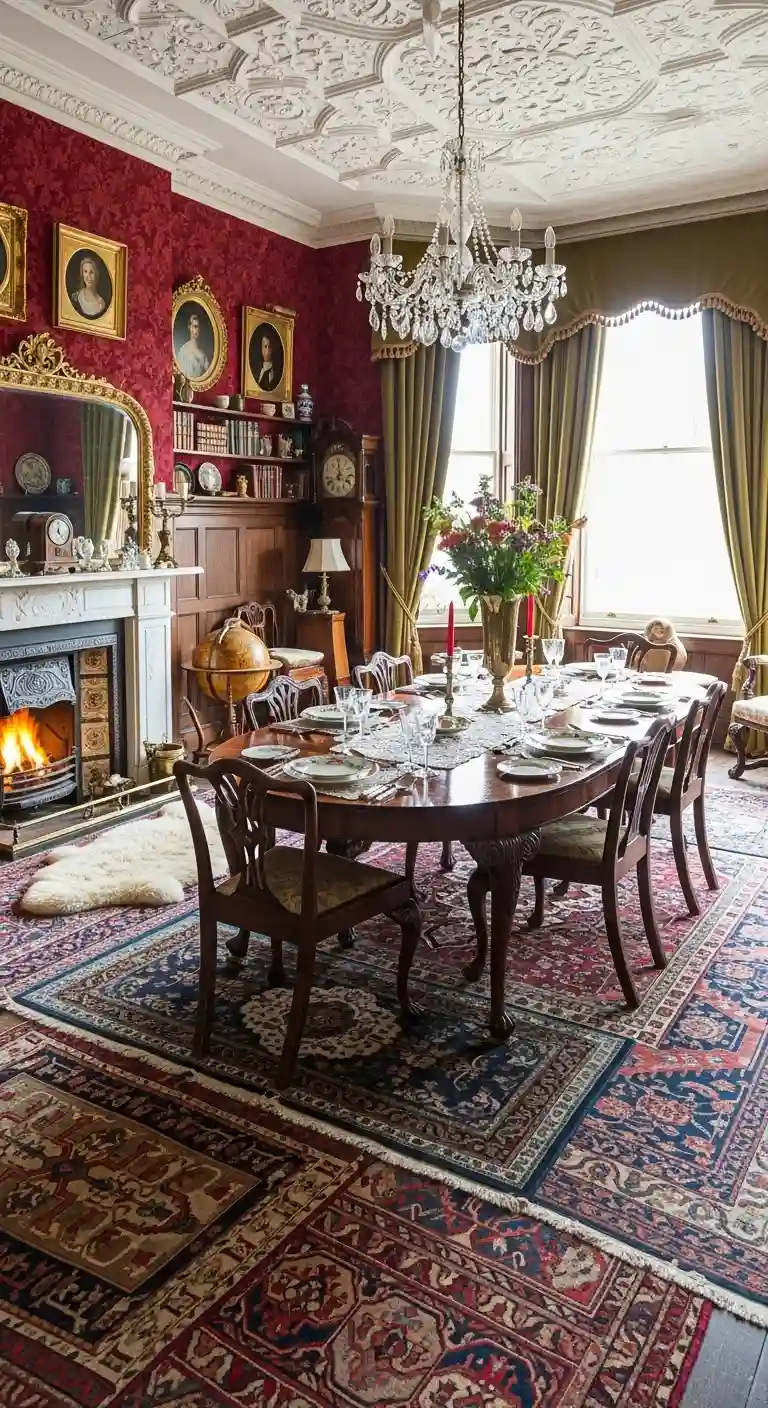
A traditional patterned rug can add color, texture, and a sense of history to a Victorian dining room. Persian-inspired and Oriental-style designs often feature intricate motifs that complement antique furniture and decorative architectural details.
Choose a rug with colors that relate to the rest of the room. Deep red, navy, muted gold, and earthy green can work beautifully with traditional wood finishes.
The rug should be large enough for dining chairs to remain on it when pulled away from the table. This makes the seating arrangement more practical and helps the dining area feel visually connected.
If your wallpaper is heavily patterned, choose a rug with a more restrained design. When the walls are relatively simple, a richly patterned rug can become the room's main decorative feature.
Consider durability and cleaning requirements, particularly if the dining room is used every day.
Styling tip: Pull one or two colors from the rug into your curtains, upholstery, or decorative accessories for a cohesive result.
12. Victorian Dining Room with Gold and Brass Details
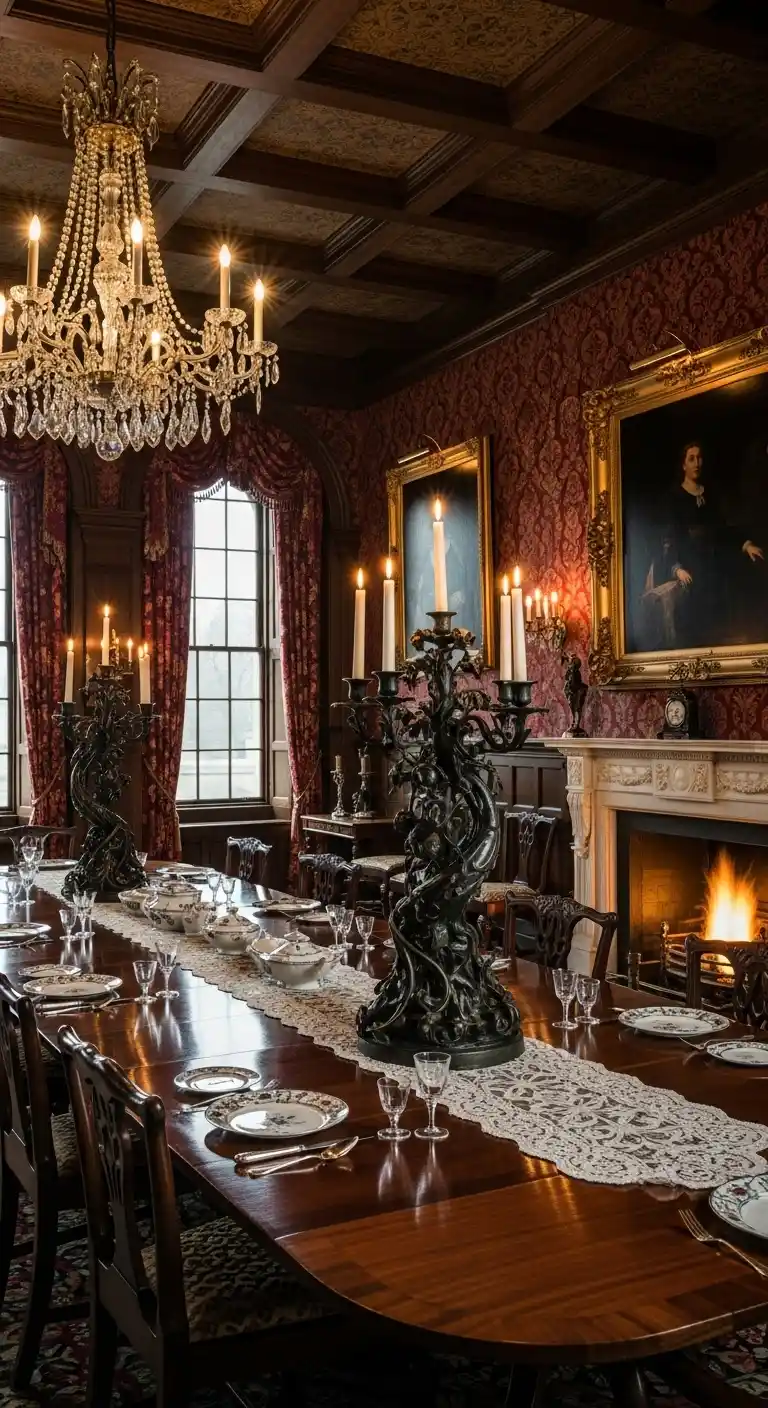
Gold and brass accents can enhance the luxurious character of a Victorian dining room. These finishes work especially well with dark wood, deep wall colors, crystal lighting, and traditional decorative motifs.
Introduce metallic details through chandelier frames, mirror borders, cabinet hardware, picture frames, or candlesticks.
Warm brass can create a softer, more understated appearance, while polished gold provides a brighter and more formal effect. Antique or aged finishes may be especially suitable for a traditional interior.
Avoid using too many competing metallic finishes. Repeating one dominant finish throughout the room helps the design feel coordinated.
Gold accents also work well against lighter colors. A cream dining room with brass lighting and a wooden table can feel elegant without requiring dramatic wall colors.
Styling tip: Use metallic finishes in a few well-chosen places so they add warmth and sparkle without overwhelming the room.
13. Formal Victorian Dining Room with a Grand Wooden Table
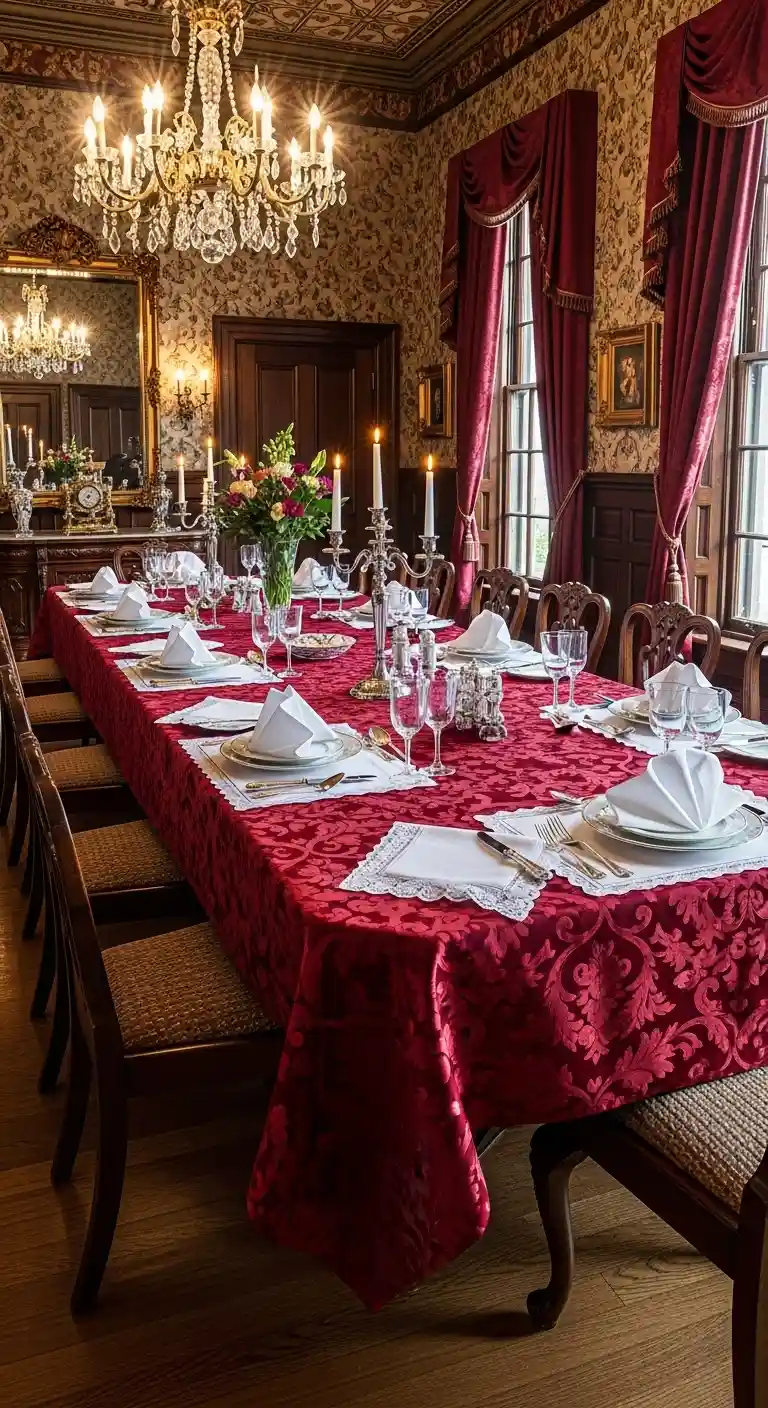
A grand wooden dining table is ideal for a formal Victorian dining room designed for celebrations and family gatherings. Its substantial proportions create a clear focal point and establish the room's traditional character.
Look for tables with carved legs, decorative aprons, pedestal bases, or rich wood finishes. Extendable designs can be particularly useful if you regularly host large gatherings but do not need the extra length every day.
Pair the table with comfortable upholstered chairs and a chandelier that suits its scale. A matching sideboard or china cabinet can provide practical storage while reinforcing the formal atmosphere.
For everyday use, a simple runner and a low centerpiece can keep the table attractive without preventing people from using the surface.
Make sure the table leaves sufficient room for chairs and walkways. A beautiful table should improve the room's function rather than make movement difficult.
Styling tip: Choose a table with timeless proportions and let the craftsmanship become the main decorative feature.
14. Victorian Dining Room with Floral Curtains
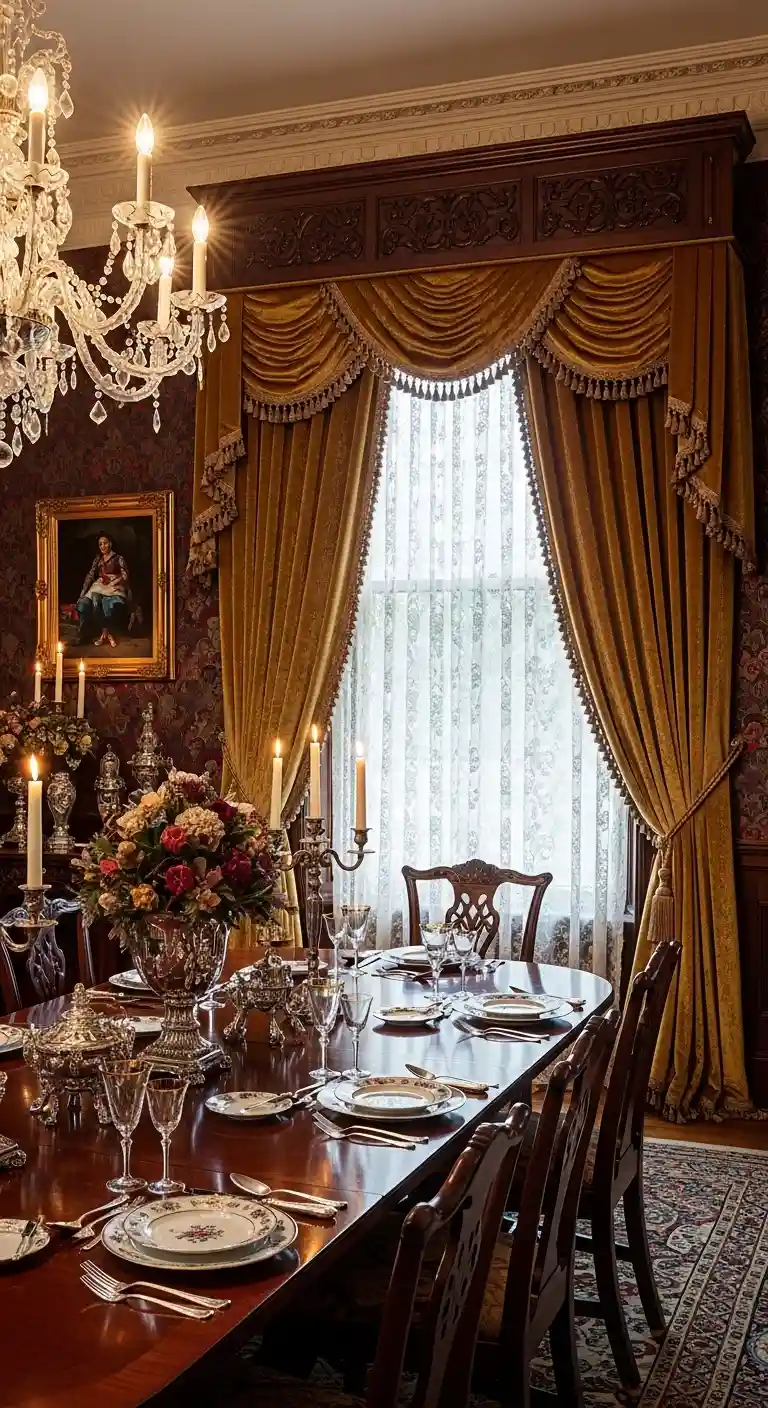
Floral curtains are a natural fit for many Victorian-inspired dining rooms. Botanical prints and traditional floral patterns can soften the architecture while adding color and decorative detail.
For a classic look, choose fabrics featuring muted roses, delicate leaves, or richly colored botanical motifs. If your room already has patterned wallpaper, select curtains with a simpler print or a complementary solid color.
Floor-length curtains can make windows feel taller and create a more finished appearance. Heavier fabrics may suit formal dining rooms, while lighter materials work well in brighter spaces.
Coordinate the curtain colors with the rug, upholstered chairs, or artwork rather than matching every element exactly.
Window treatments should also be practical. Consider how much sunlight enters the room and whether you need lining for privacy or light control.
Styling tip: Pair floral curtains with a dark wood table, cream walls, and subtle brass accents for a traditional dining room with warmth and personality.
15. Victorian Dining Room with a China Cabinet
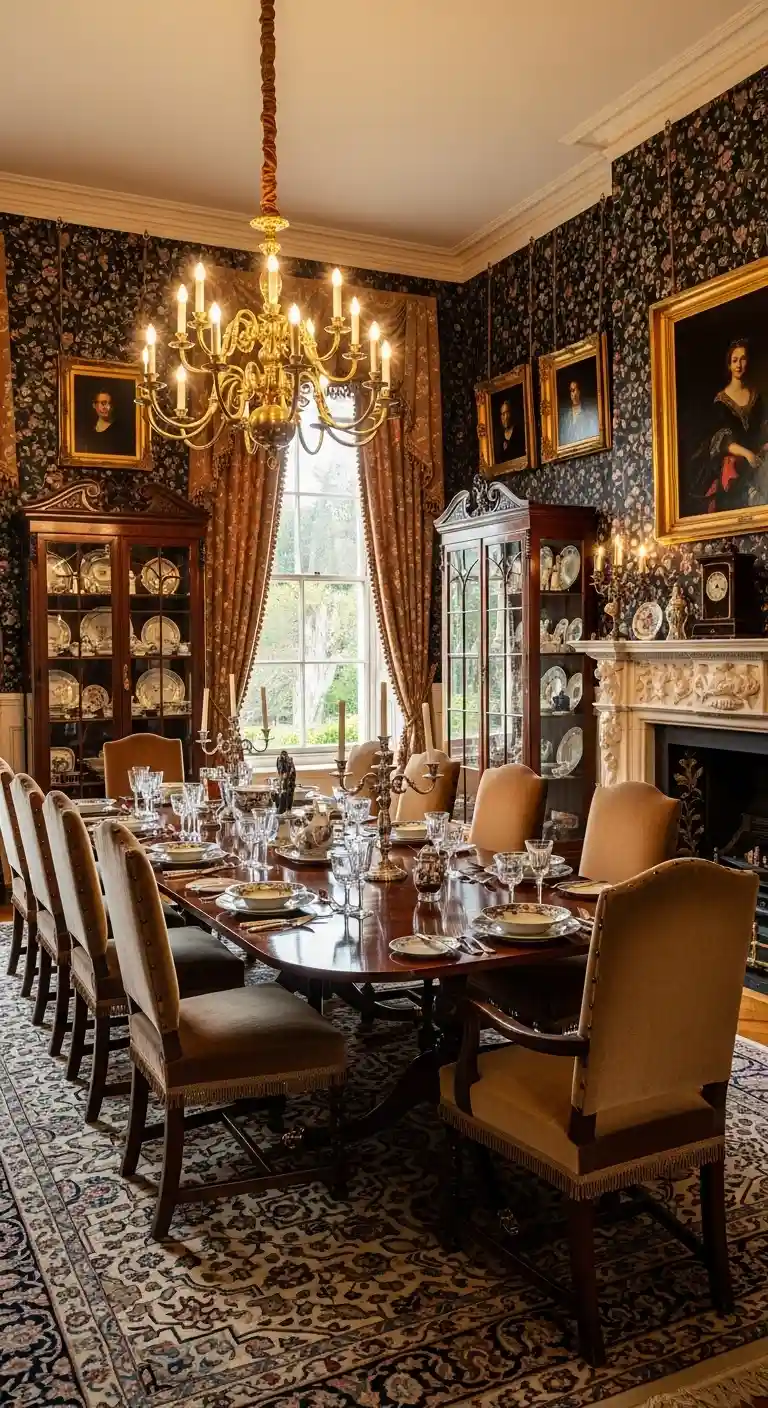
A china cabinet is both a functional storage piece and a decorative feature in a Victorian dining room. It provides space for displaying fine china, glassware, serving pieces, and treasured family objects.
Choose a cabinet with glass-front doors, carved wood details, or an elegant traditional silhouette. Dark wood creates a classic look, while a painted cabinet can work beautifully in a lighter interpretation of Victorian style.
Arrange the contents carefully. Group dinnerware by color or type, leave some open space between objects, and use a few decorative pieces to create visual interest.
If the cabinet includes internal lighting, warm illumination can highlight the display during evening gatherings.
Ensure that the cabinet is positioned where doors can open comfortably without interfering with dining chairs or walkways.
Styling tip: Display your most attractive pieces at eye level and keep less decorative everyday items in closed storage.
16. Moody Victorian Dining Room with Navy Walls
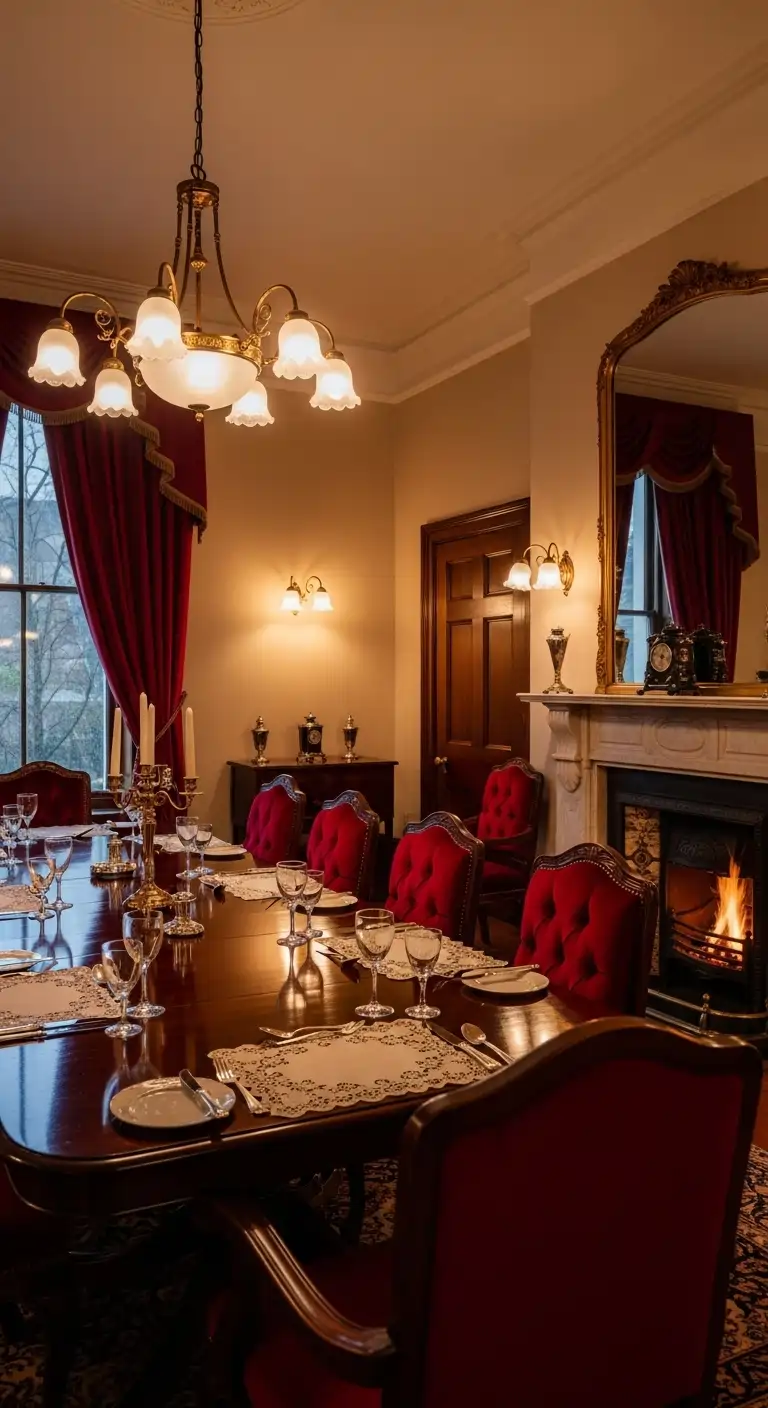
Navy blue creates a sophisticated backdrop for Victorian furniture and decorative details. It offers the dramatic effect of a deep color while remaining versatile enough to complement wood, cream upholstery, brass, and patterned textiles.
Use navy on all the walls for a rich, enveloping atmosphere, or apply it to a single feature wall if you prefer a lighter result.
Dark blue works particularly well with warm wood furniture and traditional framed artwork. A crystal chandelier or brass wall sconces can add contrast and help brighten the room.
To avoid making the space feel too dark, consider lighter curtains, reflective mirrors, and warm-white lighting.
Before painting, test a sample on different walls and observe it throughout the day. Navy can look very different depending on natural light and the surrounding finishes.
Styling tip: Combine navy walls with walnut furniture, cream dining chairs, and brass accents for a refined Victorian-inspired interior.
17. Modern Victorian Dining Room with Contemporary Touches
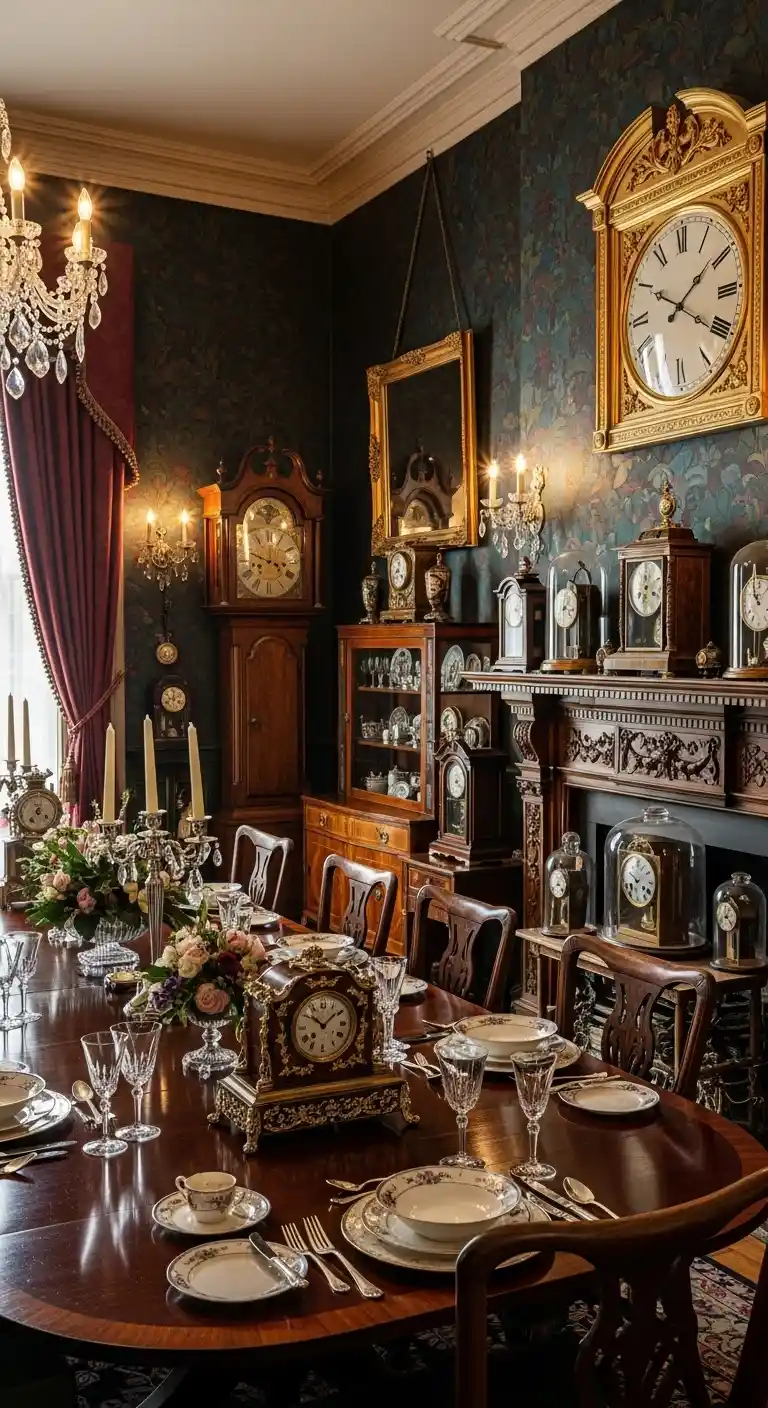
Modern Victorian design combines the decorative beauty of traditional interiors with the simplicity and convenience of contemporary living.
Instead of reproducing every historic detail, choose a few defining elements, such as wall molding, a carved wooden table, or a traditional chandelier. Then introduce modern furniture, streamlined accessories, and a more restrained color palette.
For example, a classic dining table can be paired with contemporary upholstered chairs and a simple sculptural light fixture.
Painted paneling in warm white or muted sage can provide architectural interest without making the room feel overly formal. Modern artwork can also create an appealing contrast with traditional furniture.
The goal is to balance old and new rather than making every item match the same historical style.
Styling tip: Start with one traditional focal point and use contemporary elements to keep the dining room feeling fresh and comfortable.
18. Victorian Dining Room with Decorative Mirrors
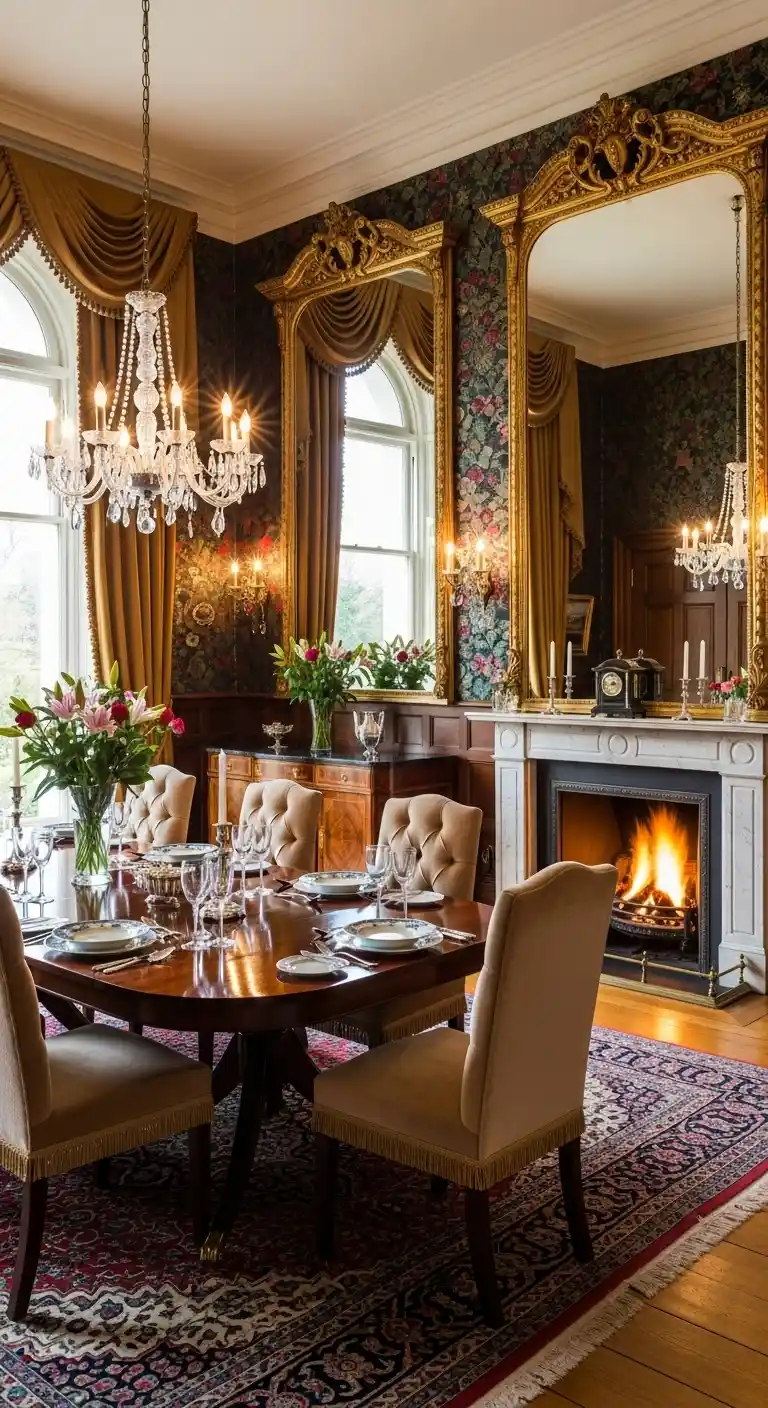
Mirrors are useful in Victorian dining rooms because they reflect light, introduce visual depth, and complement traditional decorative styles.
An ornate mirror with a carved wooden or metallic frame can become a striking focal point above a sideboard or on the wall opposite a window.
For a grander arrangement, consider a large mirror with a decorative frame that relates to the chandelier or wall molding.
Mirrors can also make a compact dining room feel more open. However, placement matters. A mirror that reflects clutter or an unattractive view may not improve the room.
If you prefer a less formal style, choose a simpler antique-inspired frame and pair it with neutral walls and understated furniture.
Make sure large mirrors are mounted securely, particularly in homes with children.
Styling tip: Position the mirror to reflect natural light or an attractive architectural feature rather than simply filling an empty wall.
19. Victorian Dining Room with Botanical Artwork
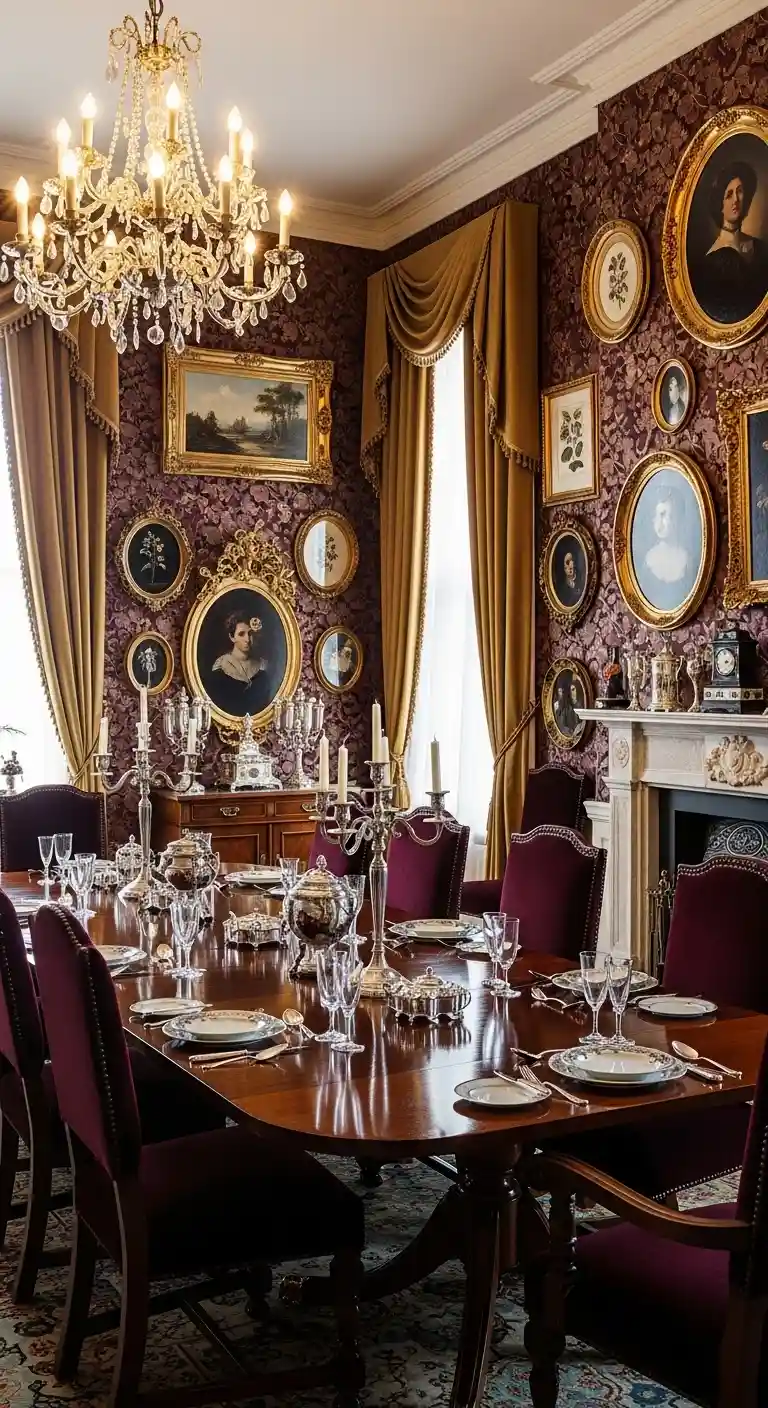
Botanical artwork complements Victorian interiors by introducing nature-inspired imagery and a traditional decorative character. Floral illustrations, vintage plant prints, and framed botanical studies can all work well.
Arrange several prints together to create a gallery wall, or select one large artwork as a focal point above the sideboard.
Choose frames that suit the room's style. Dark wood creates a traditional appearance, while antique gold adds a more formal touch.
The colors in the artwork can help tie the room together. Green botanical prints work well with cream and walnut, while floral images featuring burgundy or dusty rose can complement richer traditional palettes.
If your wallpaper already features an elaborate pattern, choose simpler artwork to prevent the room from feeling too busy.
Styling tip: Use botanical prints alongside natural wood, floral arrangements, and soft textiles to create a traditional dining room that feels connected to nature.
20. Cozy Victorian Dining Room with Warm Lighting and Soft Textures
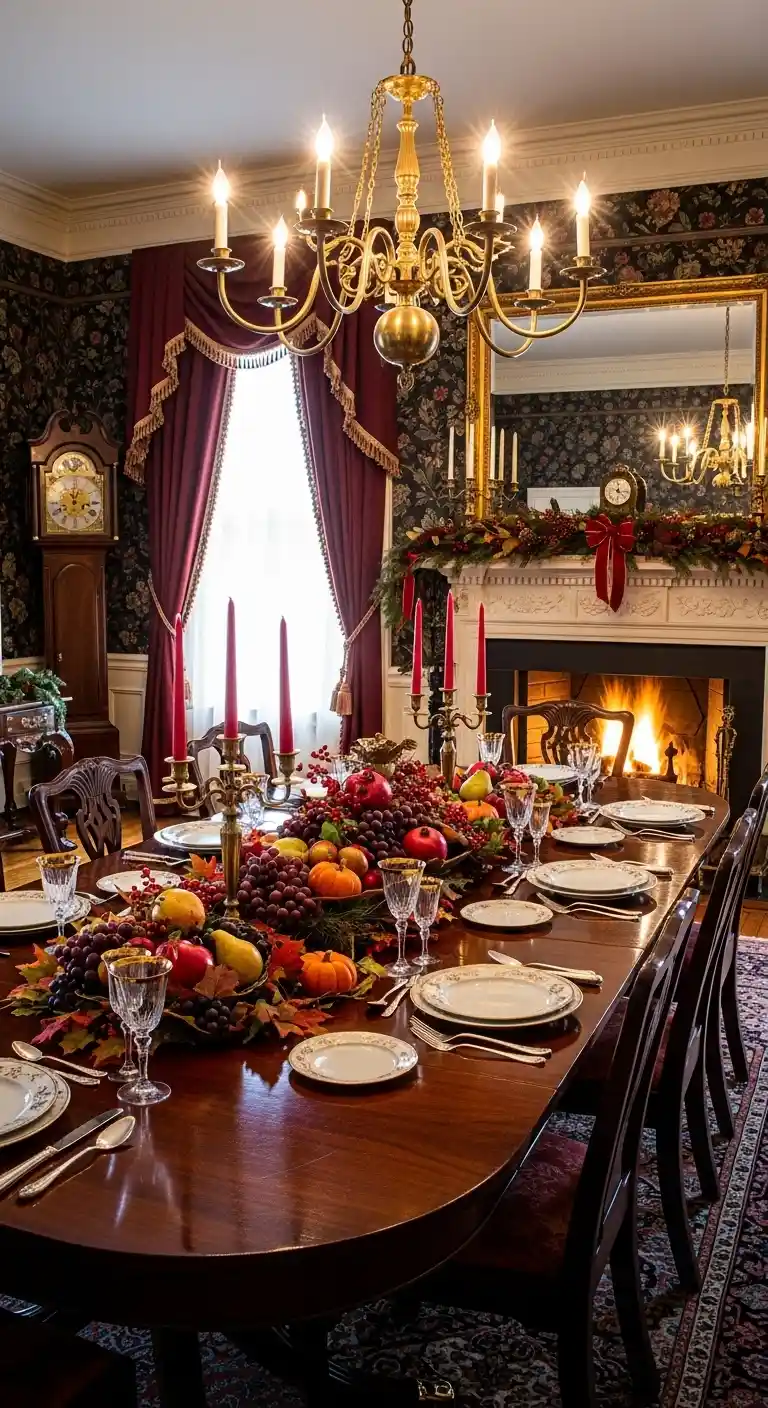
Victorian dining rooms can be grand and dramatic, but they should also feel comfortable enough for everyday meals and long conversations.
Warm lighting, upholstered chairs, layered textiles, and carefully selected accessories help create a welcoming atmosphere without losing the style's elegance.
Start with a traditional wooden table and comfortable seating. Add a patterned rug, lined curtains, and a few cushions if your seating arrangement includes a bench or upholstered nook.
Choose warm-white bulbs and combine overhead lighting with wall sconces or table lamps on a sideboard. This creates a more flexible atmosphere for both family dinners and formal gatherings.
Soft cream, warm brown, muted green, and burgundy can all contribute to a cozy traditional palette.
Avoid overcrowding the table with decorative objects. A simple centerpiece and a few coordinated accessories often look more elegant than an arrangement filled with competing details.
Styling tip: Combine soft lighting, textured fabrics, and dark wood furniture to create a Victorian dining room that feels both luxurious and lived-in.
How to Create a Beautiful Victorian Dining Room on a Budget
You do not need to purchase expensive antiques or renovate every wall to introduce Victorian style into your home. A few carefully selected details can create a noticeable transformation.
Focus on One Statement Piece
Choose a beautiful chandelier, a traditional dining table, or an ornate mirror as the main focal point. Build the rest of the design around that item rather than buying multiple statement pieces at once.
Use Paint to Change the Atmosphere
Rich green, navy, burgundy, cream, and warm taupe can help establish a Victorian-inspired palette. Painting one wall or adding decorative molding may be more affordable than replacing furniture.
Shop for Secondhand Furniture
Vintage stores, estate sales, and secondhand marketplaces can be useful places to find traditional furniture and accessories. Inspect the condition carefully and account for any restoration costs.
Update Existing Dining Chairs
New upholstery, seat cushions, or carefully chosen fabric can refresh existing chairs. Choose materials that complement the dining table and are suitable for everyday use.
Decorate with Affordable Accessories
Candlesticks, framed botanical prints, decorative bowls, and fresh flowers can help complete the look without requiring a major investment.
The key is to create a cohesive design rather than buying every decorative item associated with the Victorian era.
Final Thoughts
Victorian dining room designs offer a beautiful way to bring elegance, character, and timeless appeal into your home. From dark wood furniture and crystal chandeliers to patterned wallpaper, velvet chairs, and rich jewel tones, these interiors combine decorative detail with a welcoming atmosphere.
You can embrace the traditional look through a grand formal dining room or choose a modern Victorian interpretation that blends classic architecture with contemporary comfort.
The most successful design is one that suits your home's proportions, lighting, and everyday needs. Start with the furniture and colors you love, then add lighting, textiles, and accessories that bring the room together.
Whether you prefer emerald green walls, antique furniture, elegant cream interiors, or a dramatic navy dining room, Victorian-inspired decorating offers plenty of opportunities to create a distinctive space.
With thoughtful planning and a few well-chosen details, your dining room can become an inviting setting for family dinners, celebrations, and memorable gatherings for years to come.
Which Victorian dining room idea is your favorite? Save your favorite inspiration and start planning your own timeless dining space.
Frequently Asked Questions
What are the main features of a Victorian dining room?
Common features include dark wood furniture, decorative wall molding, ornate chandeliers, patterned wallpaper, traditional rugs, antique-style mirrors, and rich colors such as burgundy, emerald green, and navy.
What colors work best in a Victorian dining room?
Deep red, forest green, navy, cream, warm beige, and rich wood tones are popular choices for Victorian-inspired interiors. The best palette depends on the room's natural light and the atmosphere you want to create.
How can I make a modern home look Victorian?
Introduce traditional details such as decorative molding, a classic chandelier, antique-inspired furniture, botanical artwork, and rich accent colors. Combining these elements with modern furniture can create a balanced contemporary interpretation.
Is Victorian dining room decor expensive?
It can be expensive if you purchase original antiques and custom architectural details, but it does not have to be. Paint, secondhand furniture, decorative mirrors, traditional textiles, and carefully chosen lighting can help achieve the look on a budget.
What type of chandelier suits a Victorian dining room?
Crystal chandeliers, traditional multi-arm fixtures, and decorative brass or gold-toned lights are suitable options. Choose a fixture that is proportionate to the dining table and ceiling height.
How do you decorate a small Victorian dining room?
Choose appropriately sized furniture, use mirrors to reflect light, and select a few traditional focal points rather than filling the room with decorative pieces. Cream walls and warm lighting can help maintain an open, welcoming atmosphere.
Can Victorian furniture work with modern decor?
Yes. Victorian furniture can look beautiful alongside contemporary lighting, simple artwork, modern upholstery, and understated accessories. Combining old and new elements can create a more personal and flexible interior.
What flooring works well in a Victorian dining room?
Traditional wood flooring, parquet patterns, and wood-look finishes can complement Victorian decor. A patterned area rug can add warmth and help define the dining area while protecting the floor.