8 Minimalist Outdoor Kitchen Ideas for a Clean and Clutter-Free Backyard
7 Minimalist Outdoor Kitchen Ideas for a Clean and Clutter-Free Backyard
Too many outdoor kitchens accidentally turn a peaceful backyard into an overcrowded commercial restaurant line. When you pack a patio with a six-burner grill, a side power burner, a dome pizza oven, a smoker, a kegerator, a sink tower, and patterned stone veneer, the visual noise competes directly with the trees, sky, and lawn you stepped outside to enjoy in the first place.
Embracing minimalist outdoor kitchen ideas flips that script entirely. By editing your setup down to essential cooking functions, hiding utility hardware behind handle-free weather-resistant doors, and committing to a calm, unified material palette, your outdoor kitchen reads like a quiet architectural sculpture when not in use—and performs effortlessly when you fire up dinner. Here are 7 intentional ways to build a clean, clutter-free outdoor kitchen.
1. A Single, Streamlined Grill Station Instead of Multiple Appliances
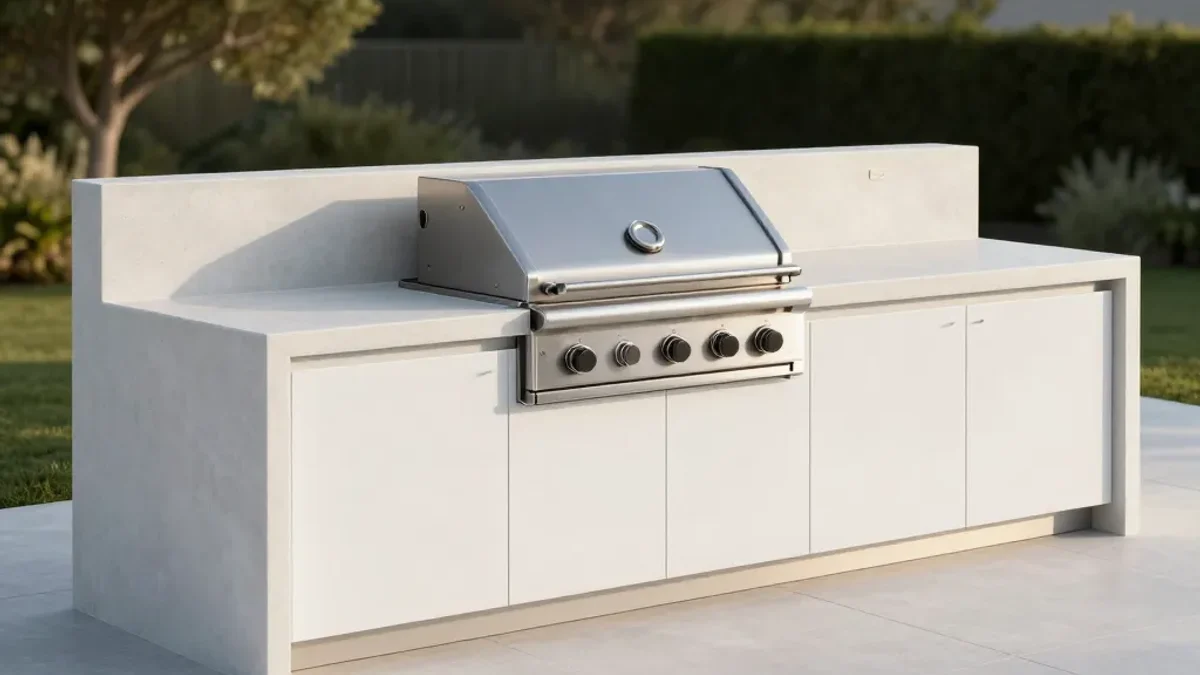
The fastest way to clutter a backyard patio is installing three or four separate cooking appliances that only get used twice a year. Minimalist outdoor design starts with radical editing: choosing one high-performance, built-in 32- to 36-inch gas or charcoal grill head and eliminating redundant side burners, freestanding smokers, and countertop pizza ovens. Modern luxury built-in grills can sear at 800°F, rotisserie-roast with a rear infrared burner, and bake on a ceramic stone with the lid closed—performing the job of four separate gadgets inside a single, flush-mounted stainless steel footprint.
When your counter run is broken only by a single low-profile grill hood, the entire island reads as a calm horizontal plinth rather than an appliance showroom. Furthermore, eliminating extra gas manifolds and electrical cutouts reduces maintenance, prevents grease traps between appliances, and leaves you with uninterrupted landing zones on both sides of the grates.
2. Built-In, Concealed Storage to Eliminate Visual Clutter
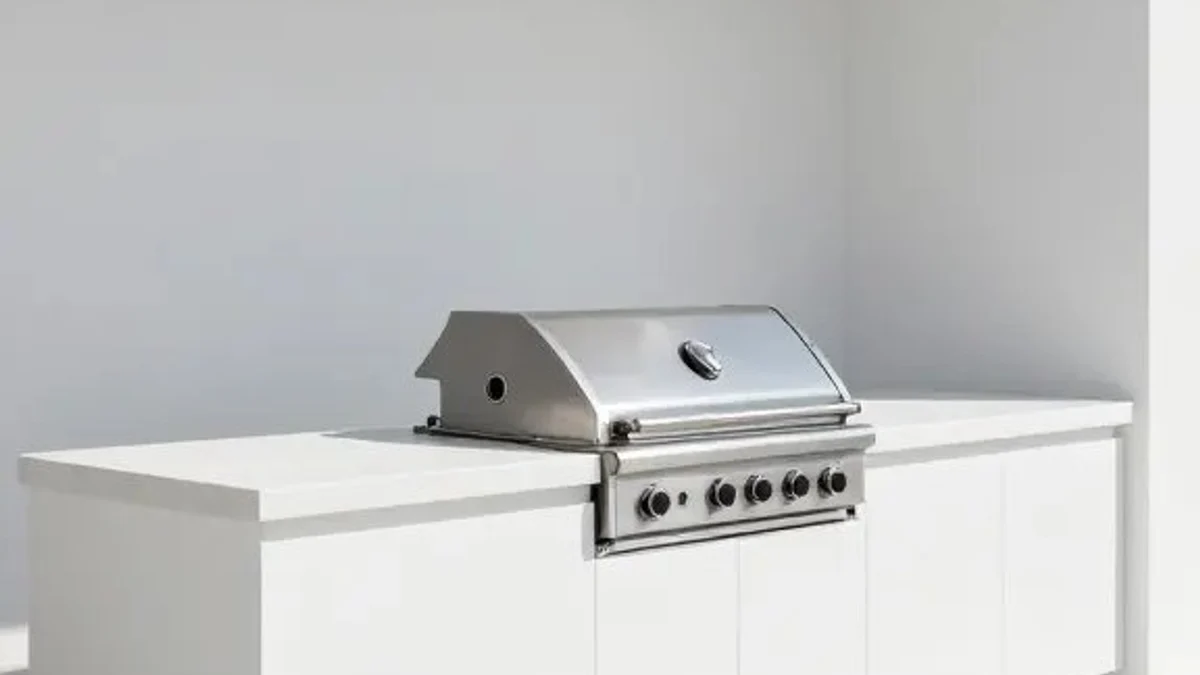
Nothing ruins a serene patio faster than exposed propane tanks, plastic charcoal bins, paper towel rolls, and wire grill brushes sitting out in the open. In a minimalist outdoor kitchen, every single tool, fuel source, and waste bin lives inside weather-sealed, full-height or under-counter concealed cabinetry. Instead of open shelving or stainless wire racks—which collect pollen, leaves, and dust between weekends—flush-fitting marine-grade aluminum or high-density polymer (HDPE) doors seal away the working guts of the kitchen completely.
Behind those quiet, monolithic doors, outfit the interior with a pull-out propane tank tray, a hidden dual trash/compost bin, and a weather-gasketed dry drawer for tongs, thermometers, and cedar planks. The moment you close the cabinet doors after dinner, the outdoor kitchen reverts into a clean architectural wall that looks effortless from your indoor living room windows.
3. A Monochromatic Material Palette (Concrete, Stainless Steel) for Cohesion
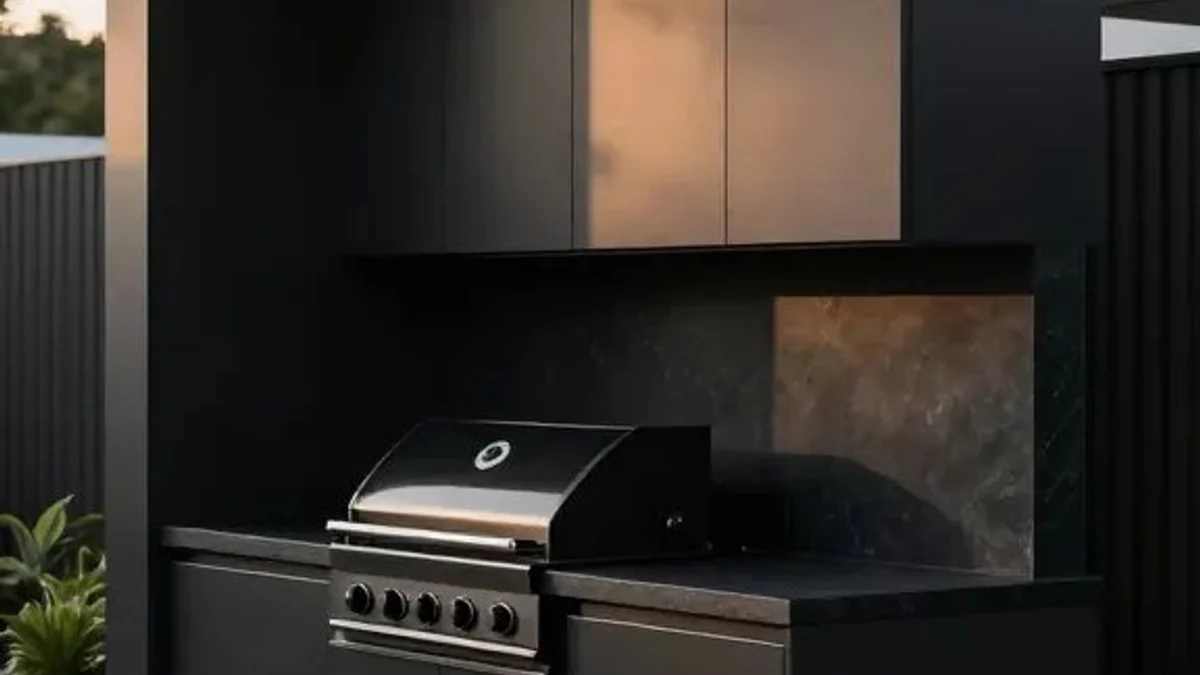
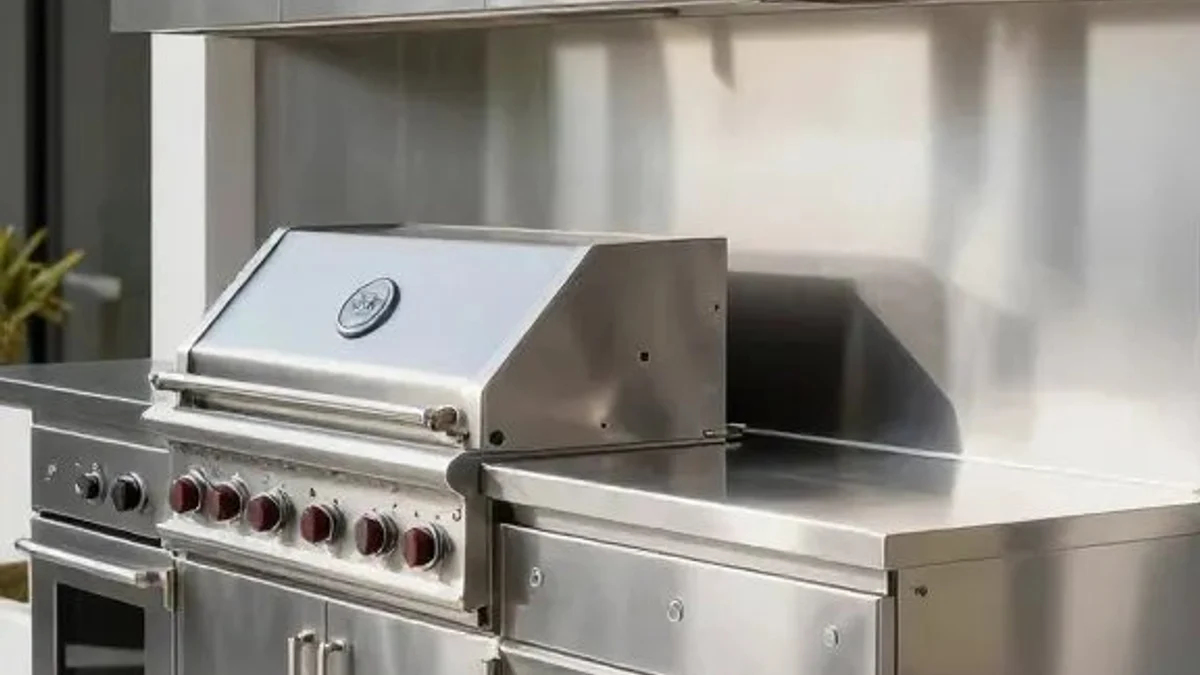
Traditional outdoor kitchens often clash because they mix four or five competing materials in a 10-foot span: stacked ledger stone on the base, speckled granite on the counter, stainless steel doors on the front, and red brick on the patio floor. A minimalist outdoor kitchen achieves instant visual calm by committing to a strictly monochromatic or two-material palette—such as brushed 304/316 marine-grade stainless steel paired with poured architectural concrete.
When the cabinet doors, kickplate, countertop, and grill hood share the same cool silver-gray or warm limestone-gray tonal family, the eye no longer jumps from material seam to material seam. Sunlight and garden shadows play across the subtle texture differences between honed concrete and brushed steel, allowing the surrounding green foliage and blue sky to provide all the color the space needs.
4. Minimal Countertop Styling with Only Essential Tools Visible
An outdoor countertop should never become a permanent parking lot for condiment caddies, citroen candles, utensil crocks, and decorative lanterns. Following the core minimalist rule of zero-clutter horizontal surfaces, keep at least 90% of your outdoor countertop completely bare between meals. A broad expanse of honed white sintered stone (such as Dekton or Neolith), architectural concrete, or pale quartz reflects natural daylight and gives you an expansive, hygienic landing zone for platters of grilled vegetables and steaks.
If you want a single organic touch so the counter doesn't feel stark, limit yourself to one functional living element—such as a single matte-charcoal stoneware pot planted with fresh culinary rosemary, thyme, or oregano that you can snip directly onto the grill grates while cooking.
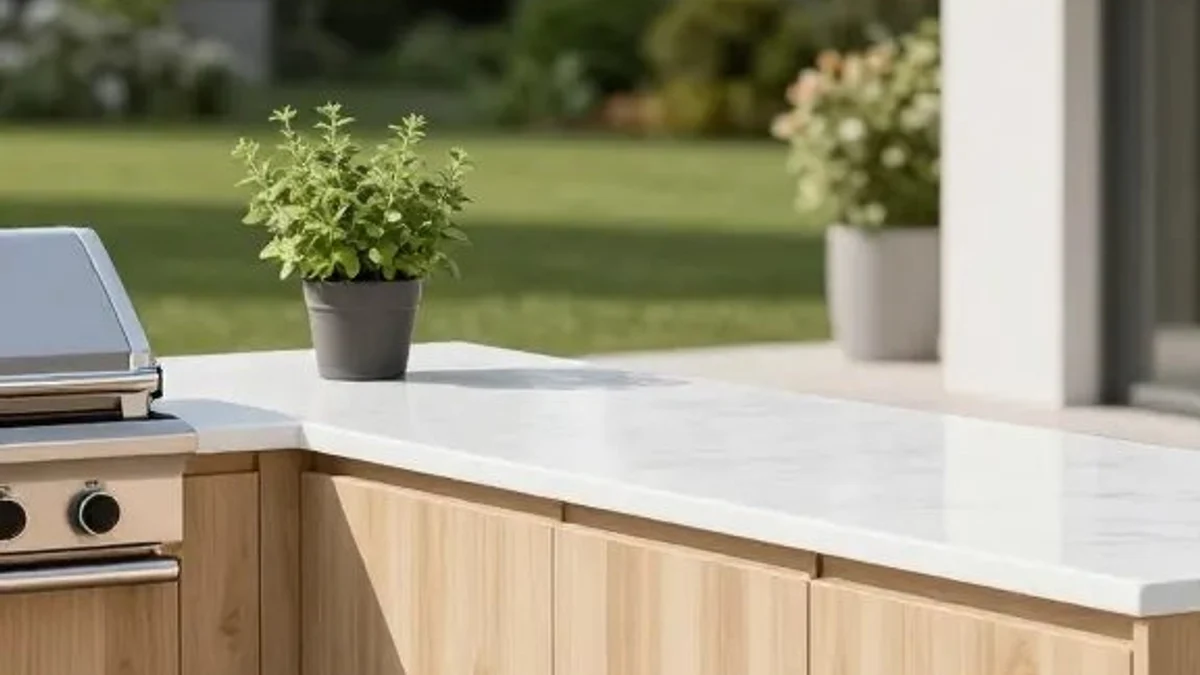
5. Clean-Lined Cabinetry with Integrated, Handle-Free Fronts
Protruding bar pulls and bulky latch handles not only catch on pockets as you walk past a narrow patio island, but they also break a cabinet bank into dozens of busy metallic rectangles. Designing your outdoor kitchen with clean-lined, handle-free cabinet fronts using 45-degree mitered finger-pull channels (J-pulls) or marine push-to-open latches creates an uninterrupted architectural facade.
Whether you choose vertical-grain thermally modified ash/teak slats or powder-coated aluminum slab doors, eliminating external hardware lets the natural rhythm of the vertical wood boards or honed stone waterfalls read like a piece of modern garden architecture rather than a row of utility lockers. A continuous shadow-reveal gap (usually 3/4 inch deep) tucked directly beneath the countertop overhang lets you grip and open drawers comfortably with one hand.
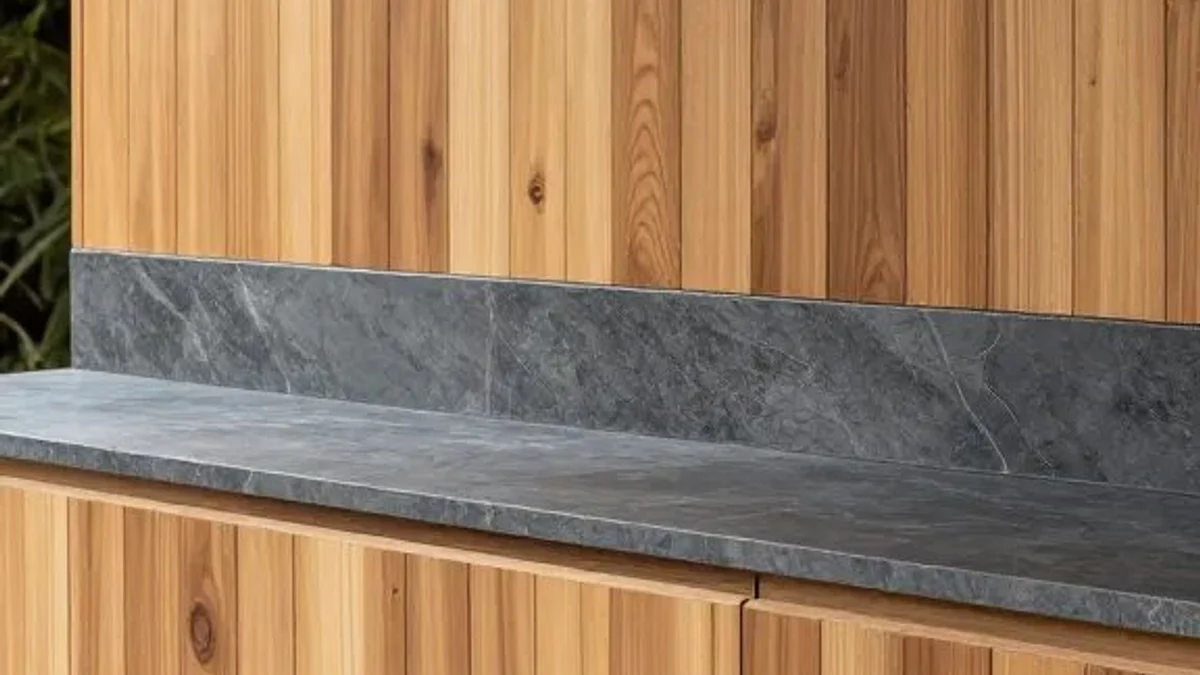
6. A Compact Footprint Designed Around Only the Essentials
You don't need a sprawling 16-foot U-shaped pavilion to host unforgettable backyard dinners. In fact, oversized L- and U-shaped islands often slice a backyard in half and block natural foot traffic between the indoor kitchen and the patio dining table. A compact, linear 6- to 8-foot freestanding grill table or open-base console designed strictly around the three essentials—a 24-inch prep zone, a 32-inch grill, and an 18-inch plating zone—delivers 100% of the culinary function in less than a third of the footprint.
By raising the teak or concrete counter on slender matte-black powder-coated steel legs (or framing it inside a slim architectural portal), air and lawn views pass freely underneath the unit, making small urban courtyards and townhome decks feel open and spacious.
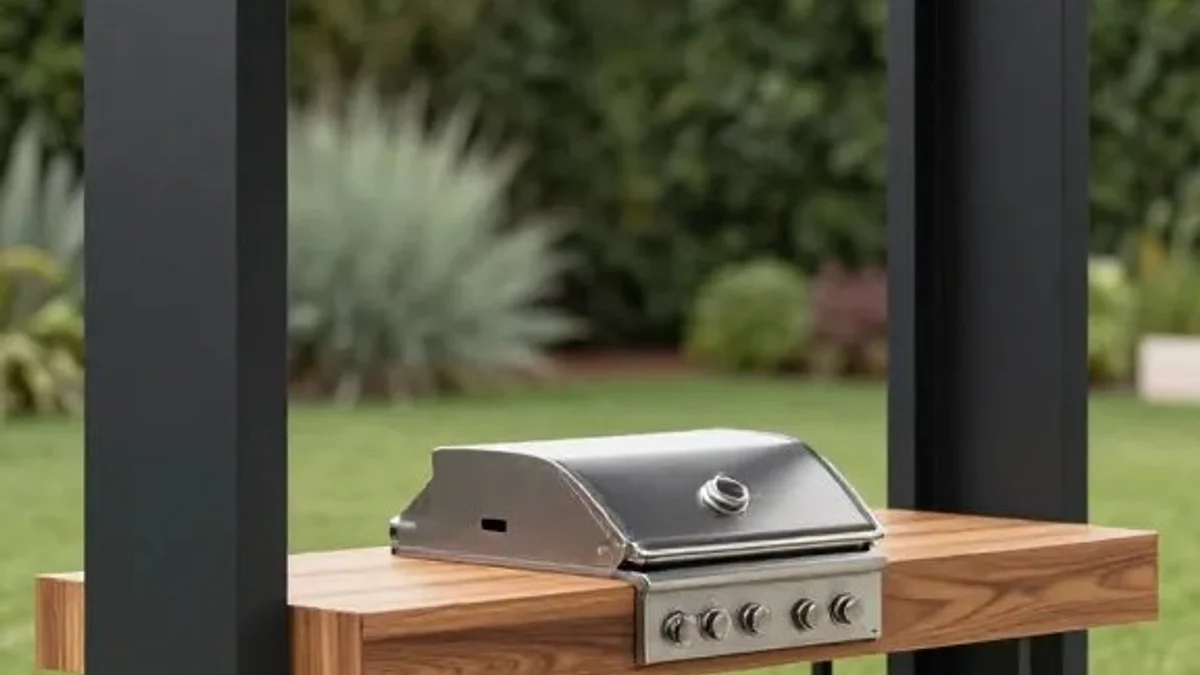
7. Negative Space Left Intentionally Around the Cooking Area
In minimalist architecture, the space you leave empty is just as important as the structure you build. Rather than cramming barstools up against the back of the grill island or surrounding the counter with tall pergolas, mounted outdoor TVs, and string-light poles, leave generous negative space—both on the countertop and across the surrounding patio hardscape.
Framing at least 36 to 48 inches of uninterrupted honed concrete counter between the grill and an undermount gooseneck sink—and leaving 5 feet of clear limestone or concrete paver breathing room around the island perimeter—lets the eye rest. The tactile backdrop of natural stacked slate, board-formed concrete, or a clipped hornbeam hedge becomes the quiet visual frame, turning outdoor cooking into a slow, meditative ritual.
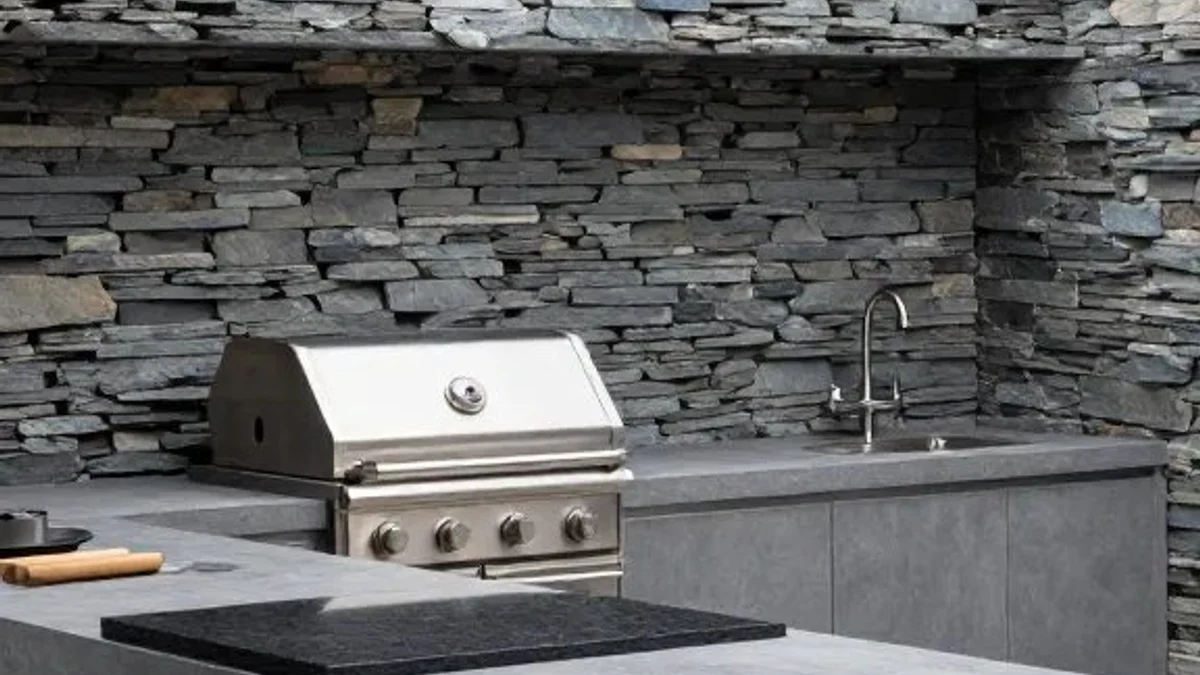
Minimalist Outdoor Kitchen Material & Layout Matrix
| Design Element | Minimalist Specification | What to Remove / Avoid | Weatherproof Advantage |
|---|---|---|---|
| Cooking Appliance | Single 32"–36" built-in grill with internal rotisserie | Separate side burners, pizza domes & smokers | Fewer gas joints & unbroken counter planes |
| Cabinet Doors | Handle-free slab HDPE, powder-coated aluminum, or teak | Protruding bar pulls & open wire shelving | EPDM gaskets keep interiors 100% dry & dust-free |
| Countertop Surface | Honed cast concrete or matte Dekton sintered stone | Busy speckled granite or grouted tile counters | Zero UV fading, freeze-thaw proof & stain-proof |
| Footprint & Layout | Linear 6'–9' galley plinth with 40%+ bare counter space | Bulky U-shaped islands with raised bar tiers | Preserves backyard sightlines & guest traffic flow |
Conclusion: Start by Removing Rather Than Adding
Designing a truly calm, enduring outdoor kitchen isn't about seeing how many indoor appliances you can weatherproof and bolt onto your patio—it is about starting by removing rather than adding. When you strip away redundant side burners, exposed propane tanks, protruding handles, and busy multi-stone veneers, what remains is pure function and architectural tranquility.
Begin your backyard plan with a single high-performance built-in grill, flank it with generous expanses of uncluttered concrete or sintered stone, and tuck every tool behind gasket-sealed, handle-free cabinetry. Your backyard will stay serene, spacious, and effortlessly ready for dinner 365 days a year.