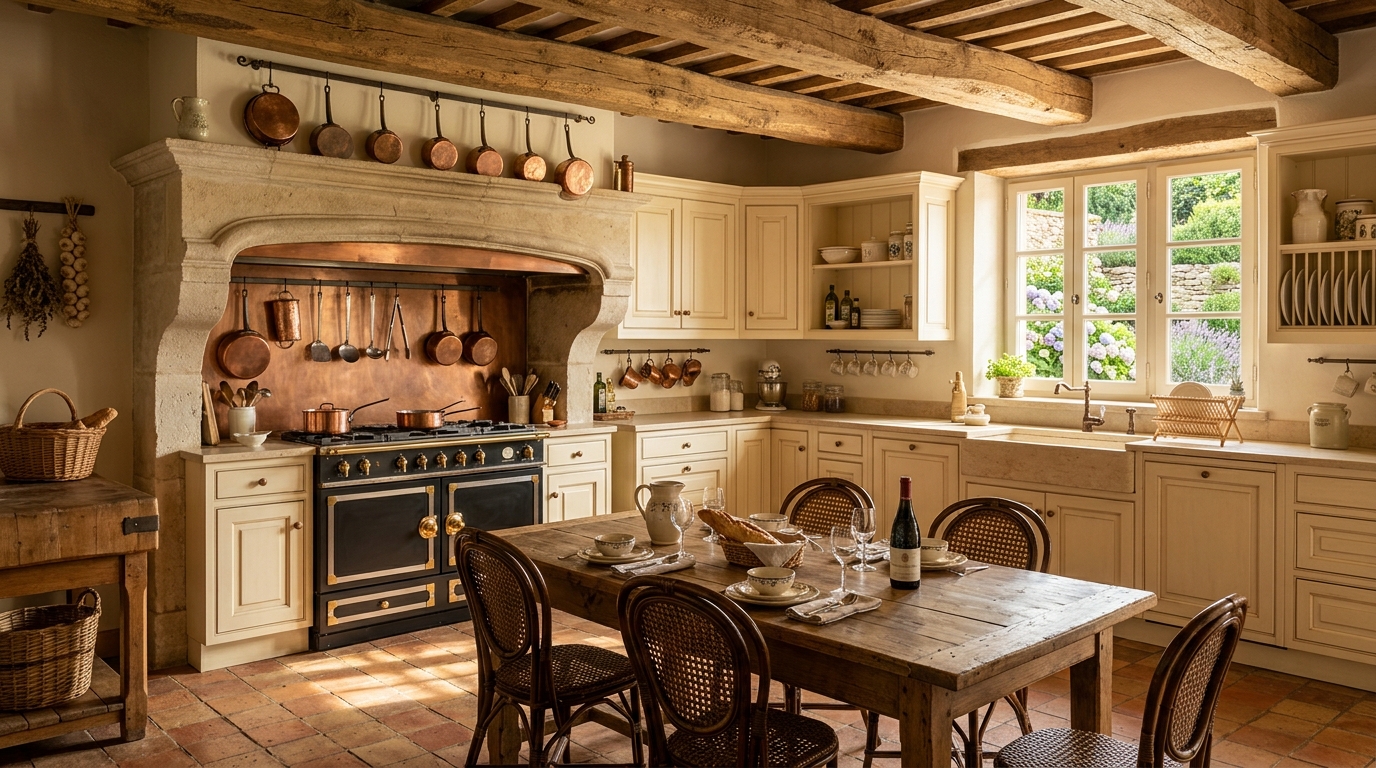
1. Warm, Creamy White Cabinetry with Raised-Panel Detailing
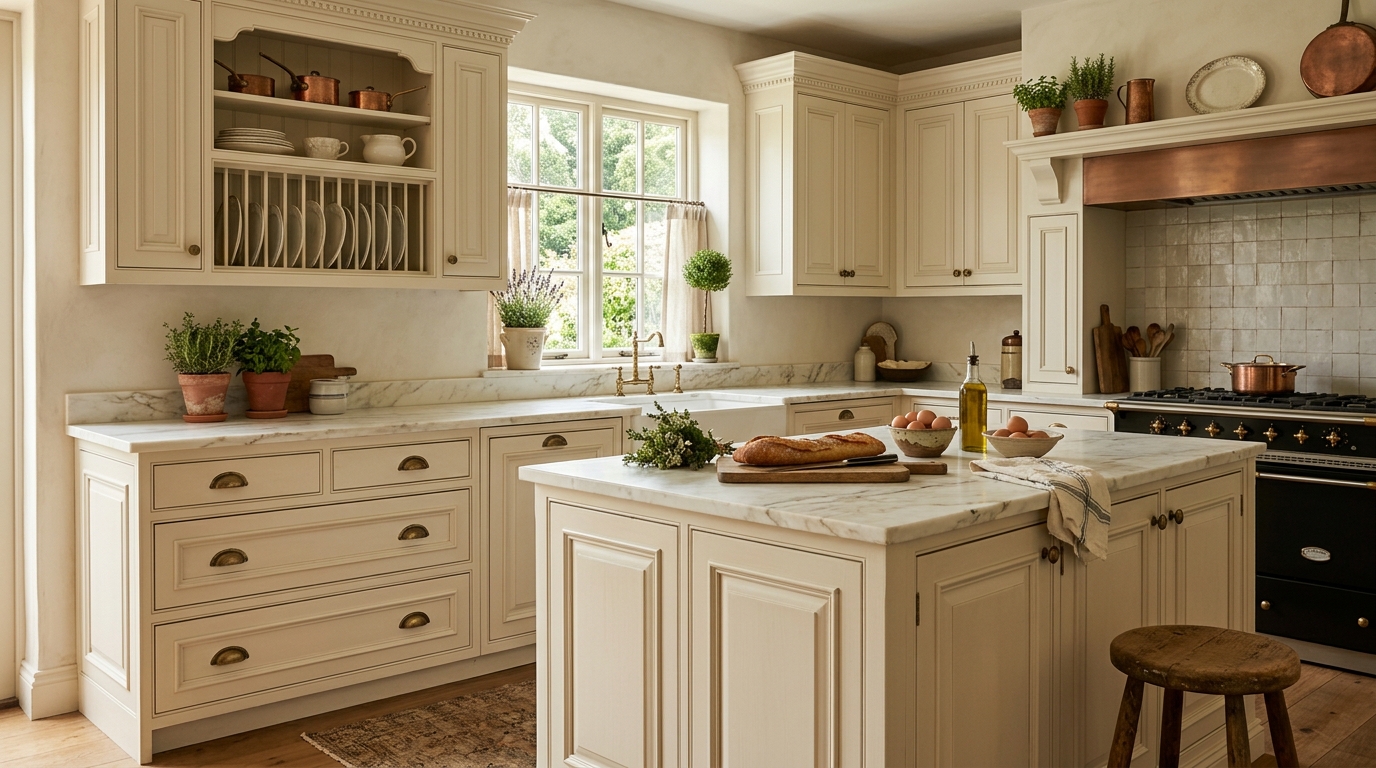
Unlike the stark, ultra-modern pure whites often seen in contemporary spaces, an authentic French country kitchen relies heavily on warm, creamy off-white cabinetry. Shades reminiscent of clotted cream, warm antique lace, and soft linen give millwork a timeworn grace that instantly softens the entire room. Raised-panel cabinet doors, subtle beadboard insets, and architectural crown molding introduce rich shadow lines that celebrate classic provincial craftsmanship.
To capture true provincial style, avoid glossy lacquer or ultra-flat modern paints in favor of a soft eggshell or satin finish with subtle distressing along the beveled edges. Pair creamy raised-panel cabinetry with unlacquered brass knobs or wrought iron cup pulls to ground the softness with antique character.
2. Toile de Jouy Patterned Curtains or Upholstery
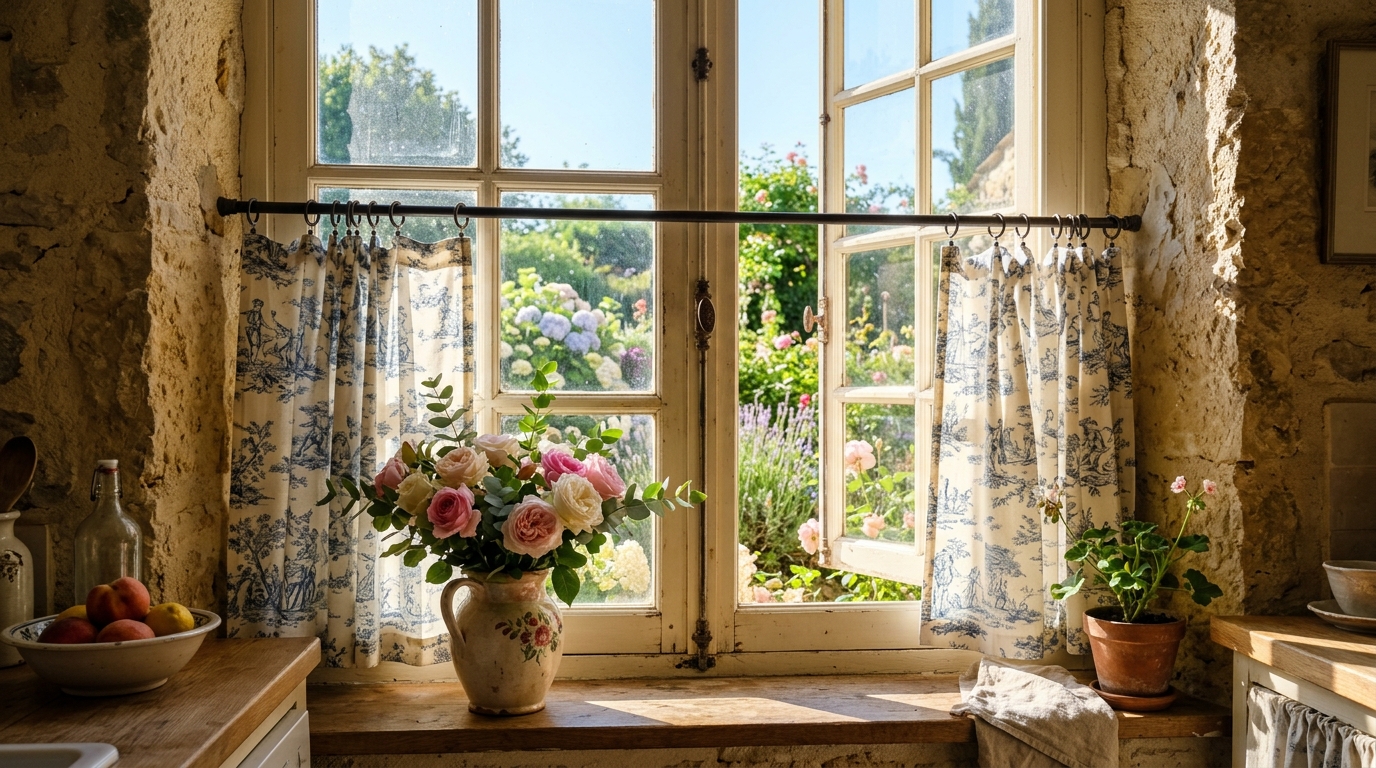
Few decorative motifs are as quintessentially French as Toile de Jouy. Originating in 18th-century France, these intricate, monochromatic pictorial fabrics depict romantic pastoral landscapes, bucolic harvest scenes, and delicate floral vignettes. When introduced into a kitchen via cafe window curtains, upholstered barstool cushions, or custom bench seat cushions, toile immediately infuses narrative charm and timeless heritage.
When styling toile in a modern culinary space, stick to classic color pairings such as charcoal on cream, soft delft blue on porcelain white, or muted burgundy on flaxen linen. Using toile on tailored Roman shades or pleated cafe curtains allows natural sunlight to filter through the weave while framing your kitchen windows like a pastoral painting.
3. Wrought Iron Light Fixtures and Hardware
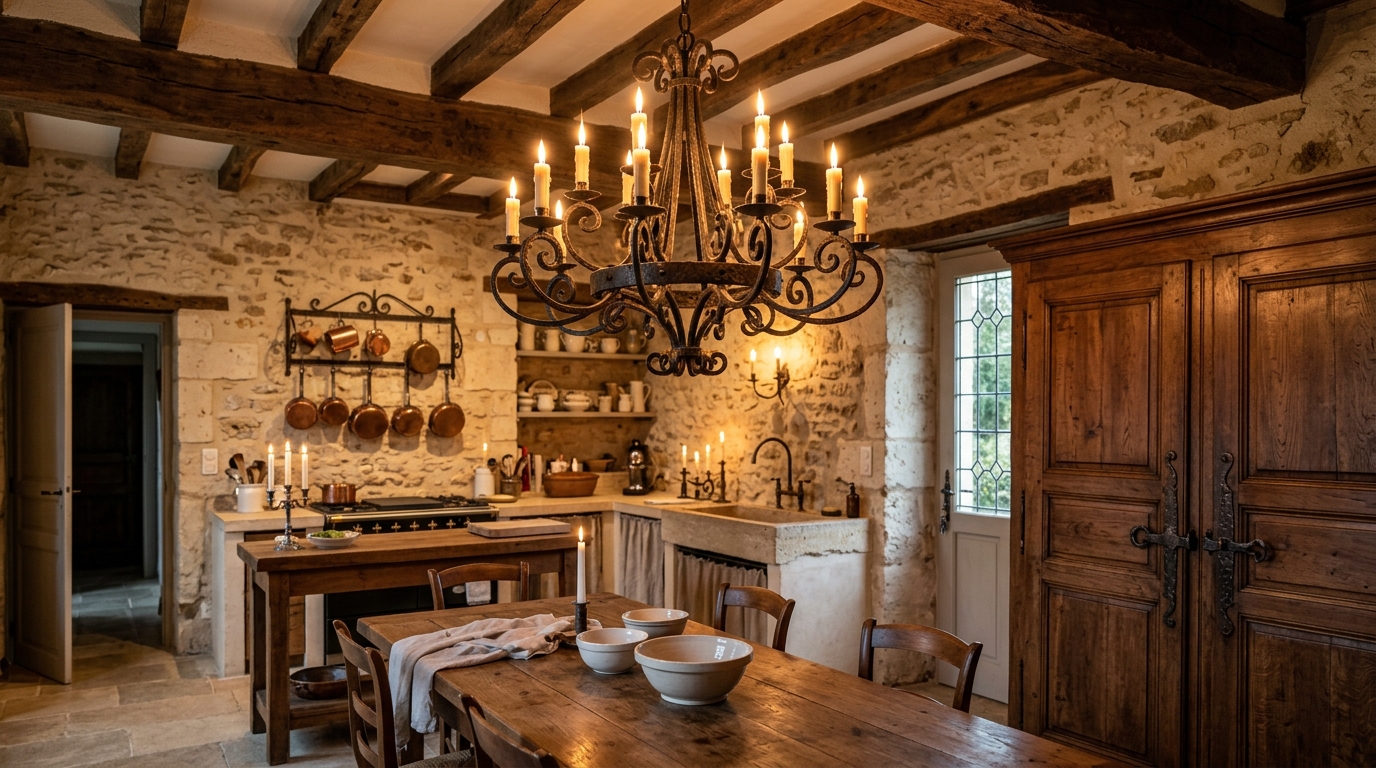
Wrought iron provides the essential structural anchor that prevents French country kitchens from feeling overly sweet or delicate. Hand-forged iron elements—with their matte charcoal finish, subtle hammer marks, and graceful scrolling silhouettes—introduce authentic artisan weight. From oversized cage chandeliers and wall sconces to cremone bolt window fasteners and cabinet strap hinges, dark iron creates breathtaking visual contrast against pale plaster and creamy millwork.
For an effortless look, introduce wrought iron in functional layers: hang a curvilinear iron pot rack over a butcher block island, swap out standard modern cabinet latches for traditional iron turn-buckles, or mount forged iron shelf brackets beneath chunky open timber shelving.
4. A Farmhouse Sink Framed with Decorative Tile
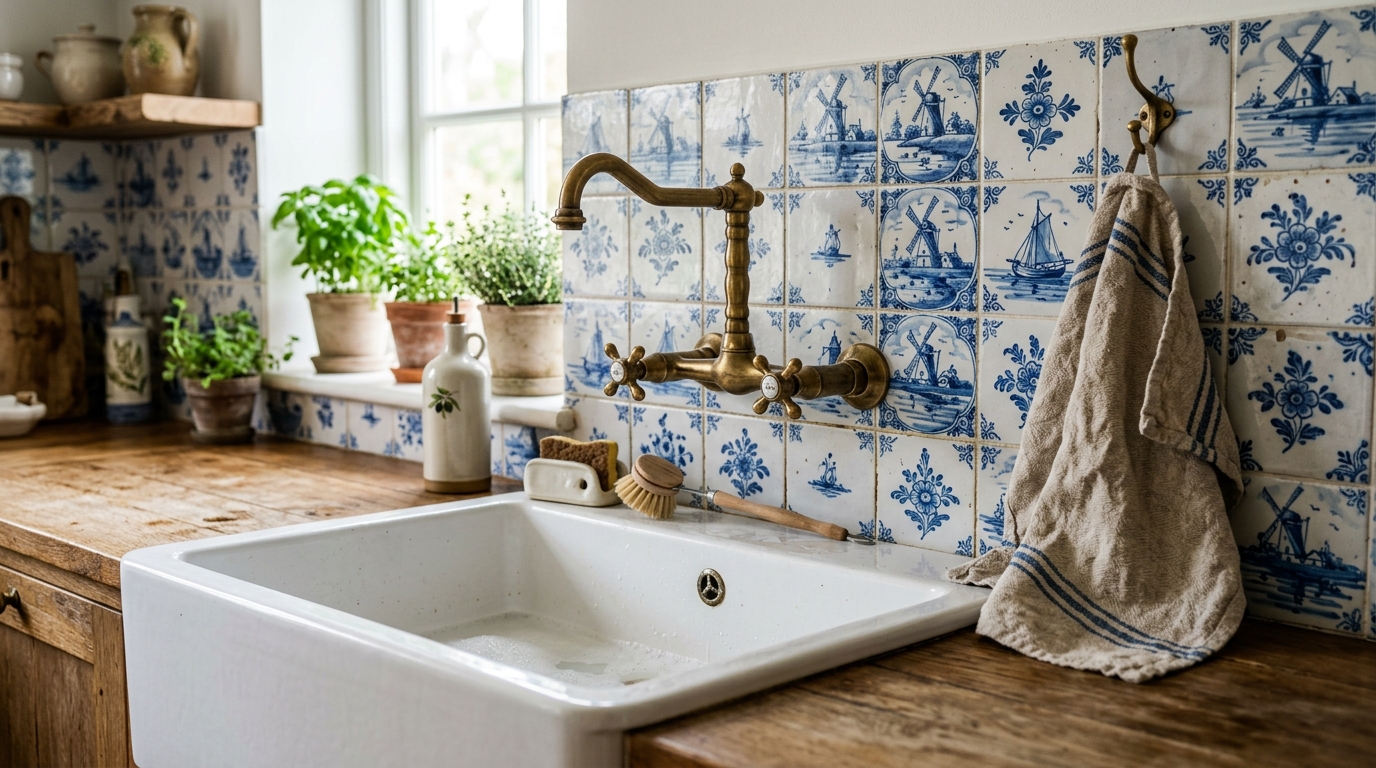
At the heart of every French provincial kitchen lies a hardworking apron-front farmhouse sink. Crafted from durable fireclay or carved solid limestone, these expansive, deep basins evoke centuries of harvest prep and communal cooking. Framing the sink area with hand-painted ceramic tiles—such as traditional French faience or blue-and-white Delft patterns—elevates a utilitarian washing station into a bespoke decorative showpiece.
Complete the authentic provincial vignette by pairing your fireclay sink with an antique bridge faucet featuring gooseneck spouts and porcelain hot-and-cold lever handles. Install a small ledge above the backsplash to hold natural sea sponges, olive oil soaps, and a crock of wooden scrubbing brushes.
5. Soft, Muted Provincial Color Palettes (Lavender, Sage, and Warm Cream)
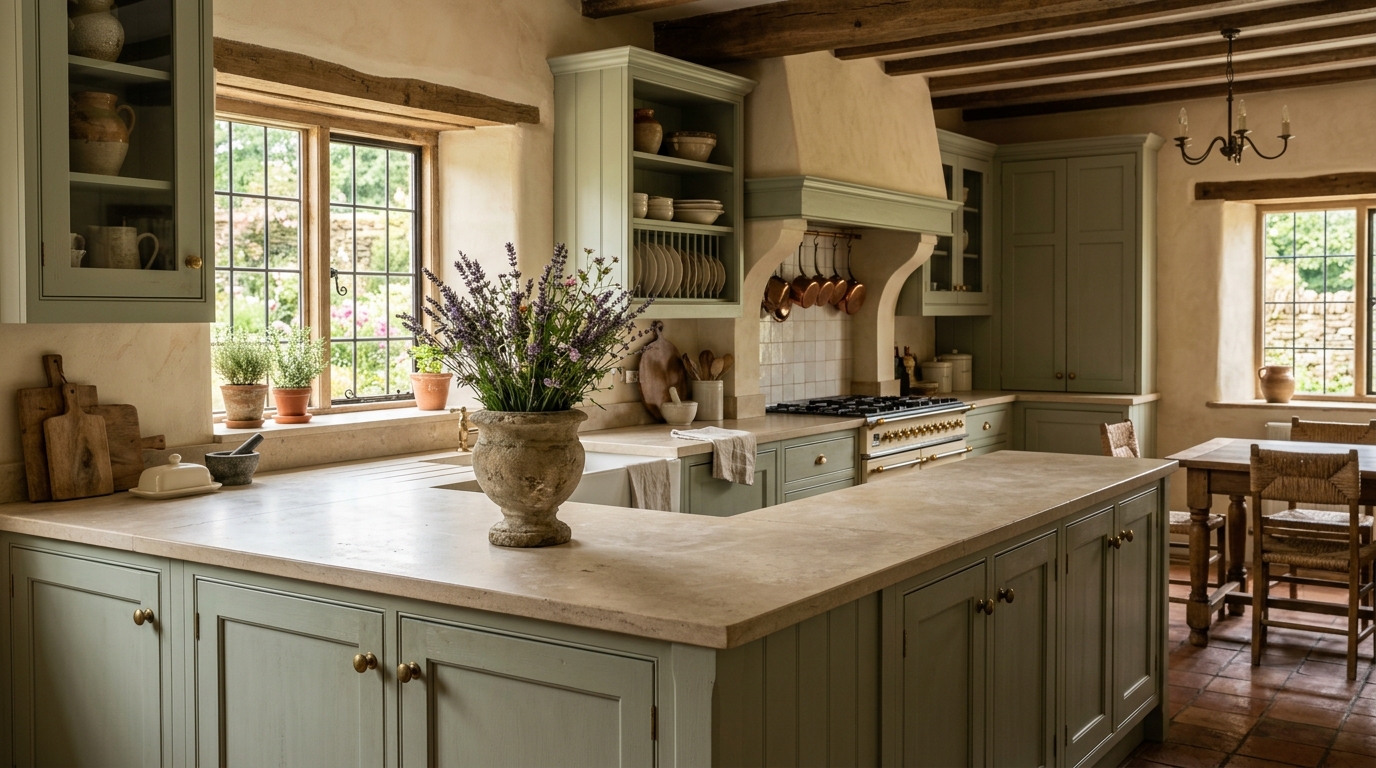
The color palette of a French country kitchen takes its direct inspiration from the sun-drenched landscapes of Provence: fragrant purple lavender fields, silvery-green olive groves, golden wheat fields, and pale limestone quarries. Rather than saturated jewel tones, French provincial design embraces dusty, muted hues that look softened by generations of Mediterranean sunshine.
Try painting your central kitchen island or pantry doors in a whisper of French sage or misty Provence blue, while keeping perimeter cabinetry in warm buttermilk cream. Layer in soft lavender linens, aged terracotta urns, and wheat straw baskets to weave nature's calming rhythm through every corner of the room.
6. A French Range with a Decorative Tile Backsplash Surround
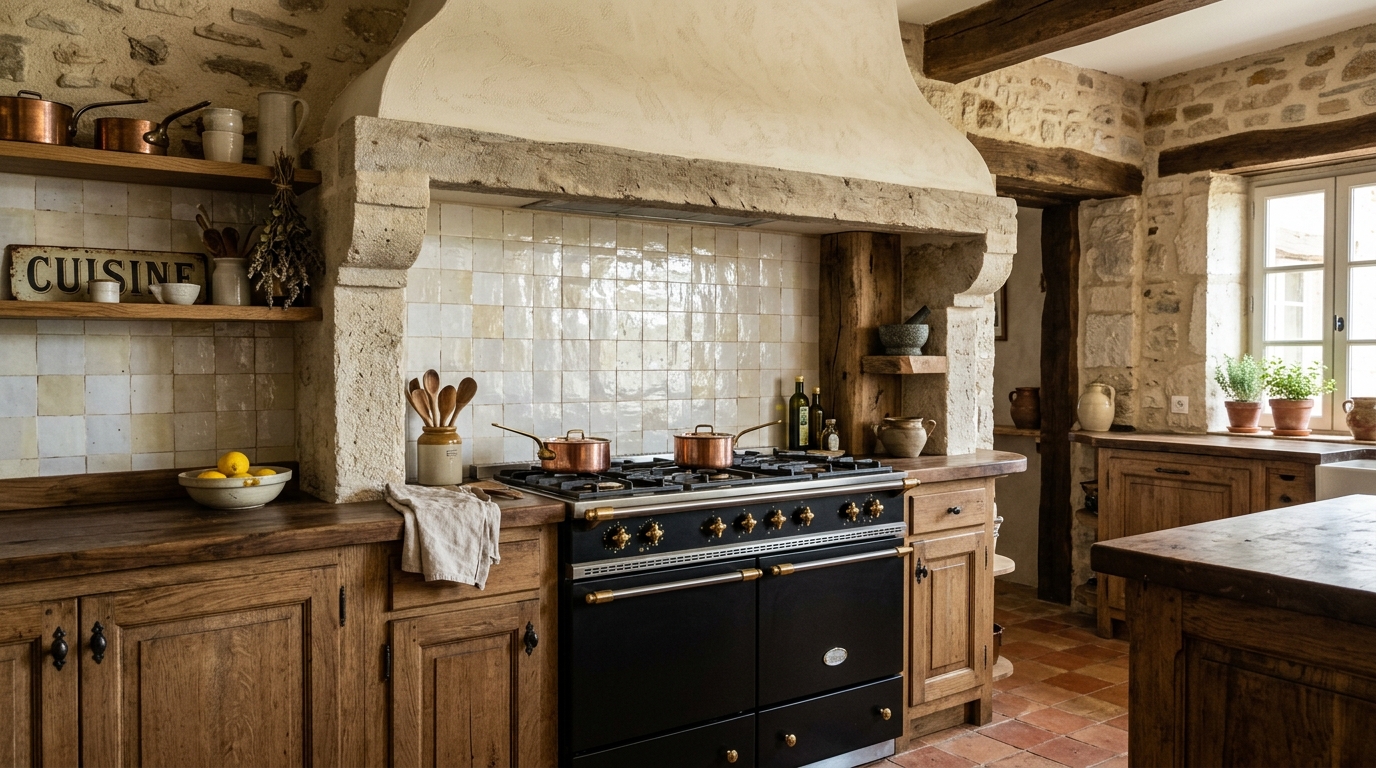
Nothing anchors a luxury French country kitchen quite like an iconic French cast-iron range cooker from heritage manufacturers like La Cornue or Lacanche. With their enamel finishes in hues of matte black, ivory, or royal navy accented by solid brass knobs and side rails, these appliances are masterworks of culinary engineering. Enclosing the range within a masonry stone or stucco hearth alcove creates an architectural focal point reminiscent of historic estate kitchens.
Line the interior alcove with hand-glazed zellige tiles or a framed medallion of antique terracotta tiles. Mount a low brass hanging rail directly behind the cooktop to keep copper saucepans and olive wood tasting spoons within arm's reach while cooking.
7. Distressed Wood Furniture with an Aged, Elegant Patina
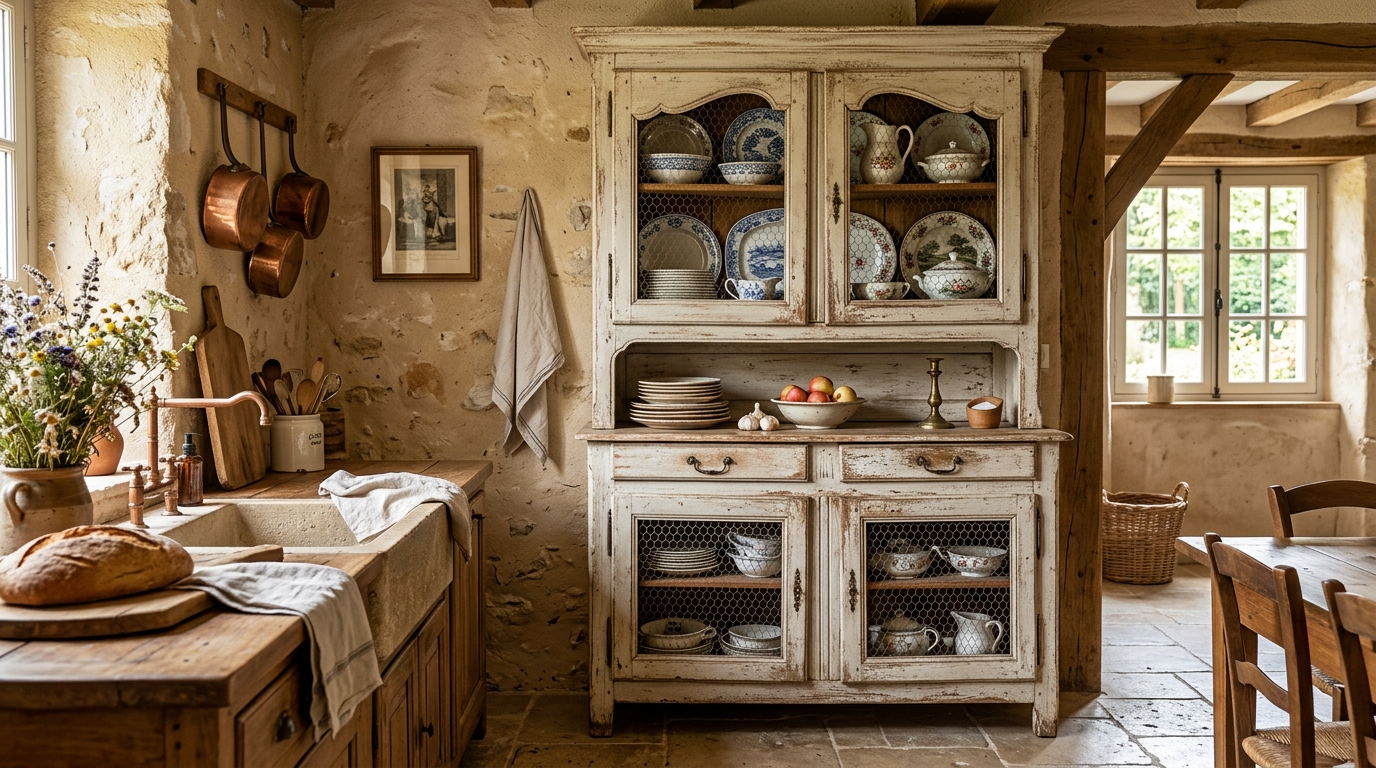
French country style cherishes the poetry of age and the beauty of wear. Instead of relying solely on uniform built-in cabinetry, incorporate freestanding antique furniture pieces such as a distressed pine cupboard, a carved armoire converted into a larder, or a wire-mesh hutch. Pieces showing layers of chipped milk paint, weathered oak grain, and authentic wormholes bring undeniable soul and collected history into the kitchen.
Look for vintage French buffets with Louis XV cabriole legs and brass escutcheon keyplates. Use the open or chicken-wire upper cabinet doors to display stacks of scalloped ceramic dinnerware, vintage soup tureens, and antique ironstone platters.
8. Copper Pots and Pans Displayed as Functional Wall Decor
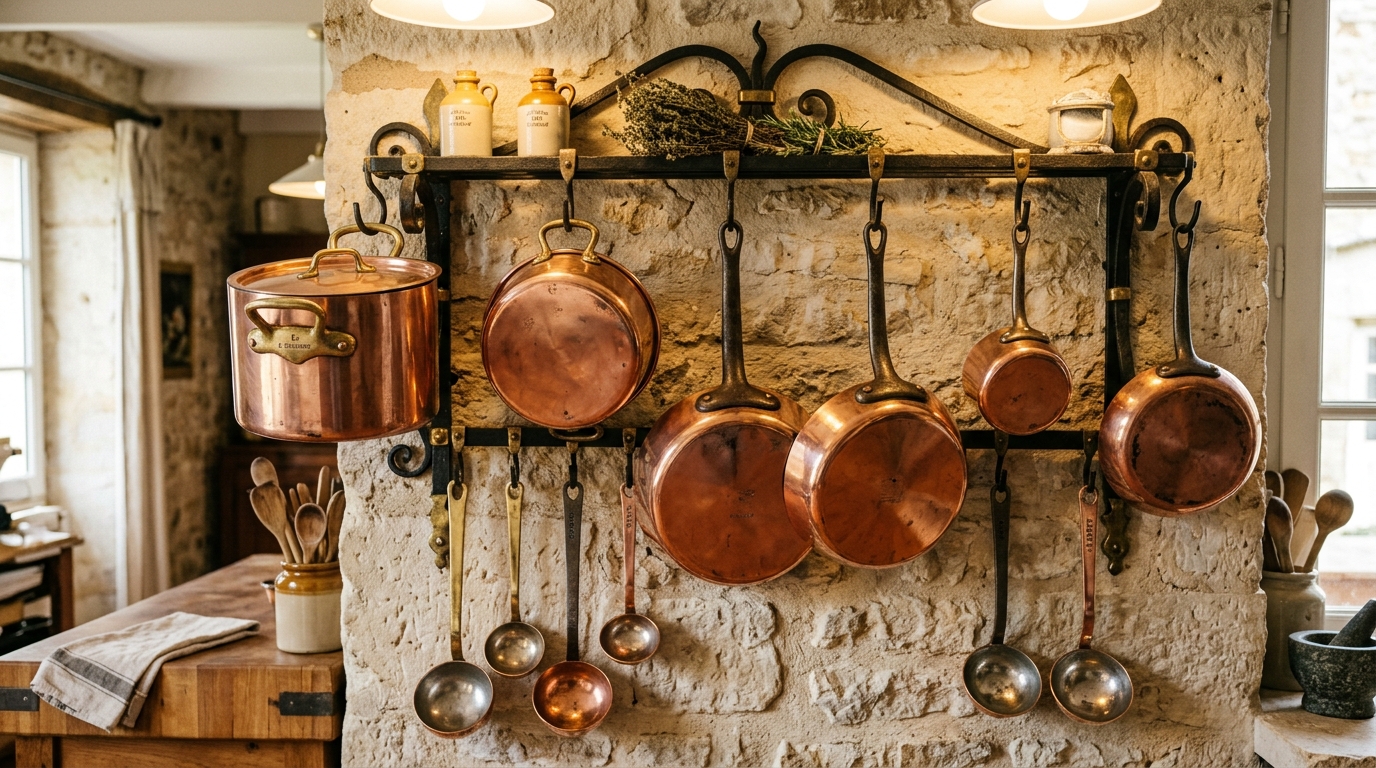
In traditional French kitchens, heavy copper cookware is celebrated as both the gold standard of culinary performance and the ultimate decorative accent. Hanging a collection of vintage Mauviel copper saucepans, sauté skillets, and brass-handled stockpots against an exposed stone or tiled wall adds radiant metallic warmth that glows under soft ambient light.
Install a heavy-duty wall-mounted brass rail or ceiling-hung wrought iron pot rack adjacent to your stove. Let some pieces develop an authentic, gentle verdigris patina over time rather than polishing them to a mirrored finish, which preserves their soulful, lived-in rustic charm.
9. A Rustic Wood Dining Table with Elegant Curved Bistro Chairs
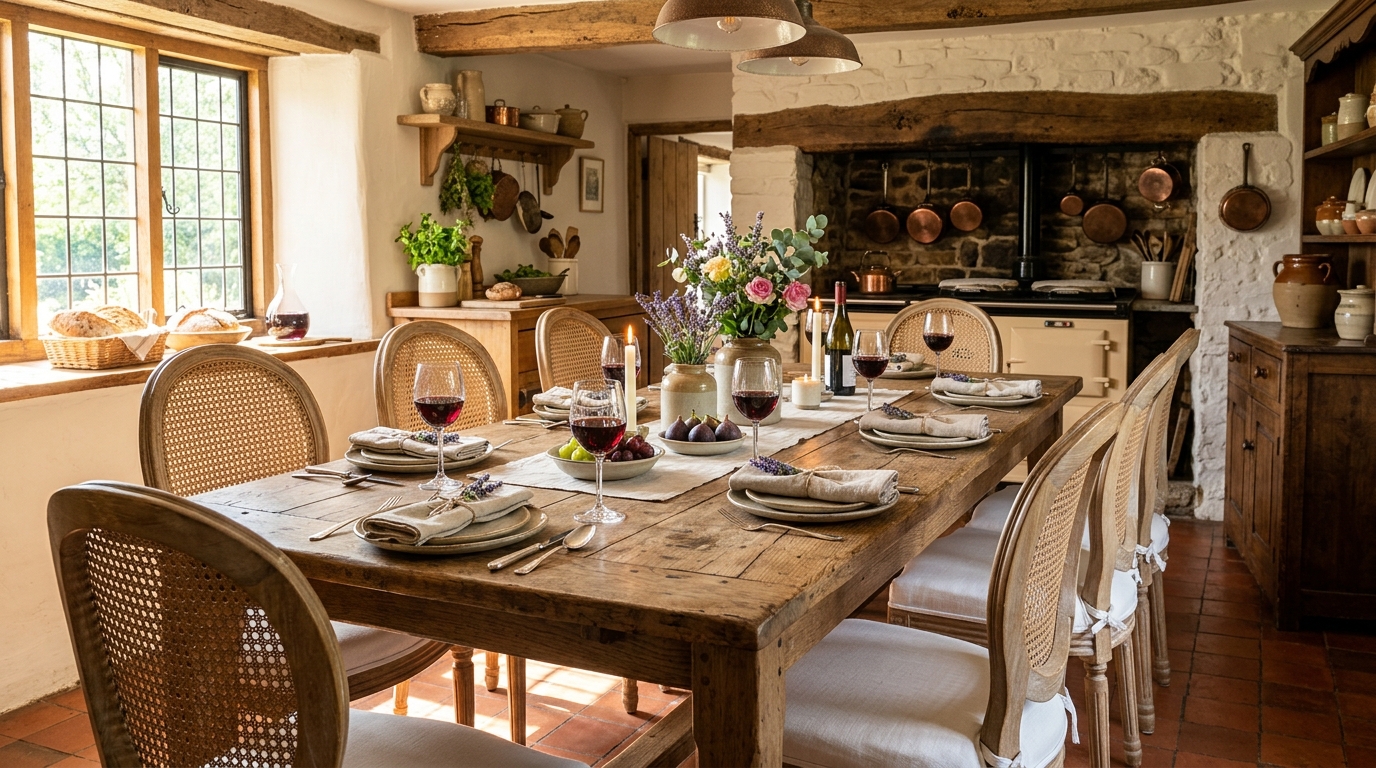
A central hallmark of French living is gathered dining right in the heart of the kitchen. Replace or complement a built-in island with an authentic farmhouse dining table made from thick, reclaimed French oak or bleached chestnut with substantial turned baluster legs. Surround the table with elegant Louis XVI round-back chairs, French cane-backed chairs, or classic bentwood bistro seats to master that coveted high-low balance.
Dress the table with a simple stonewashed linen runner, a low footed compote bowl filled with fresh seasonal figs or lemons, and beeswax taper candles set in mismatched antique brass holders for effortless everyday elegance.
10. Provincial Blue and White Pottery on Open Shelving
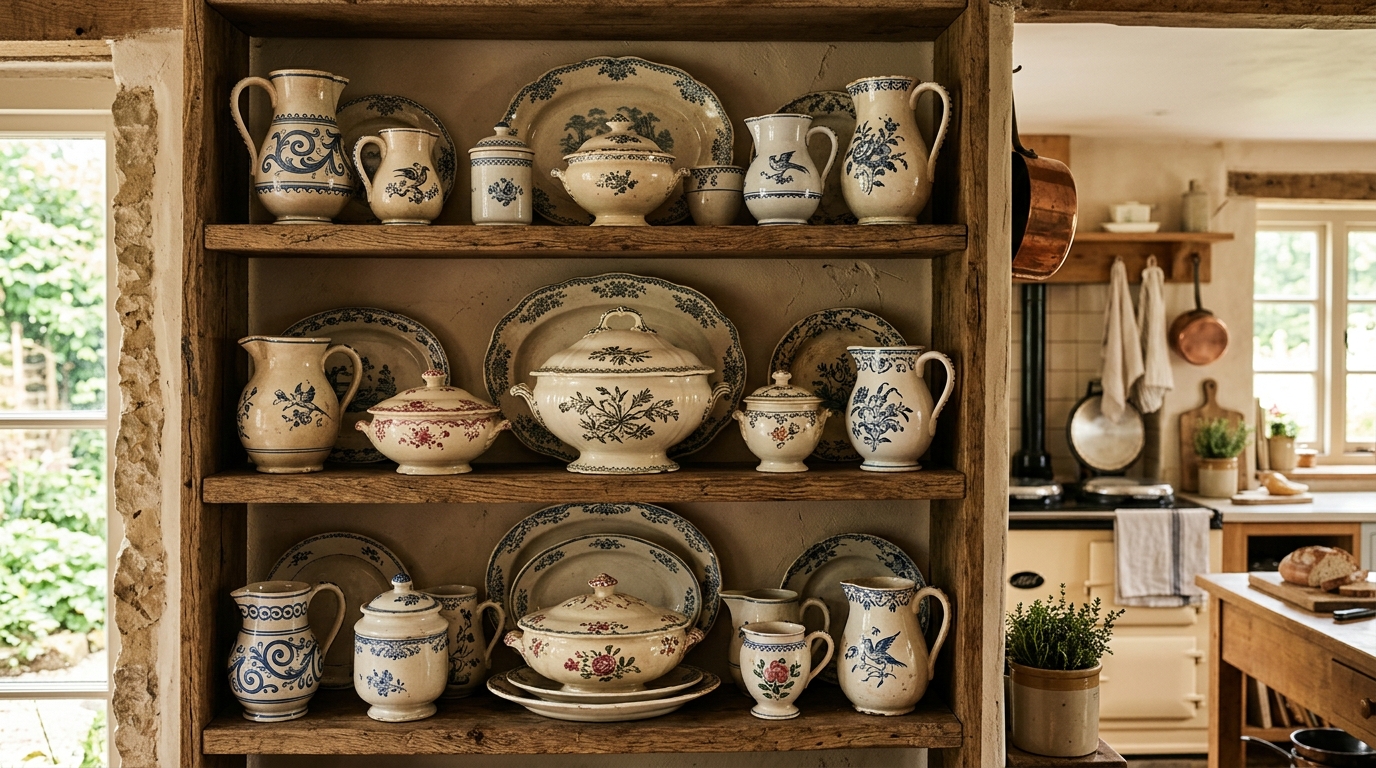
Open reclaimed timber shelving provides the perfect exhibition space for authentic French provincial faience, Quimper pottery, and antique ironstone. The vibrant cobalt blue hand-painted floral motifs and pastoral crests contrast gorgeously against rough-hewn oak and chalky limewash walls. Displaying utilitarian dishware openly reinforces the welcoming, accessible spirit of French country cooking.
Arrange pieces by balancing heights: stand large oval serving platters upright at the rear, flank them with footed soup tureens and milk jugs, and stack shallow ceramic pasta bowls in neat tiers in the foreground. Intersperse small potted rosemary topiaries for an organic touch.
11. A Flagstone or Reclaimed Brick Floor for Authentic Texture
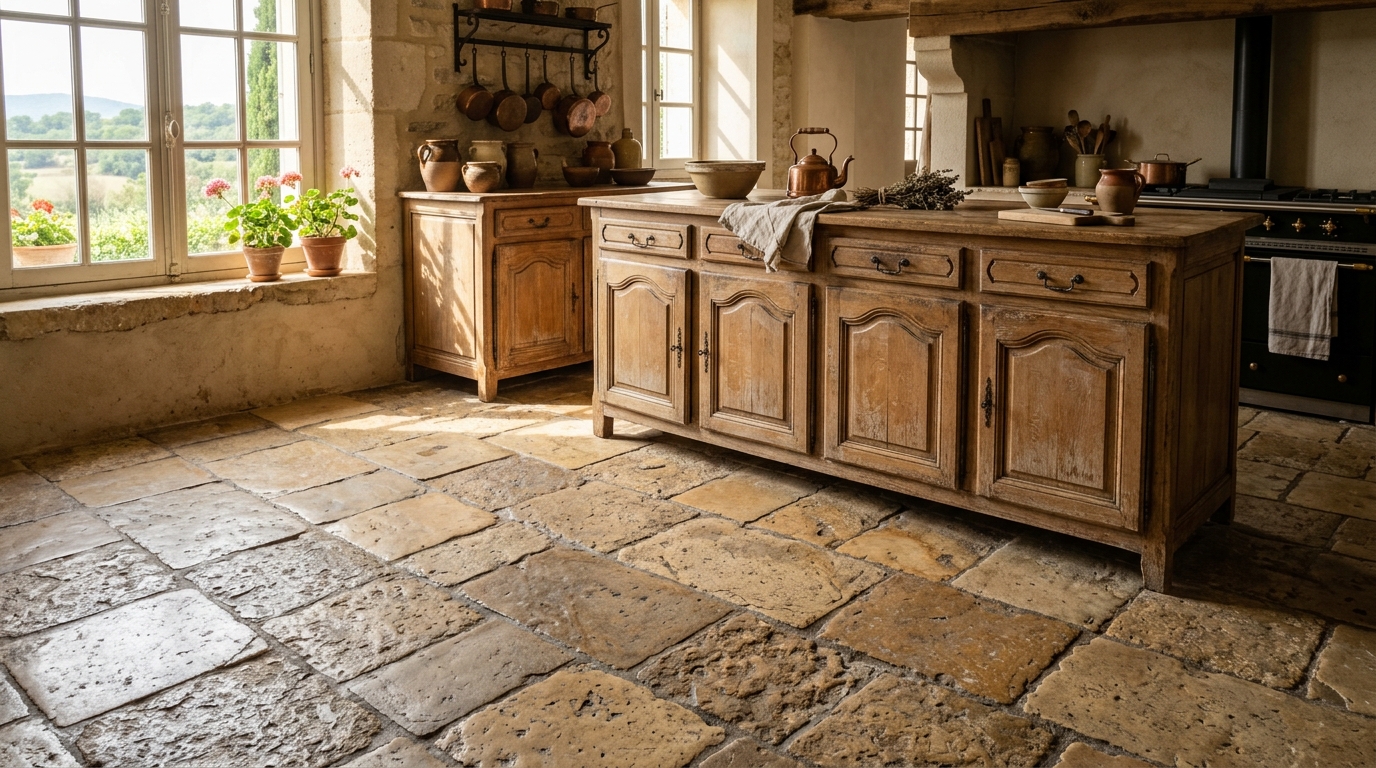
Flooring establishes the foundational authenticity of a French country kitchen. Reclaimed French limestone pavers, tumbled flagstones, or reclaimed antique clay bricks introduce raw tactile texture underfoot. These natural materials develop a rich, satiny patina after decades of use and stay naturally cool during warm Mediterranean summers.
Choose flagstones in random, irregular rectangular layouts with soft, pillowed edges and wide mortar joints in a warm sand tone. If installing in colder climates, embed radiant underfloor heating beneath the stone to ensure your morning barefoot coffee routine feels sumptuously cozy.
12. Layered Vintage Rugs in Soft Muted Patterns
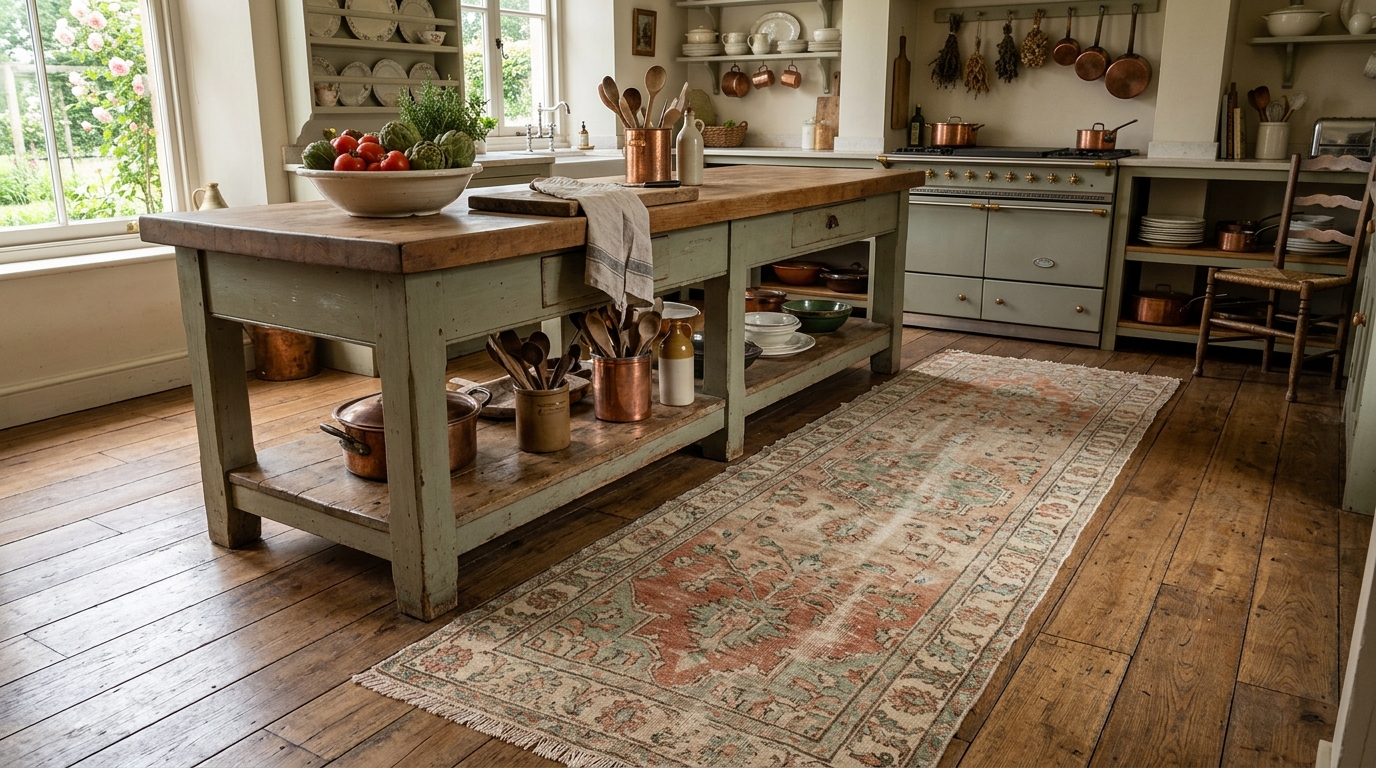
To soften the hard surfaces of stone floors and timber cabinetry, layer faded vintage rugs along high-traffic corridors like the sink run or island workstation. Antique Turkish Oushak runners or French Aubusson-inspired wool rugs featuring time-worn botanical motifs in shades of terracotta, dusty sage, and washed indigo bring gentle luxury and acoustic warmth into the room.
Opt for flatweave or low-pile antique rugs that can easily handle kitchen foot traffic. A quality non-slip rubber rug pad underneath ensures security during busy meal preparations, while the intentional wear of the textile enhances the room's layered, collected charm.
13. Ornate, Carved Wood Cabinetry Details and Corbels
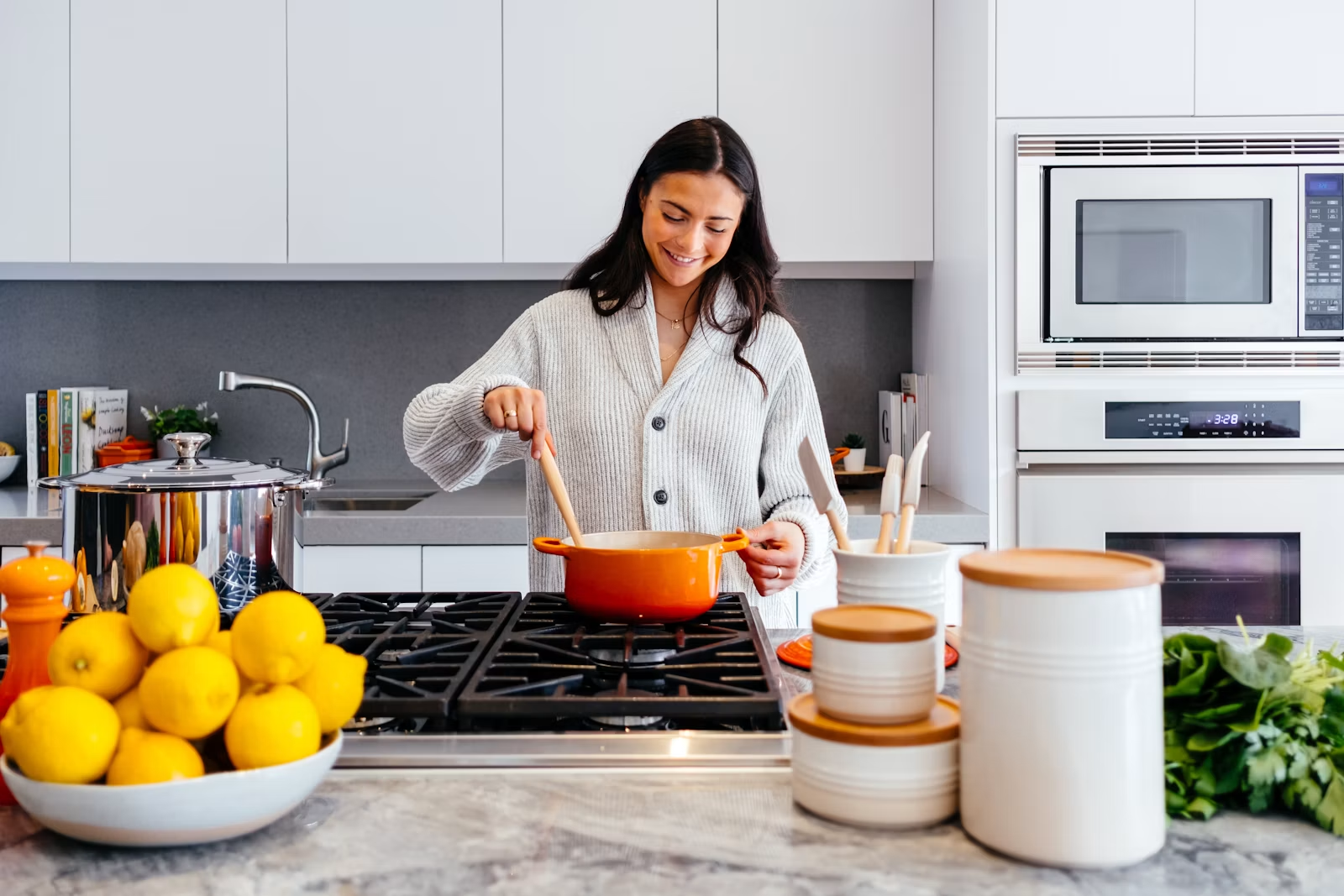
Architectural millwork is what separates casual rustic decor from refined French provincial design. Incorporating hand-carved wooden corbels under upper cabinetry, acanthus leaf moldings along the range hood canopy, and fluted corner pilasters on the kitchen island brings chateau-worthy grandeur to everyday culinary routines.
Keep the carvings subtle and organic rather than overly ornate. A soft wire-brushed finish or hand-applied antique glaze highlights the dimensional depth of the woodwork, creating delicate shadow lines that catch the golden afternoon light.
14. An Antique Crystal or Wrought Iron Chandelier Focal Point
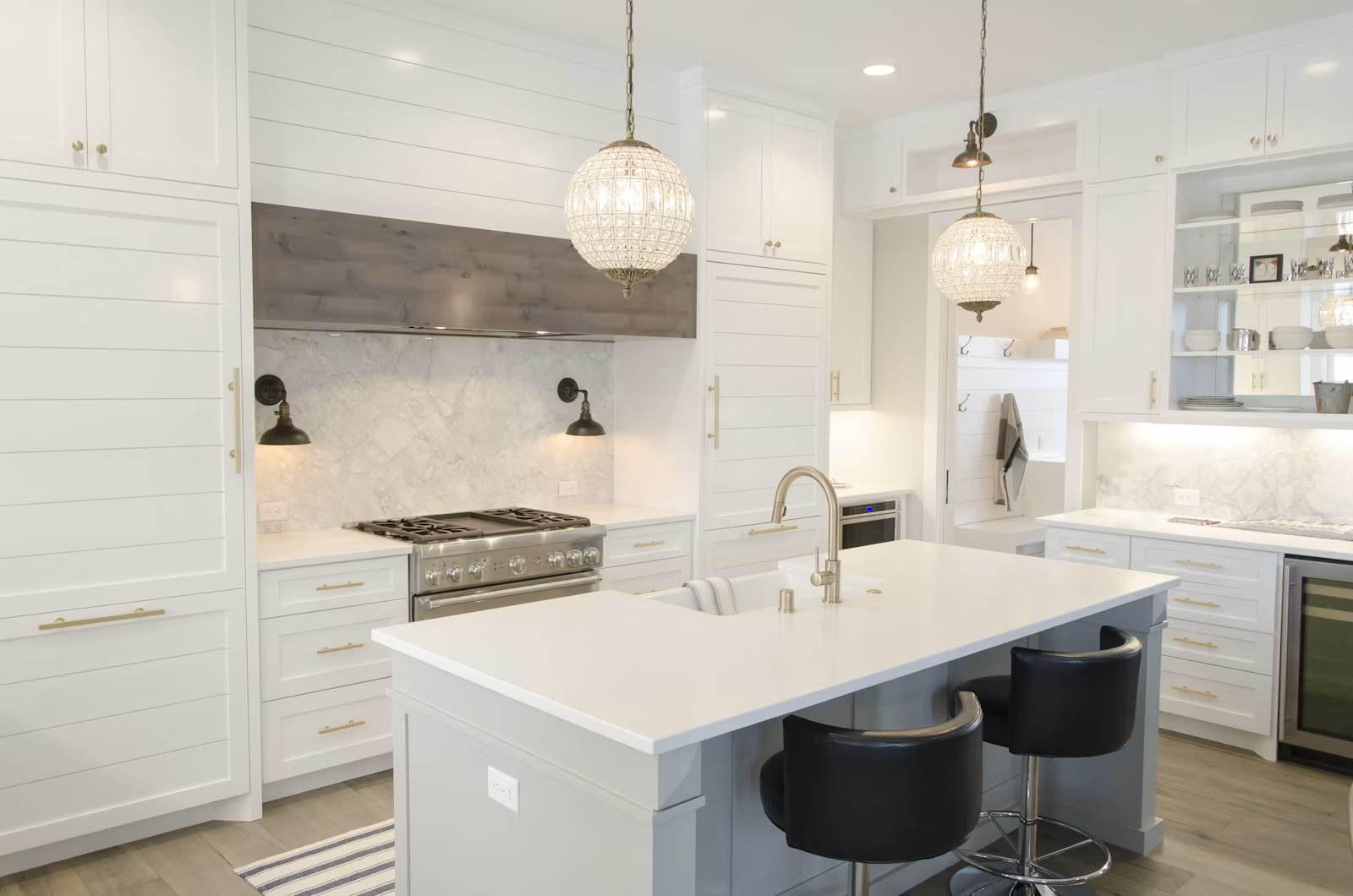
One of the boldest expressions of French country chic is the intentional juxtaposition of an opulent crystal chandelier hung directly over a rustic butcher block island or heavy farm table. The sparkle of faceted crystal drops catches natural daylight, casting dancing prisms across rough plaster walls and weathered timber beams.
If crystal feels too formal for your lifestyle, opt for a hand-carved wooden bead chandelier or a multi-arm wrought iron candelabra fixture. Equip the fixture with warm dimmable LED candelabra bulbs (2700K) to replicate the romantic, flickering ambiance of real candlelight during evening dinners.
15. Dried Lavender and Fresh Herb Bundles Suspended from Racks
Provencal kitchens are sensory havens where cooking and gardening intertwine. Suspended bundles of dried French lavender, fragrant rosemary sprigs, thyme branches, and woven braids of purple garlic hung from ceiling beams or pot racks infuse the room with therapeutic natural aromas while serving as functional cooking garnishes.
Suspend herb bundles using natural jute twine tied with simple slipknots from black S-hooks. As the herbs cure in the gentle kitchen air, their soft faded greens and violet tones add organic poetry and authentic farm-to-table spirit to your prep zones.
16. Warm Terracotta Tile Flooring
Hexagonal terracotta tiles—traditionally known in France as tomettes—are one of the most recognizable and beloved architectural features of southern French homes. Their warm, earthy palette spans shades of burnt sienna, dusty ochre, and warm clay rose, instantly infusing sunny Mediterranean warmth into the space.
Pair tomette terracotta floors with pale lime-washed walls and soft cream cabinetry to let the rich geometry of the tiles shine. Seal the tiles with a breathable matte penetrating sealer to protect against cooking splatters while allowing the clay's natural color variations to age gracefully.
17. A Vintage-Inspired French Bakery Sign (Boulangerie / Pâtisserie)
Infuse whimsical vintage character into your kitchen with an antique or reproduction French enamel trade sign. Signs celebrating traditional French artisanal trades—such as *Boulangerie* (bakery), *Pâtisserie* (pastry shop), *Épicerie* (grocer), or *Marché aux Fleurs* (flower market)—serve as charismatic conversational focal points over an open archway or coffee station.
Look for signs made from heavy enameled metal with curved convex profiles and chipped grommet holes, or hand-painted wooden planks with authentic crackle glazes. Position the sign above a bread box, pastry cloche, or coffee bar to define a cozy culinary zone.
18. Linen Window Drapery with Delicate Scalloped Trim
Window treatments in French country kitchens should feel light, effortless, and breezy. Natural unbleached Belgian linen curtains allow soft daylight to diffuse gently into the kitchen while offering privacy. Delicate details like scalloped embroidered hems, crochet lace edging, or mother-of-pearl tiebacks elevate simple fabric into a refined statement.
Hang cafe curtains at the midpoint of your kitchen casement window on slender unlacquered brass rods with matching clip rings. This allows you to gaze out at garden vistas while prepping meals, while shielding direct glare from low morning sun.
19. A Wall-Mounted Plate Rack Displaying French Ceramic Platters
A traditional French *porte-assiettes* (vertical plate rack) turns everyday dinnerware into dynamic vertical wall art. Built with slender vertical wooden spindles and grooved shelves, plate racks display your favorite porcelain chargers, scalloped salad plates, and transferware platters face-out for instant access and visual delight.
Integrate a plate rack directly into your upper cabinetry run or hang an independent antique pine unit above a small baker's table. Grouping plates by complementary palettes—such as all-cream ironstone or blue-and-white pastoral motifs—creates a cohesive, curated aesthetic.
20. Warm Antique Brass Fixtures Paired with Soft Painted Cabinetry
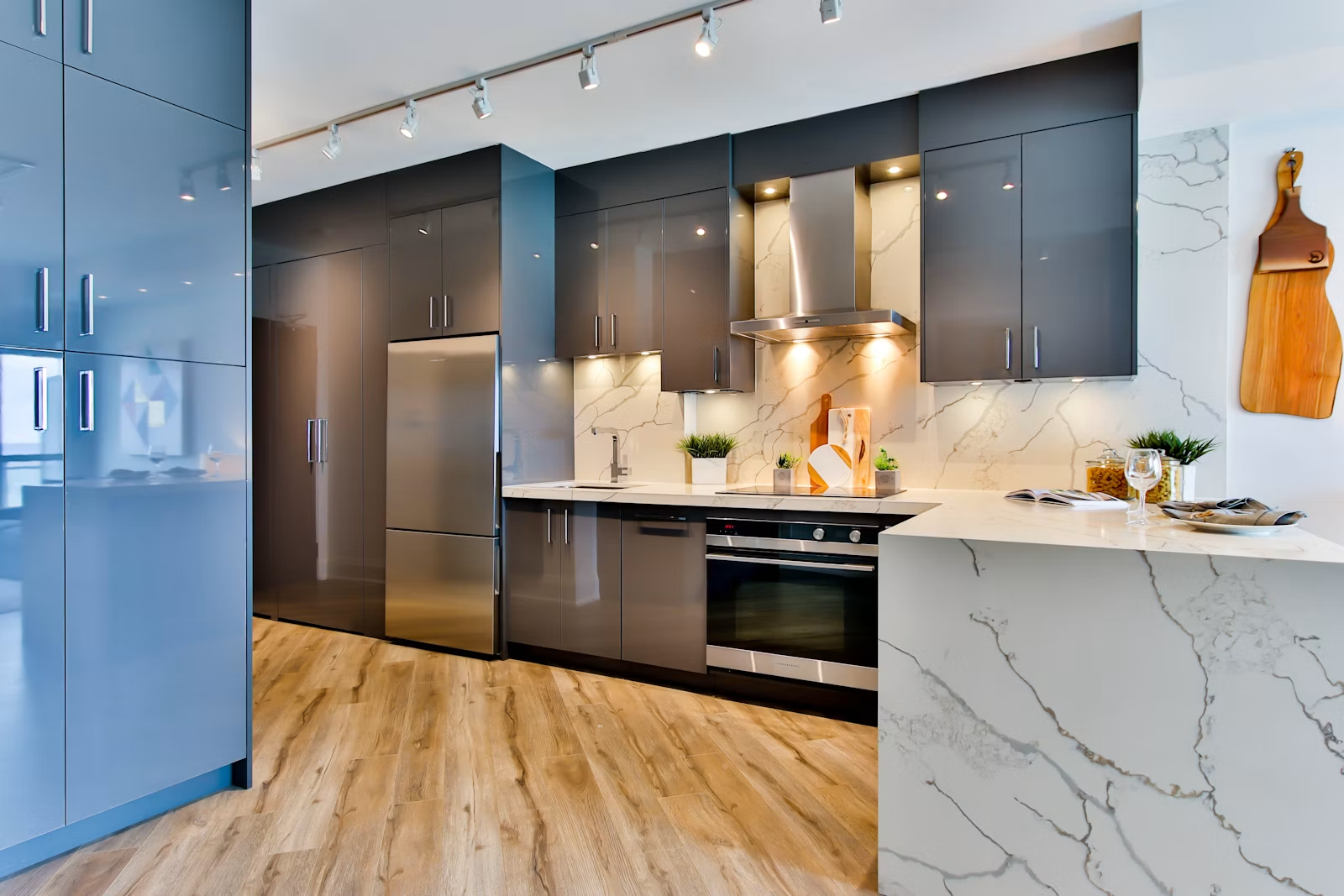
To complete your French country kitchen, turn to the living warmth of unlacquered antique brass. Unlike sterile modern chrome, raw brass reacts organically with touch, water, and air over time, developing a rich, nuanced patina that tells the story of a well-loved kitchen. When paired with soft dove gray or antique linen cabinetry, brass hardware glows with quiet, understated luxury.
Coordinate your bridge faucet with unlacquered brass cabinet bin pulls, hinged cabinet latches, and slender wall-mounted gallery rails on open spice shelves for a harmonious, designer-grade finish that will only look better with age.
Design Breakdown: Key Elements of French Country Style
| Design Element | Authentic French Provincial Choice | What It Adds to the Room |
|---|---|---|
| Cabinetry | Creamy off-white with raised panels & corbels | Timeless architectural elegance & soft shadows |
| Cookware Display | Hanging unpolished French copper pots | Radiant metallic warmth & culinary authenticity |
| Flooring | Tumbled limestone pavers or terracotta tomettes | Grounding earth tones & tactile antique texture |
| Hardware & Lighting | Hand-forged wrought iron & unlacquered brass | Artisanal craftsmanship & living patina |
| Fabrics | Toile de Jouy cafe curtains & raw Belgian linen | Narrative pastoral charm & soft diffused daylight |
Bringing French Provincial Charm Home
Creating an authentic French country kitchen is less about adhering to rigid decorating rules and more about embracing a lifestyle centered on warmth, hospitality, and timeless artisanal craftsmanship. By layering soft muted palettes, timeworn woods, textured stone surfaces, and living metals like copper and unlacquered brass, you can cultivate a kitchen that feels deeply rooted in history yet perfectly attuned to modern living.
Start by introducing just a few classic provincial touches—a rack of gleaming copper pots, a pair of linen cafe curtains, or a bowl of fresh lavender—and watch as your kitchen transforms into a comforting, elegant retreat you will cherish for years to come.