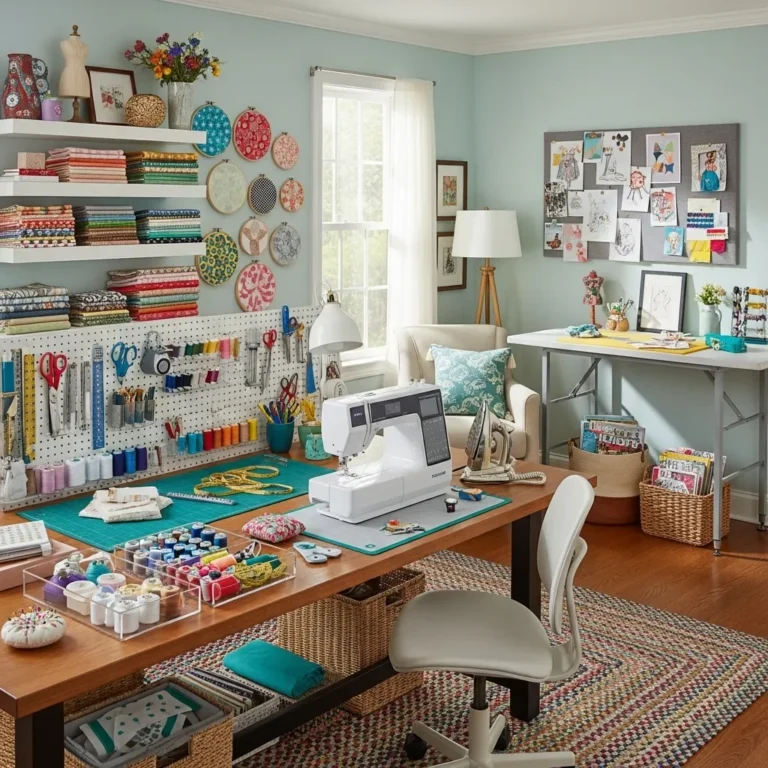
There is nothing quite as thrilling as embarking on a fresh sewing project, surrounded by bolts of colorful fabric, spools of thread, and limitless creative possibilities. However, when notions get tangled, rotary cutters go missing, and fabric piles engulf your workstation, creative joy can quickly turn into stressful friction. A thoughtfully designed, well-organized sewing room does far more than just store supplies; it establishes an intuitive physical workflow that protects your physical comfort, sharpens focus, and fuels your artistic imagination. Whether you have an entire spare room, an attic loft, or a compact creative corner in your home, implementing smart spatial layouts and dedicated storage systems makes every sewing session effortless and deeply satisfying. Explore these 10 practical sewing room ideas to organize your supplies, streamline your workflow, and boost your daily creativity.
Ergonomic Layout
1. A Dedicated Cutting Table with Ample Surface Space
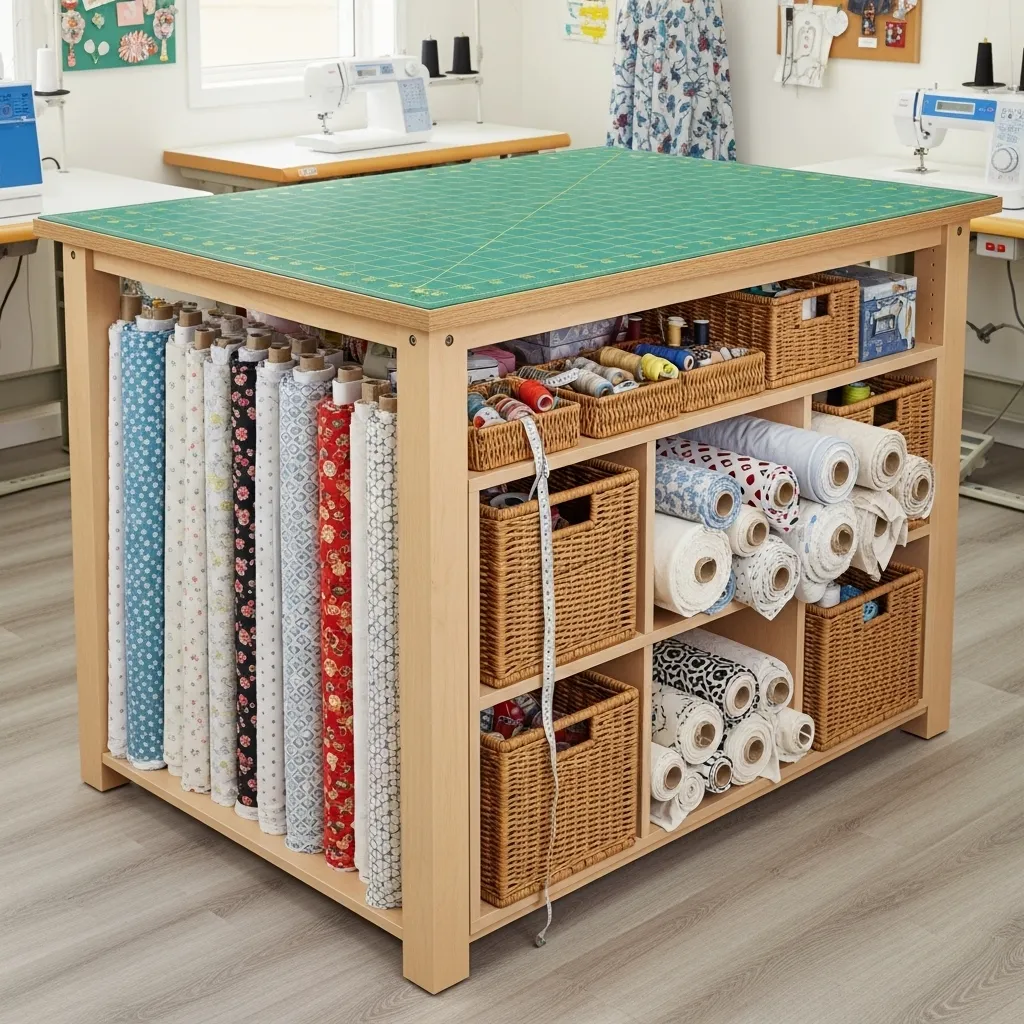
Bending over kitchen tables or crawling across hard floors to cut fabric patterns is the quickest route to physical fatigue and inaccurate cuts. A freestanding, counter-height cutting table dedicated entirely to layout, rotary cutting, and pinning transforms your entire sewing workflow. Standing-height tables (around 36 to 38 inches tall) maintain healthy spinal posture and allow full 360-degree walking access around large fabric bolts. Utilizing the open space beneath with modular storage cubes or deep rollout wire baskets keeps interfacing, cutting mats, and large acrylic rulers neatly stowed yet immediately accessible. Choose a smooth, non-snag laminate or sealed butcher-block surface equipped with a self-healing grid mat.
 Visual Precision
2. Thread and Notion Organizers with Clear, Labeled Storage
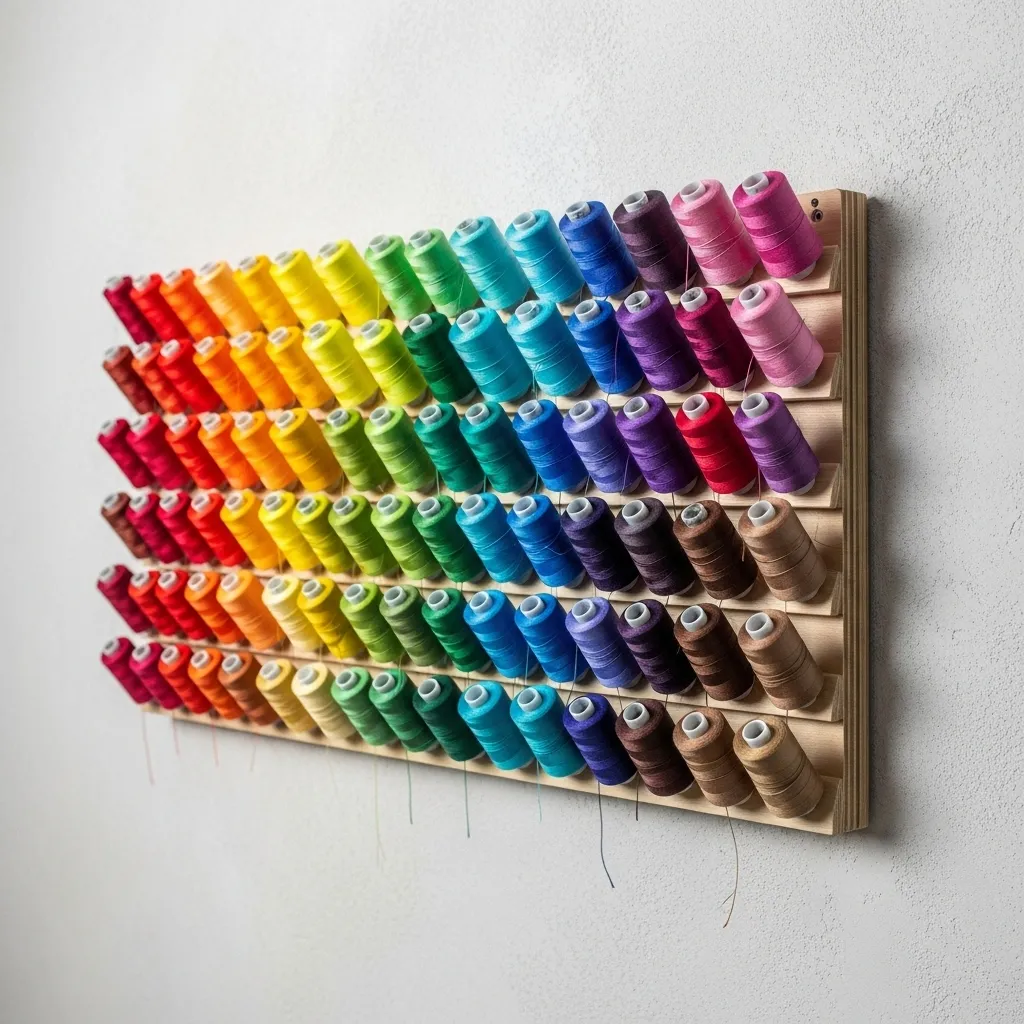
Tiny sewing notions—such as bobbins, bias tapes, zippers, safety pins, and buttons—can rapidly dissolve into disorganized drawer chaos. Mounting natural birch wood spool racks on the wall displays thread spools in an inspiring rainbow spectrum while preventing delicate threads from tangling. Pair wall racks with multi-drawer desktop organizers featuring crystal-clear acrylic drawer faces and minimalist printed labels. Storing bobbins in dedicated silicone rings right beside their matching thread spools eliminates frustration and saves valuable project setup time. When every needle size, elastic roll, and presser foot has an intuitive, transparent home, your creative momentum remains completely uninterrupted.
 Textile Organization
3. A Fabric Storage System Organized by Color or Type
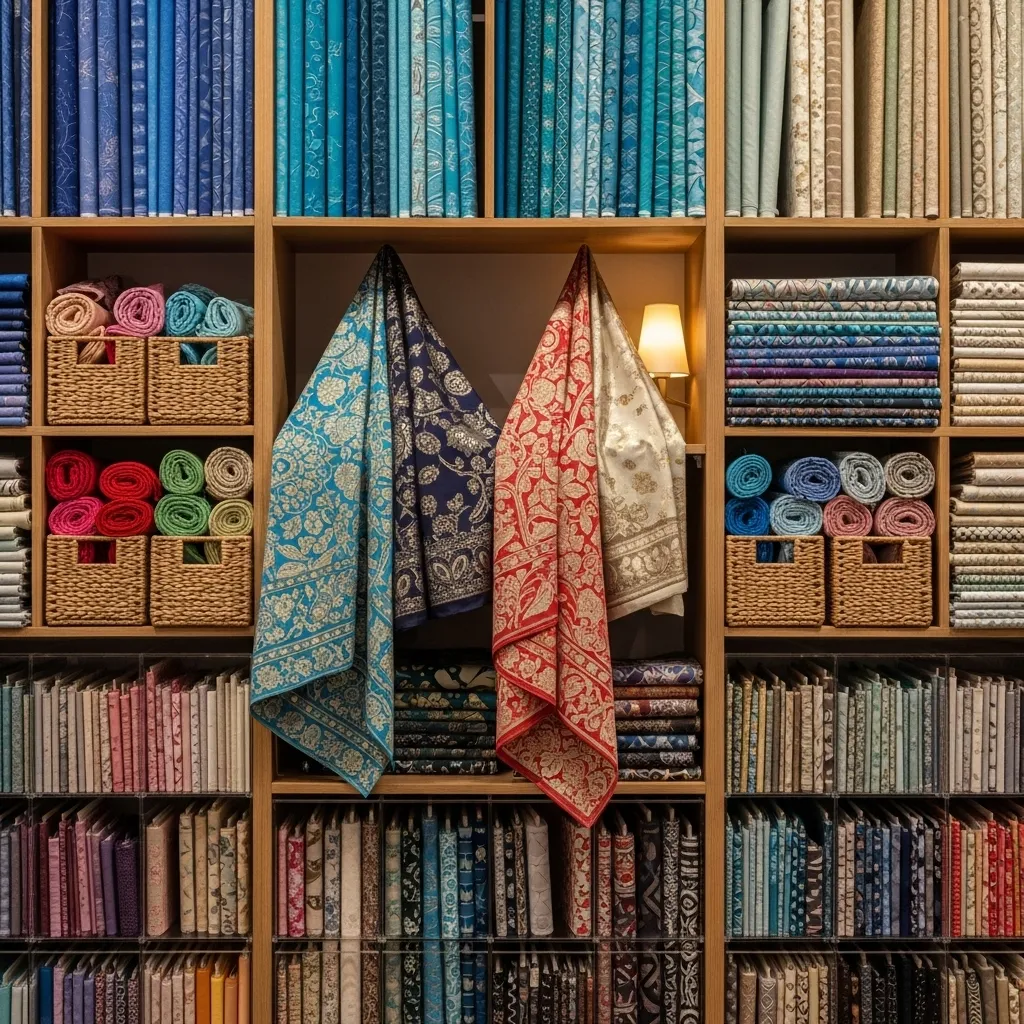
Your fabric stash is both raw material and a powerful visual muse, but folded piles stuffed in dark bins quickly become forgotten and rumpled. Folding yardage neatly around uniform mini fabric comic-book boards or acid-free cardboard sheets turns irregular cuts into tidy, upright mini-bolts that slide into open bookshelves like library books. Categorizing textiles either by fiber type (linens, denims, quilting cottons, silks) or in an inspiring chromatic rainbow makes pulling coordinating palettes an absolute joy. For delicate knits or specialty yardage that shouldn't stretch on shelves, wire pull-out closet baskets provide gentle airflow while keeping prints visible at a glance.
 Creative Moodboard
4. A Design/Inspiration Wall for Pattern and Fabric Swatches
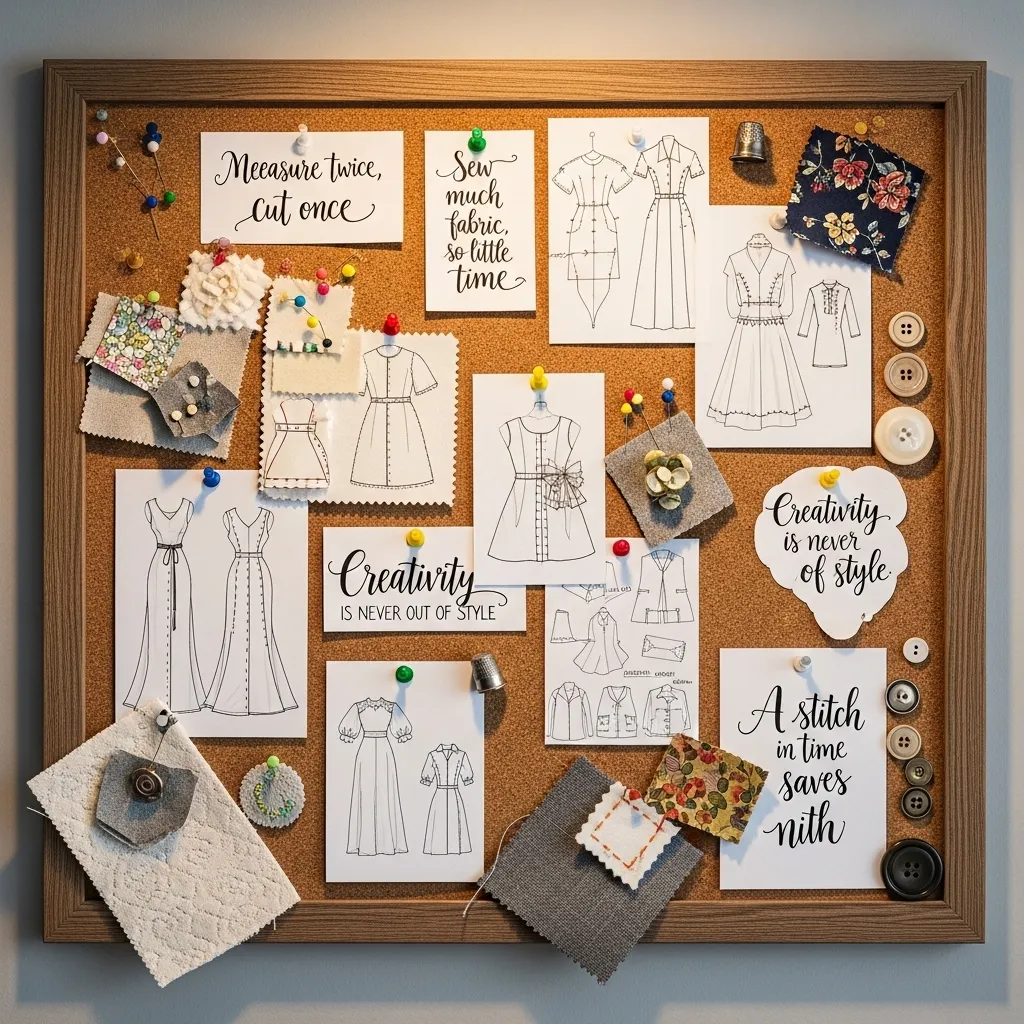
Translating a garment or quilt concept from imagination into reality requires a dynamic visual staging ground. Installing an oversized linen-wrapped cork board, a galvanized wire grid, or a felt flannel design wall allows you to pin pattern sketches, vintage magazine clippings, embroidery floss swatches, and test seam blocks at eye level. Flannel design walls are particularly magical for quilters, as raw cotton quilt blocks cling to the fuzzy surface without pins, letting you rearrange layouts effortlessly. Having an ever-evolving gallery of current projects and aspirational textures directly above your workstation sparks daily artistic inspiration.
 Precision Illumination
5. Good Task Lighting Positioned Directly Over the Sewing Machine
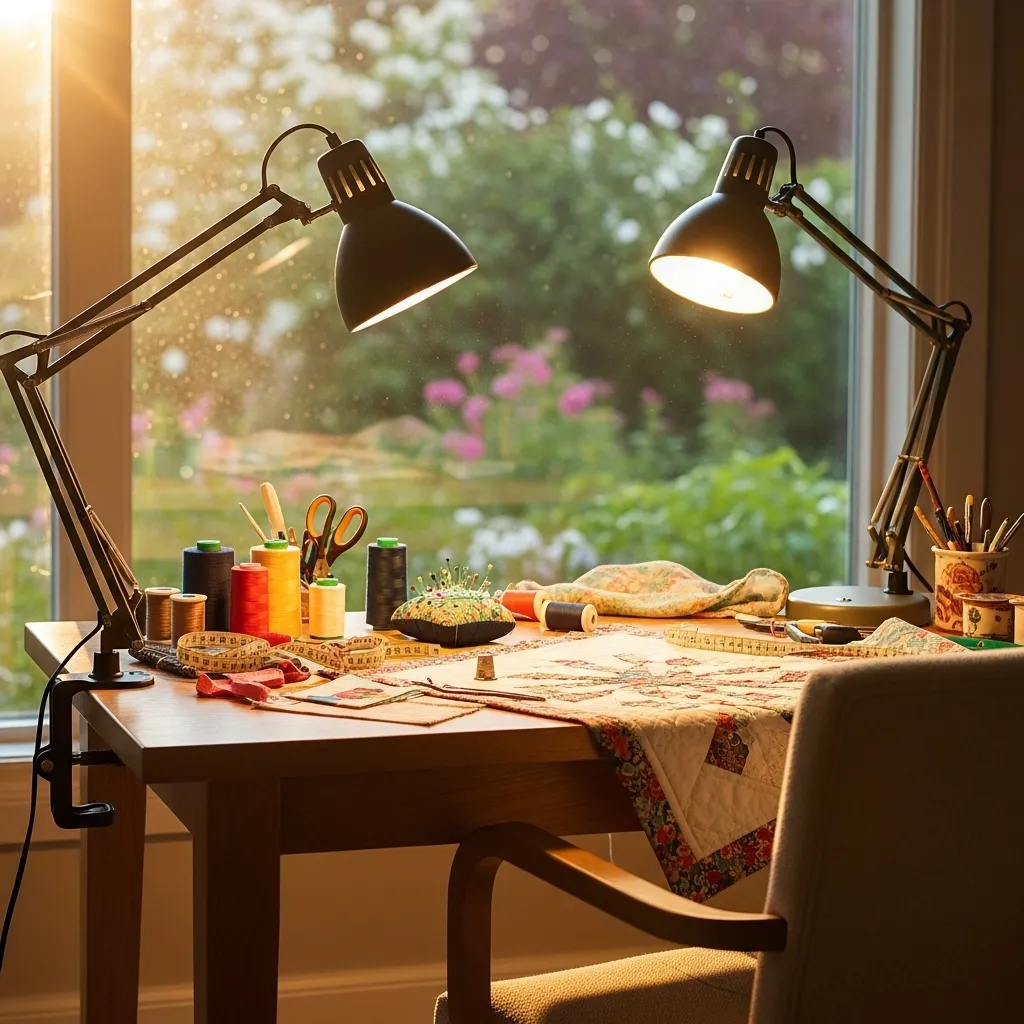
Intricate seam ripping, fine needle threading, and stitching along precise dark fabric lines demand exceptional illumination to prevent severe eye fatigue and headaches. While warm ambient ceiling fixtures create an inviting atmosphere, a dedicated flexible gooseneck LED task lamp positioned directly above your sewing machine needle plate is an absolute necessity. Choose daylight-balanced LED bulbs (around 4000K to 5000K) with a high Color Rendering Index (90+ CRI) so you evaluate true thread-to-fabric color matches accurately. Supplement your main workstation with an adhesive under-arm LED light strip mounted beneath your sewing machine throat for shadow-free stitching clarity.
 Mobile Efficiency
6. A Rolling Cart for Mobile, Flexible Supply Storage
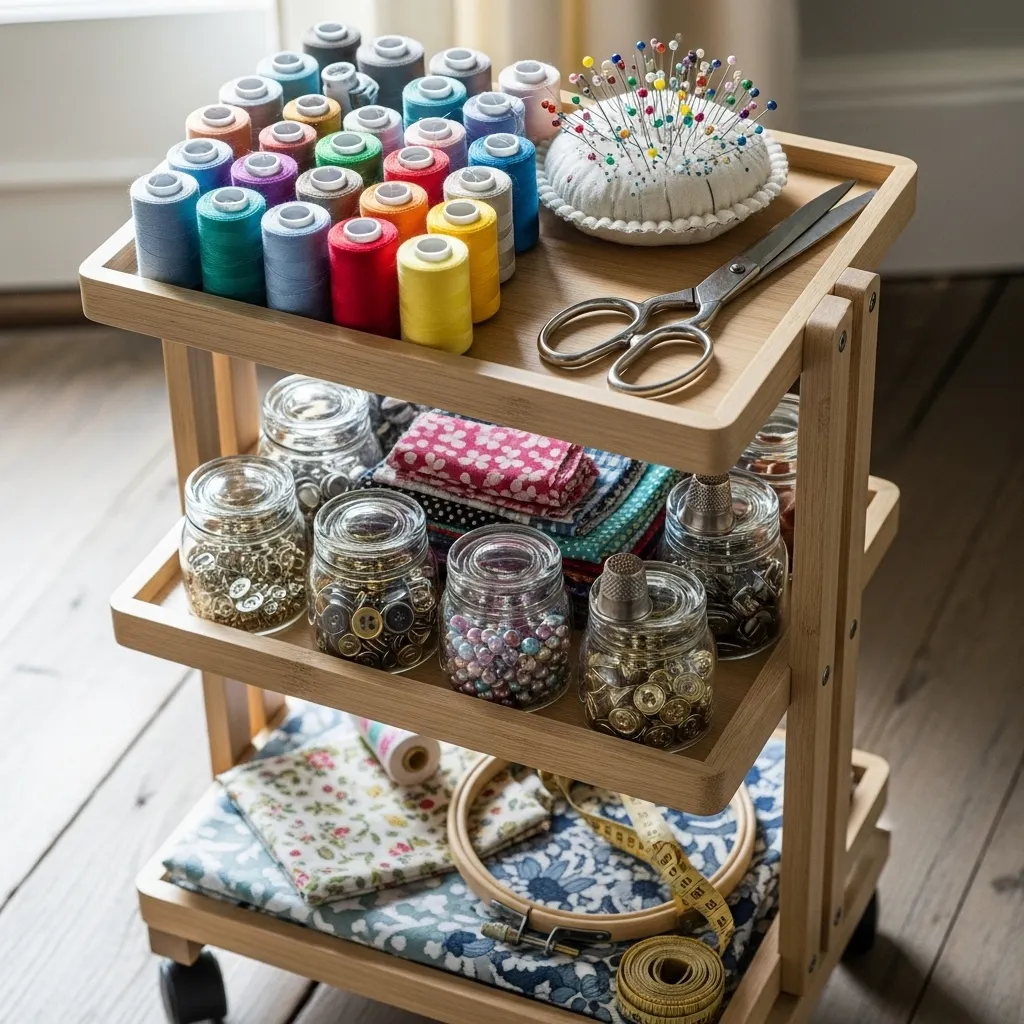
A three-tier heavy-duty steel utility cart on locking caster wheels is one of the most versatile and cost-effective additions to any creative sewing space. Stocking the top shelf with rotary cutters, seam gauges, magnetic pin dishes, and snips puts critical tools right at your elbow whether you are sitting at the sewing machine, standing at the cutting table, or pressing seams at the ironing board. Use the lower tiers for project-in-progress baskets, interfacing, and pressing hams. When your sewing session concludes or when tidying up a multi-use room, simply wheel the cart smoothly into a closet or room corner.
 Vertical Storage
7. A Pegboard Wall for Frequently Used Tools and Scissors
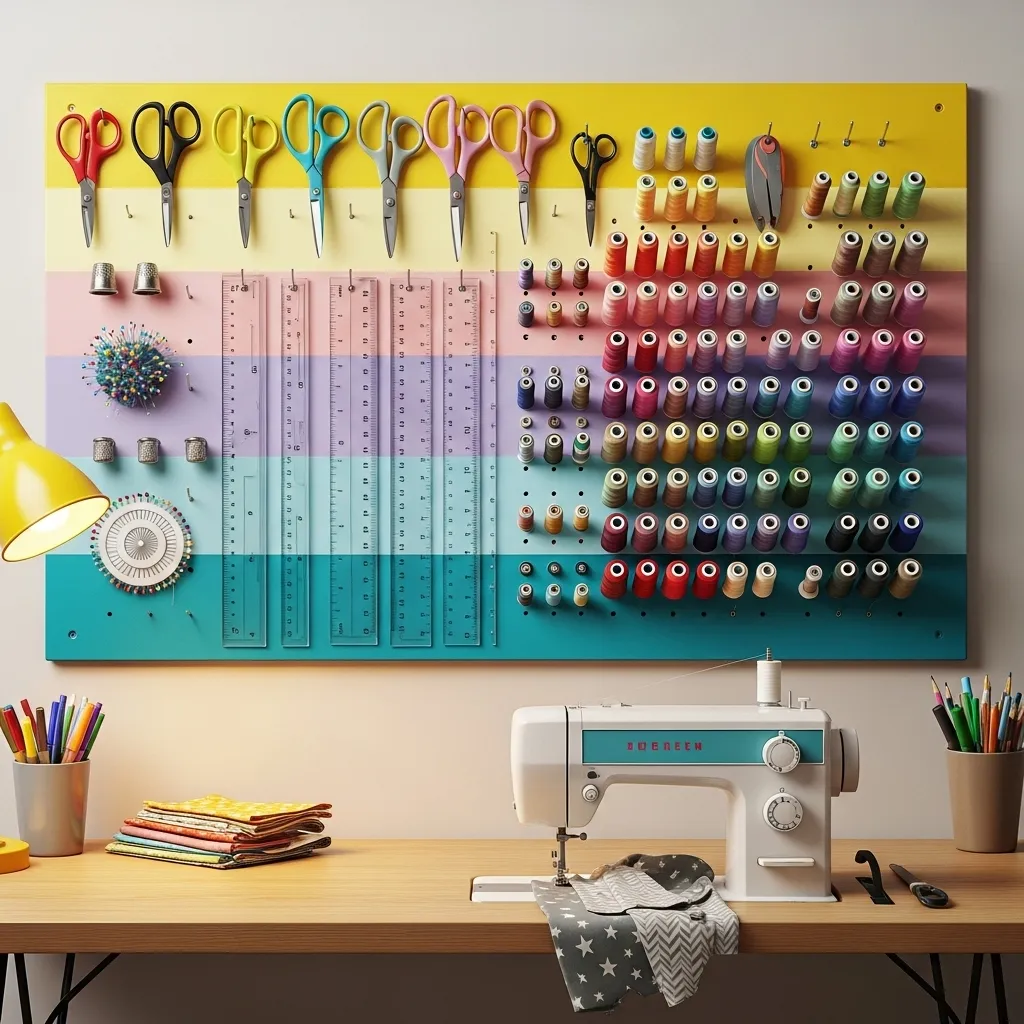
Clearing clutter off valuable desk surfaces while keeping essential tools within arm's reach is the hallmark of an efficient studio. A customized wooden or painted metal pegboard mounted directly above your main sewing desk transforms empty drywall into an organized, wall-hung workshop. Using specialized hooks, small wire baskets, and wooden dowels, you can hang dressmaking shears, pinking shears, rotary cutters, acrylic quilting rulers, and measuring tapes in plain sight. Outline each tool lightly in pencil or label pegs so every implement returns to its designated place, eliminating frantic searches mid-project.
 Ergonomic Support
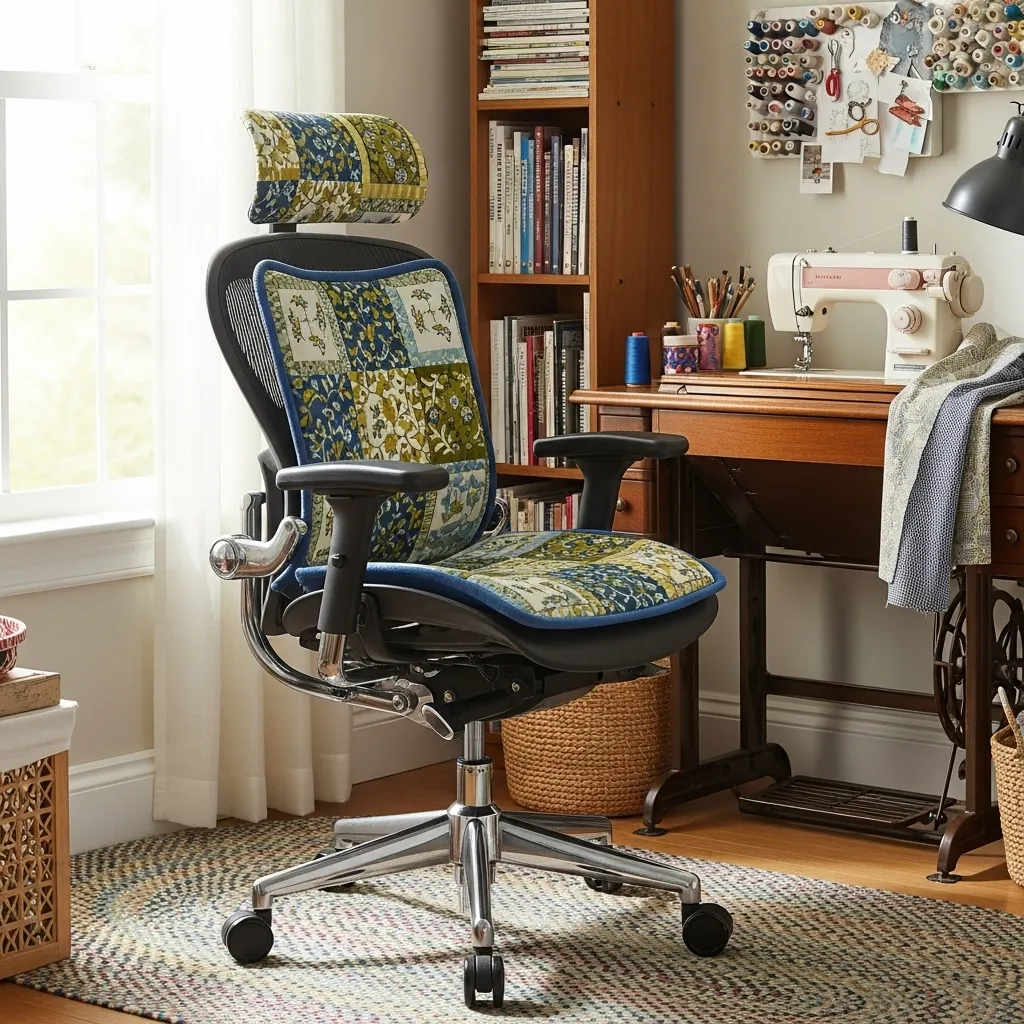
8. A Comfortable, Ergonomic Chair Suited for Long Sewing Sessions
Sewing often involves hours of repetitive sitting with a slight forward neck lean, making standard dining chairs or stiff wooden stools a recipe for chronic back pain. Investing in a high-performance ergonomic task chair with adjustable pneumatic height, active lumbar support, and breathable upholstery fundamentally changes your stamina and comfort. An armless chair—or one with flip-up armrests—is essential for sewing, allowing complete elbow freedom when handling bulky quilts or manipulating wide garment hems through the machine. Ensure the chair has smooth-rolling casters so you can effortlessly glide between your sewing machine, serger, and pressing station.
 Artisanal Sculpting
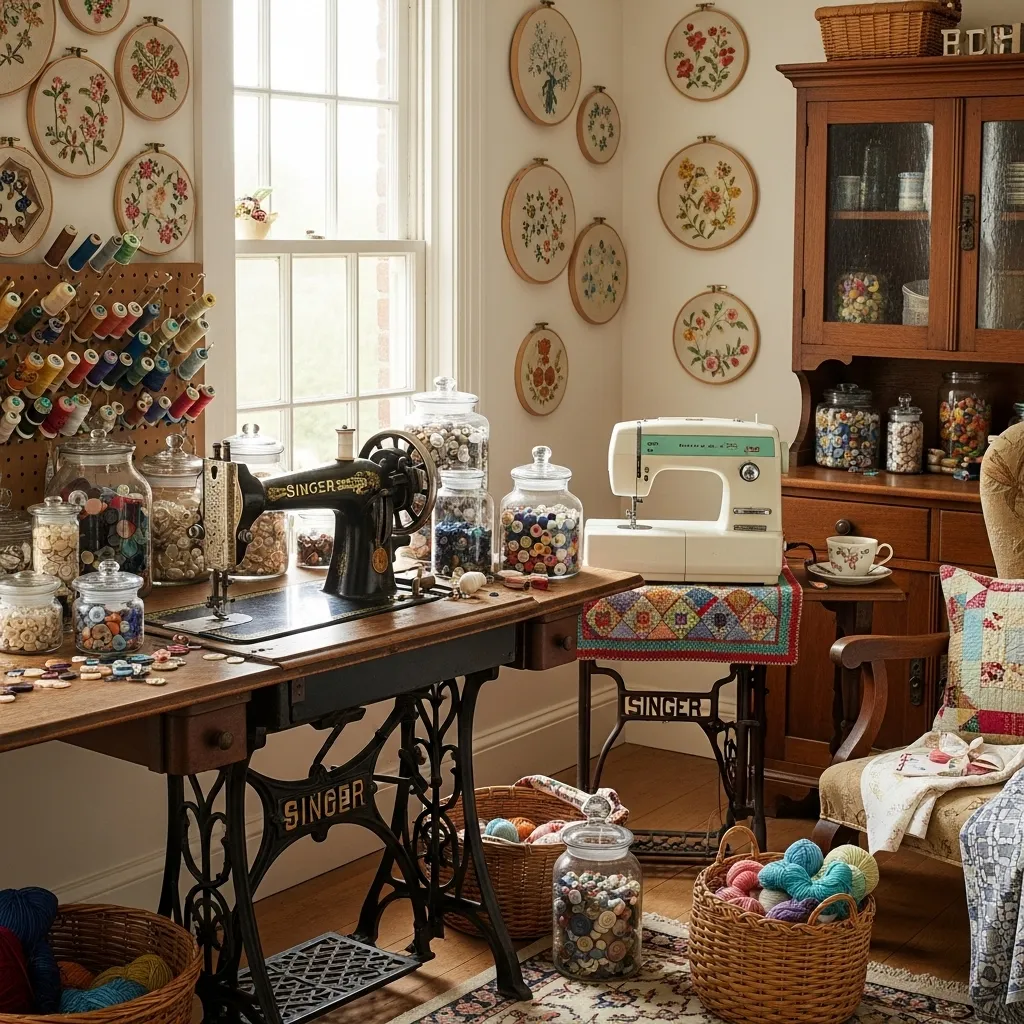
9. A Dress Form or Mannequin as Both Function and Decor
A vintage-inspired linen dress form or an adjustable dial mannequin serves as an indispensable tailoring tool while infusing artistic, haute-couture atelier romance into your sewing room decor. In addition to checking garment drape, adjusting hems, and fitting sleeves in three dimensions, a mannequin provides an elegant pedestal to display works-in-progress, finished coats, or draped fabric swatches when you aren't actively sewing. Choose a mannequin with a sturdy cast-iron or turned-wood tripod stand and pinnable linen upholstery, placing it beside a full-length mirror where it catches natural light and adds sculpted dimension.
 Creative Sanctuary
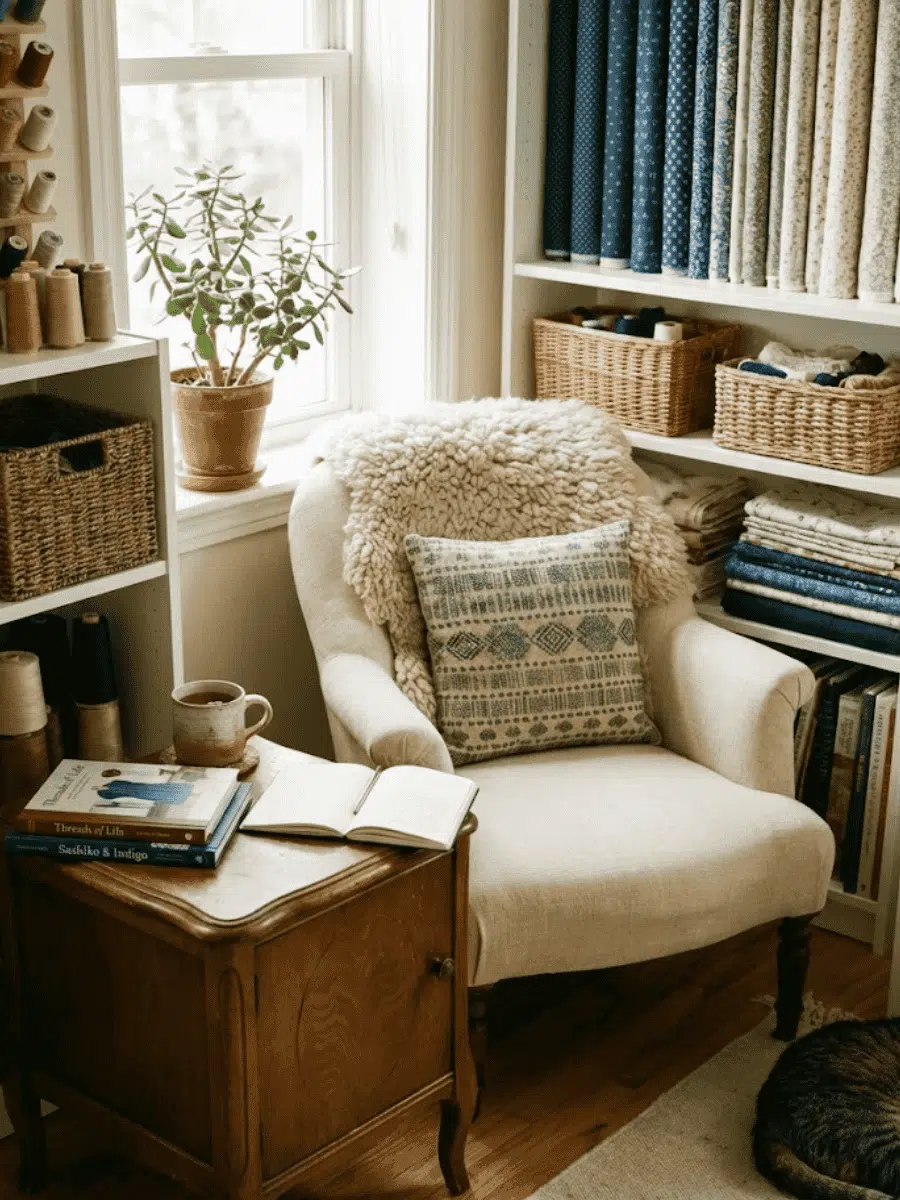
10. A Cozy Reading or Planning Nook for Pattern Research
Not every sewing hour is spent operating machinery; the ideation, pattern tracing, and hand-stitching phases require a calmer, reflective pace. Setting up an inviting reading nook in a quiet corner with a comfortable upholstered armchair, a plush footstool, and a basket of sewing magazines and pattern binders creates a relaxing retreat within your studio. This dedicated spot provides a peaceful haven to trace delicate tissue patterns, hand-sew buttonholes, or sip coffee while planning upcoming wardrobe capsule projects. Dress the armchair with a handmade quilted pillow and a soft knit throw to celebrate your creative passions.
Build Your Dream Creative Sewing Sanctuary
Creating your dream sewing studio does not require remodeling your entire home in a single weekend. The most functional, enduring craft rooms evolve organically over time as you identify the specific bottlenecks in your personal creative process. Begin with one or two high-impact upgrades—such as raising your cutting surface to save your lower back, installing a custom tool pegboard, or arranging your fabric stash into an uplifting chromatic display. As your space becomes clearer, more orderly, and intuitively organized, you will find yourself sewing with greater precision, reduced fatigue, and boundless creative inspiration. Treat your craft space with the care your artistry deserves, and enjoy every stitch you make in your organized sanctuary.