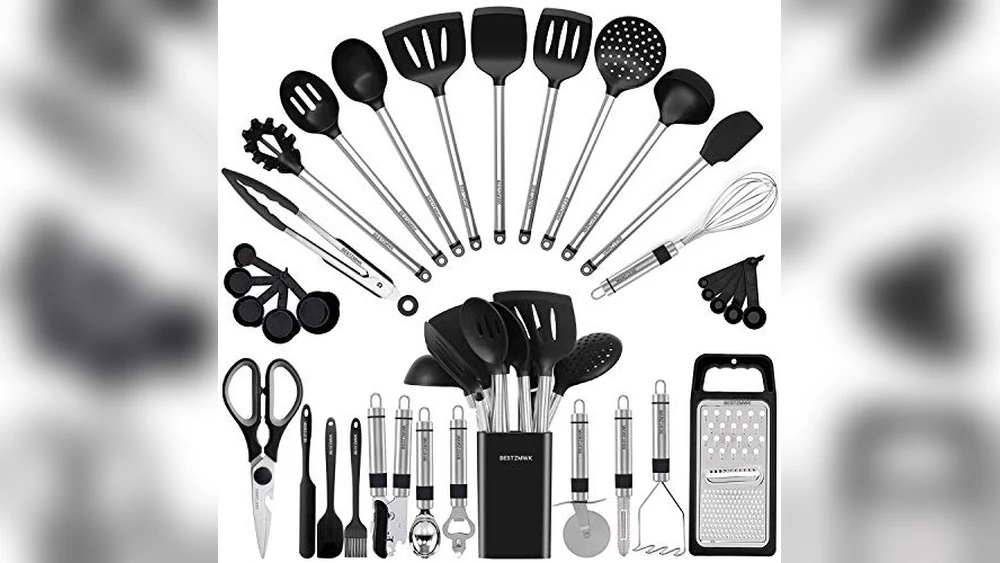
Investing in quality tri-ply or five-ply stainless steel cookware is one of the smartest upgrades any home cook can make, but pairing those pans with the wrong tools can quickly leave fine swirl scratches, dull the polished interior, or even melt inferior plastics into hot oil. While stainless steel is far tougher and more forgiving than delicate nonstick coatings, utensil choice still matters tremendously for surface longevity, effortless fond deglazing, and food safety at searing temperatures.
Whether you are deglazing browned bits after searing a ribeye, whisking a velvety pan gravy, or flipping flaky white fish, each cooking task calls for a specific material—from gentle hardwood and high-heat platinum silicone to precision-beveled brushed stainless steel. This comprehensive buying guide walks you through the 12 best kitchen utensil types for stainless steel pans so you can build a versatile, scratch-smart toolkit tailored to how you cook.
Quick Comparison: Best Utensil Types for Stainless Steel Cookware
| Utensil Type | Material | Heat Resistance | Best Cooking Task | Amazon |
|---|---|---|---|---|
| 1. Wooden Spoons & Spatulas | Hardwood (Maple/Beech/Teak) | High (No melting) | Deglazing fond & daily sautéing | Check Price → |
| 2. Silicone-Coated Tools | Food-Grade Platinum Silicone | Up to 500°F–600°F | Folding, scraping & eggs | Check Price → |
| 3. Stainless Steel Utensils | Brushed 18/8 or 18/10 Steel | Unlimited | Heavy searing & lifting roasts | Check Price → |
| 4. Nylon Spatulas | Reinforced BPA-Free Nylon | Up to 400°F | Flipping pancakes & burgers | Check Price → |
| 5. Wooden & Silicone Tongs | Steel Core + Wood/Silicone Tips | Up to 500°F | Turning steaks, chicken & veggies | Check Price → |
| 6. Bamboo Utensils | Moso Bamboo | High (No melting) | High-heat stir-frying & aromatics | Check Price → |
| 7. Silicone Whisks | Silicone-Wrapped Steel Wires | Up to 500°F | Pan sauces, gravies &oux | Check Price → |
| 8. Slotted Fish Spatula | Spring-Tempered Stainless Steel | Unlimited | Delicate fish fillets & crispy skin | Check Price → |
1. Wooden Spoons and Spatulas for Gentle, Scratch-Free Stirring
Hardwood spoons and flat-edged wooden turners are the undisputed gold standard for everyday cooking in stainless steel skillets and sauté pans. Because tight-grained hardwoods like hard maple, beechwood, olivewood, and teak are naturally softer than 18/10 stainless steel, they glide across the interior without leaving a single hairline scratch, even when you apply firm downward pressure. That rigidity makes a flat-edged wooden spatula the ultimate tool for scraping up caramelized fond—those flavorful browned proteins stuck to the bottom of a hot stainless pan—when you pour in wine or stock to deglaze. Unlike plastic, wood will never melt or warp if rested briefly against a piping-hot pan rim. When shopping, look for one-piece carved construction made from kiln-dried hardwood with a smooth, sanded edge and a food-grade mineral oil finish rather than glossy synthetic varnish.
2. Silicone-Coated Tools for Heat Resistance and Surface Protection
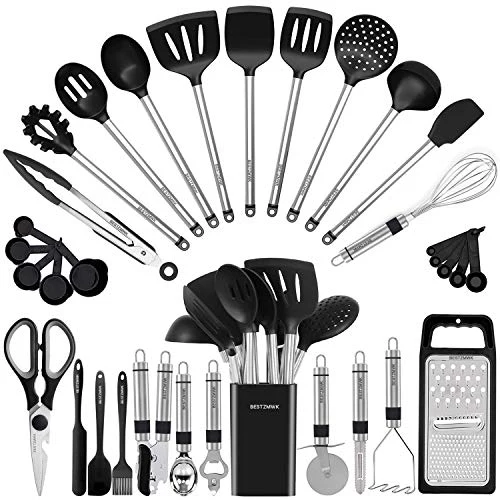
High-grade silicone spatulas, spoonulas, and turners offer unmatched flexibility that rigid wood and metal simply cannot replicate. When you are folding scrambled eggs, scraping every last drop of béchamel from the curved sidewall of a stainless steel saucier, or stirring sticky caramel reductions, a tapered silicone edge conforms seamlessly to the pan's radius. For stainless steel cooking—which frequently involves preheating pans over medium-high heat—ordinary low-temp rubber spatulas will blister or discolor. Always choose 100% FDA-compliant, platinum-cured silicone rated to at least 500°F to 600°F built around a rigid internal stainless steel or fiberglass core. Seamless one-piece silicone designs are especially practical because they eliminate the handle joint where cooking juices and dishwasher water can get trapped, giving you hygienic, whisper-quiet performance against steel cookware.
3. Stainless Steel Utensils for a Cohesive, Durable Match
One of the biggest perks of cooking on uncladded or tri-ply stainless steel instead of fragile Teflon is that you can safely use quality stainless steel utensils whenever heavy-duty leverage is required. Solid stainless steel serving spoons, slotted skimmers, and heavy turners share the exact same metallic elegance as your cookware and can withstand searing temperatures, open flames, and commercial dishwashers for decades. While metal-on-metal contact can produce minor cosmetic patina lines over years of vigorous stirring, those superficial marks have zero impact on cooking performance or food safety. To minimize even faint scuffing, select stainless steel tools with smoothly tumbled, rounded edges rather than stamped, sharp corners, and opt for ergonomic hollow or contoured handles that stay cool in your hand during extended stovetop sessions.
4. Nylon Spatulas for a Firm but Non-Scratching Option
When you want a thin, beveled flipping edge that slides effortlessly underneath smash burgers, hash browns, or delicate crêpes without the clink of metal against metal, reinforced nylon spatulas strike an ideal middle ground. Nylon is stiffer and thinner at the leading blade than thick molded silicone, allowing it to wedge cleanly beneath food that has lightly bonded to a stainless steel frying pan before releasing. At the same time, nylon is soft enough to keep mirror-polished stainless interiors looking brand new. The key buying rule with nylon is temperature discipline: look for glass-fiber-reinforced, BPA-free nylon rated to at least 400°F–450°F, and avoid leaving the spatula resting inside an empty preheating skillet. Choose matte black or dark slate heads with a slight flex at the tip for effortless wrist control.
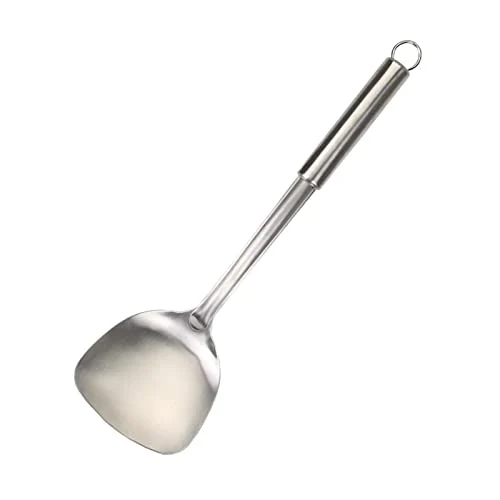
5. Wooden or Silicone-Tipped Tongs for Safely Flipping Without Scratching
A pair of spring-loaded locking tongs functions like a heatproof extension of your fingers when searing thick pork chops, rotating bone-in chicken thighs, or tossing blistered green beans in a stainless steel skillet. While bare metal scalloped tongs can scrape across the bottom of a pan when grabbing thin cutlets or asparagus spears, tongs outfitted with scalloped silicone or hardwood walnut tips grip wet, oiled ingredients securely without marring the metal surface beneath. Look for heavy-gauge 18/8 stainless steel arms—at least 1.0 millimeter thick so they never twist under the weight of a two-pound steak—paired with removable or seamlessly over-molded silicone paddles rated to 500°F and a smooth pull-ring locking mechanism for compact drawer storage.
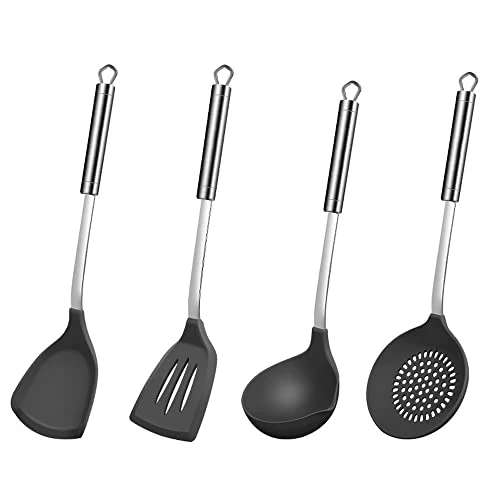
6. Bamboo Utensils as an Eco-Friendly, Gentle Alternative
Technically a fast-growing woody grass rather than a traditional timber tree, Moso bamboo produces remarkably dense, lightweight kitchen utensils that excel on stainless steel cookware. Because bamboo absorbs significantly less moisture than porous softwoods, it resists swelling, cracking, and staining even when used daily to simmer tomato sauces, curries, or braised greens in stainless steel Dutch ovens. Its natural tensile strength allows manufacturers to craft slimmer, sharper-edged turners and slotted spoons that feel nimble in the hand while remaining 100 percent scratch-free on polished steel. When choosing bamboo utensils, inspect the grain for smooth, splinter-free finishing, avoid laminated pieces glued with formaldehyde resins, and refresh the surface once a month with a light wipe of food-grade mineral or coconut oil.
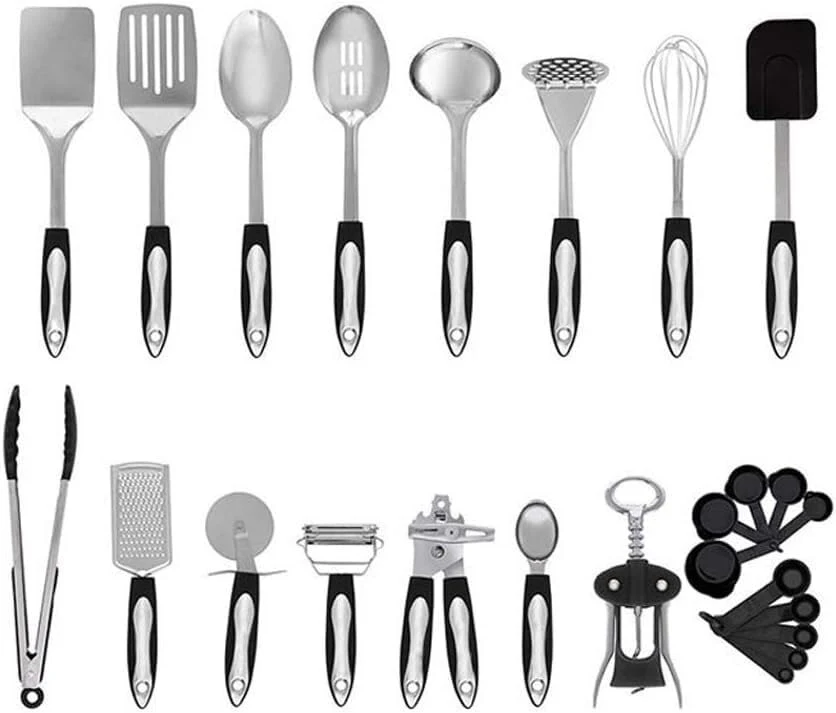
7. Silicone Whisks for Stainless Steel Sauce and Gravy Pans
Stainless steel saucepans and flared sauciers are prized by chefs for building butter emulsions, lemon pan sauces, pastry creams, and Thanksgiving gravies—tasks that require rapid, continuous whisking into the bottom corners of the pan. Vigorous whisking with bare stainless steel wires can sometimes leave gray metallic streaks in pale cream or hollandaise sauces due to microscopic abrasion against the pan walls. A silicone-coated balloon or flat roux whisk eliminates both metallic discoloration and harsh scraping noise while still aerating and emulsifying sauces quickly. Look for a whisk whose individual steel wires are encased in thin, firm heat-resistant silicone (up to 500°F) with a sealed, watertight handle ferrule so dishwater never seeps inside the grip.
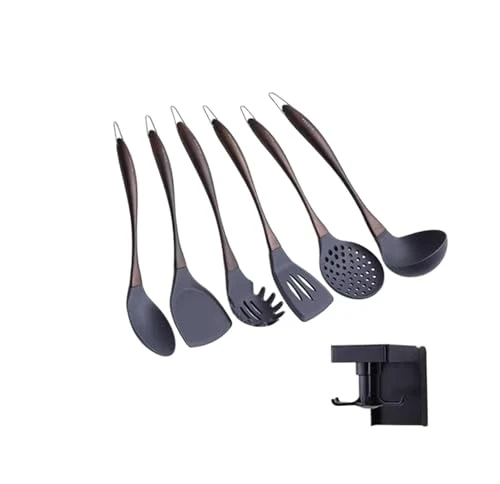
8. A Stainless Steel Fish Spatula for Delicate, Precise Flipping
Ask any professional line cook which single utensil they reach for most with a stainless steel skillet, and the answer is almost always a slotted stainless steel fish spatula. Engineered with a thin, spring-tempered, slightly angled blade and elongated drainage slots, a fish spatula flexes just enough to follow the flat bottom of a stainless steel pan and slide cleanly beneath crispy-skinned salmon, halibut, fried eggs, or roasted potatoes without tearing the crust. Because the leading edge is paper-thin, it separates food from the steel surface intact while letting excess cooking fat drain away through the slots. Look for a full-tang riveted handle and a finely honed—but rounded—front bevel that glides smoothly across the pan floor without gouging.
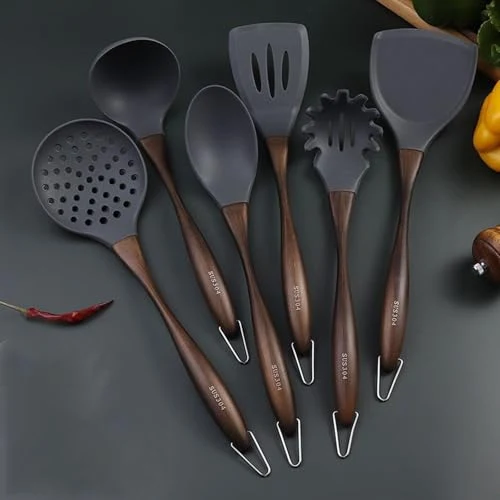
9. Wooden or Silicone Spurtles for Even Stirring in Sauces
Originating in seventeenth-century Scotland for stirring oatmeal without lumps, the paddle-shaped spurtle has become a modern kitchen essential for stainless steel cookware. With its elongated, slightly curved blade and rounded tip, a wooden or silicone-edged spurtle reaches deep into the bottom transition angle where a stainless steel pan's flat floor meets its vertical wall—the exact hot spot where risotto, polenta, or marinara tends to scorch. Unlike a wide bowl spoon that drags liquid around, a spurtle folds and agitates thick mixtures evenly with minimal wrist fatigue. Choose either a contoured pakkawood/acacia spurtle for stiff scraping power or a dual-density silicone spurtle when you want wiper-blade clean sides inside your saucepan.
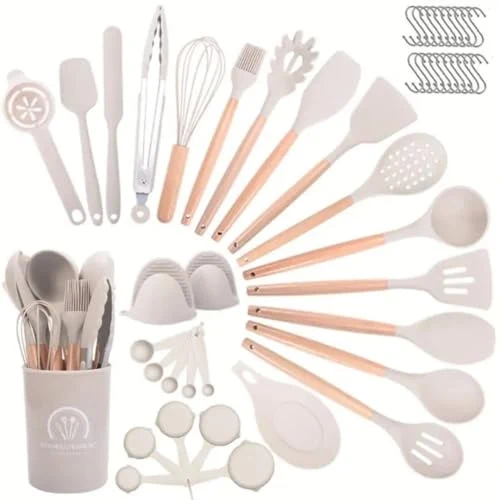
10. Heat-Resistant Silicone Basting Brushes for Stainless Steel Searing
Stainless steel pans excel at high-heat butter basting (arroser) and glazing steaks, scallops, or roasted carrots right on the burner. Traditional boar-bristle pastry brushes shed bristles, absorb rancid food odors, and scorch instantly if they touch a 450°F stainless skillet surface. A heat-resistant silicone basting brush solves all three issues: its flexible, tapered silicone bristles glide safely over sizzling pan bottoms and protein surfaces without scratching or singeing, and many top designs incorporate perforated center reservoirs that hold extra herb butter or teriyaki glaze for even distribution. Opt for a one-piece dishwasher-safe brush rated to 500°F+ with a long handle that keeps your knuckles safely clear of steam and splatter.
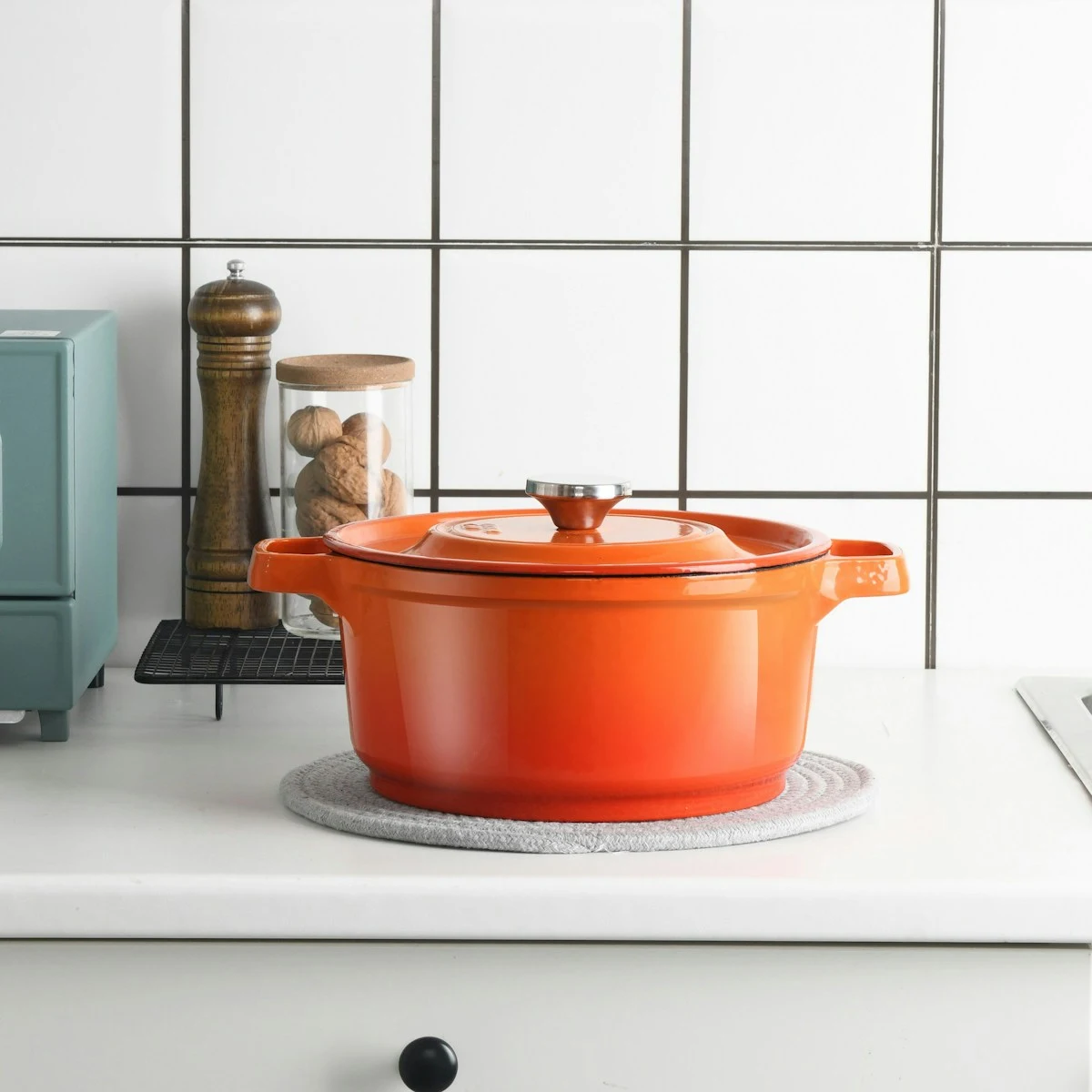
11. Long-Handled Wooden Spoons for Deep Stainless Steel Stockpots
When you are simmering eight quarts of bone broth, boiling pasta, or stirring a big batch of chili in a tall stainless steel stockpot, standard 10-inch utensils leave your hands uncomfortably close to rising steam and can slip straight into the pot. A 14- to 16-inch long-handled hardwood spoon—crafted from dense cherry, maple, or olivewood—provides the leverage needed to move heavy ingredients at the bottom of a deep vessel while keeping your grip cool and dry. Because wood is a natural thermal insulator, the handle never conducts heat upward the way an all-metal spoon can if left resting against the stockpot rim. Look for a thick, oval-profile handle shaft that resists flexing under heavy loads.
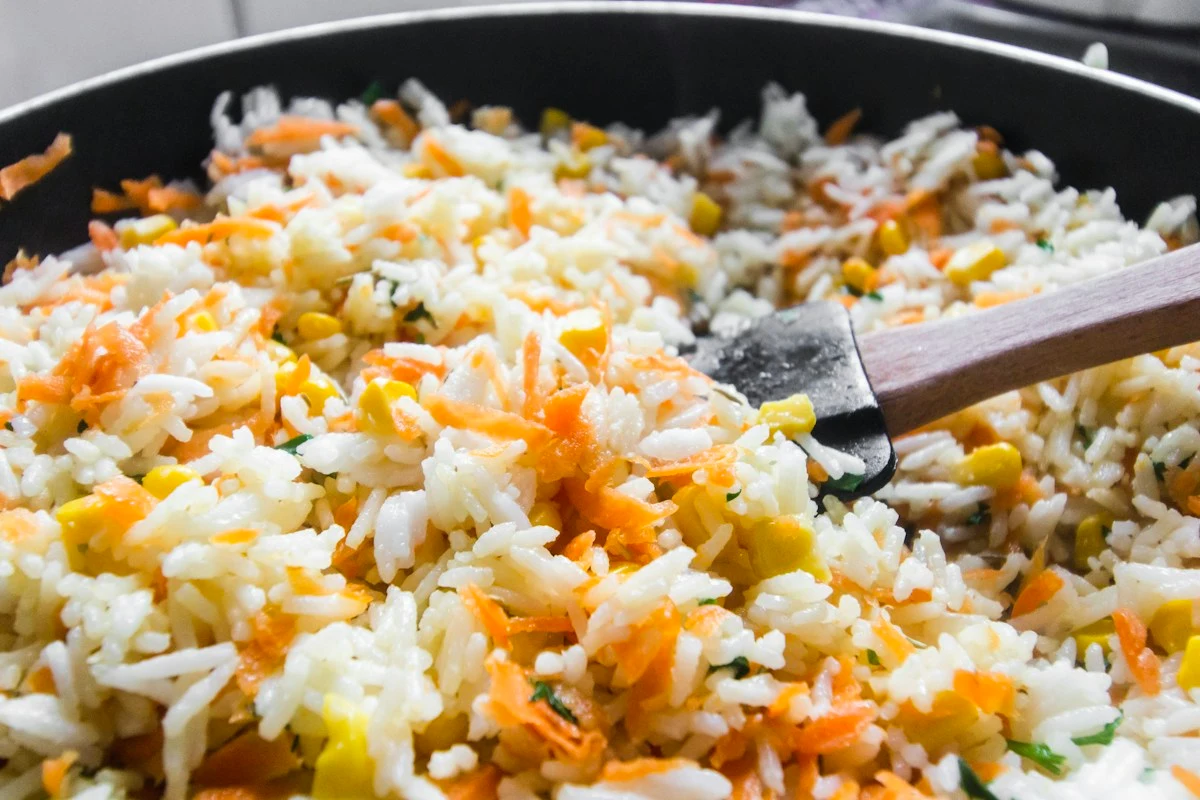
12. A Silicone-Tipped Ladle for Soups and Stews
Scooping the final ladlefuls of minestrone, lentil stew, or beef bourguignon from a stainless steel Dutch oven often leads to metal ladles clanging against the bottom and leaving circular scrape marks. A deep-bowl ladle engineered with a rigid stainless steel or nylon core and a flexible silicone front lip acts like a built-in squeegee against the bottom and sides of your pot, letting you gather every last spoonful of broth silently and cleanly. Look for a ladle with a 4- to 6-ounce bowl capacity, flared dual pouring spouts for drip-free plating, and a hooked handle end that perches securely on the rim of deep stainless steel pots between servings.
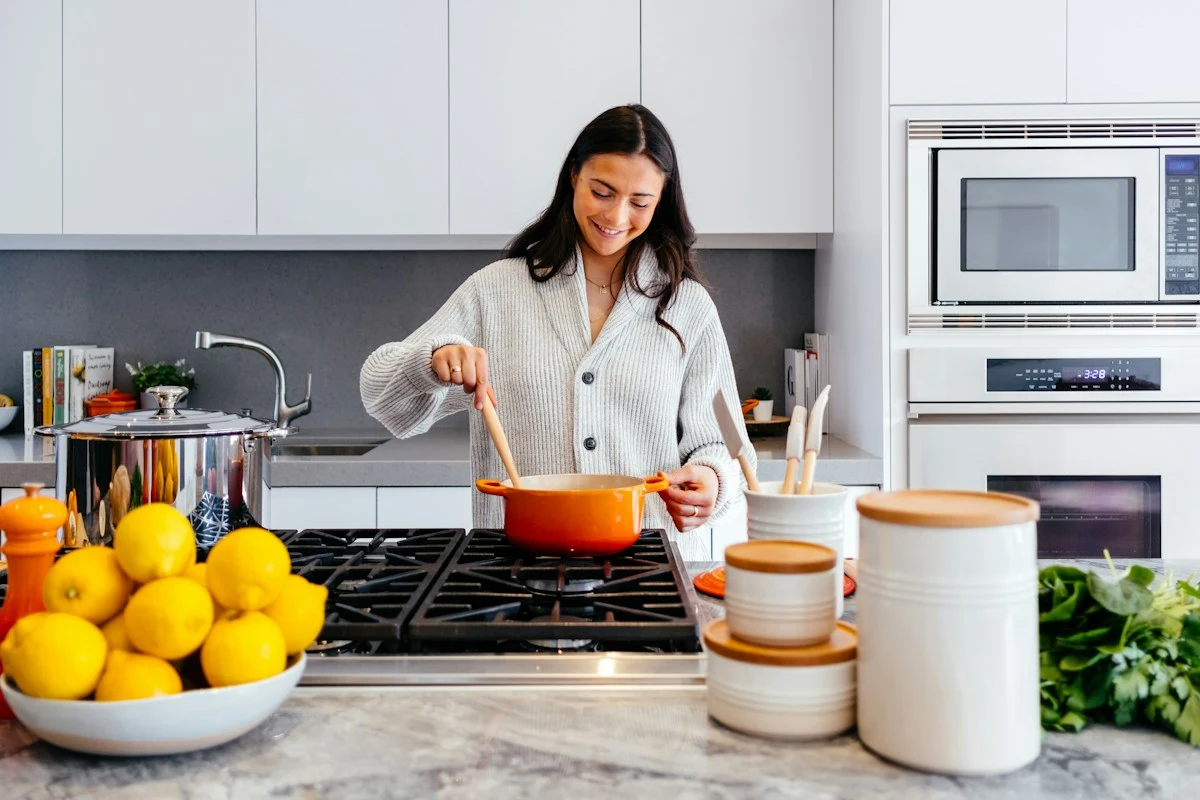
Final Thoughts: Building Your Ideal Stainless Steel Utensil Set
Choosing the best kitchen utensils for stainless steel pans does not mean locking yourself into a single material. In fact, the most capable kitchens combine three complementary workhorses: hardwood or bamboo spoons for daily sautéing and fond deglazing, high-heat platinum silicone spatulas, whisks, and ladles for gentle scraping and sauce making, and a slotted stainless steel fish spatula for precision flipping when searing proteins.
By prioritizing high heat ratings (500°F+ for silicone), smooth rounded edges, and one-piece hygienic construction, your stainless steel cookware will retain its showroom luster while helping you cook better meals every single day.