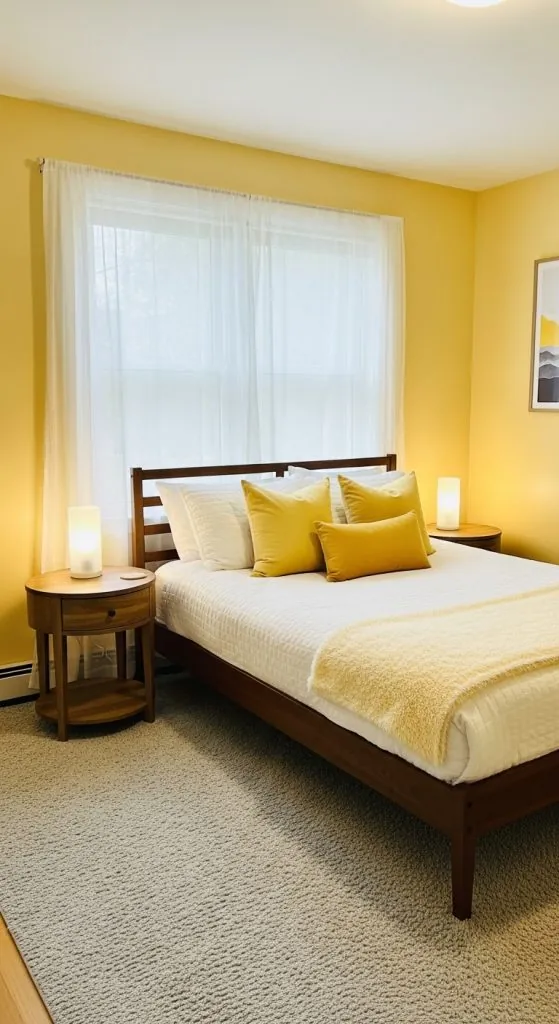
1. Soft Buttery Yellow Walls with Warm Wood Furniture
Soft buttery yellow is one of the most forgiving, versatile, and luminous wall colors you can choose for a bedroom sanctuary. Unlike high-saturation lemon shades that can overstimulate the nervous system, a gentle buttermilk or pale custard hue radiates a soft, diffused glow that effortlessly mimics the comforting warmth of early morning sunshine. When paired thoughtfully with rich natural timber—such as mid-century walnut, natural white oak, or warm honeyed pine—the yellow backdrop emphasizes the organic wood grain, grounding the entire space in timeless elegance, warmth, and visual comfort.
To keep this classic color combination feeling contemporary, fresh, and restful, avoid high-gloss paint sheens which can create distracting glare under artificial ceiling lights and bedside fixtures. Instead, specify a chalky matte or velvety eggshell finish that softly absorbs and scatters incoming daylight throughout every corner of the room. Complement the buttery walls by dressing the bed in crisp white or oatmeal-toned organic linens, creating a clean visual boundary that lets the golden undertones sing quietly in the background without competing for attention.
Incorporate brushed antique brass lighting fixtures, warm ceramic bedside table lamps, and pleated fabric shades to enhance the golden ambiance during evening hours, turning your bedroom into an inviting retreat you will look forward to unwinding in every night.
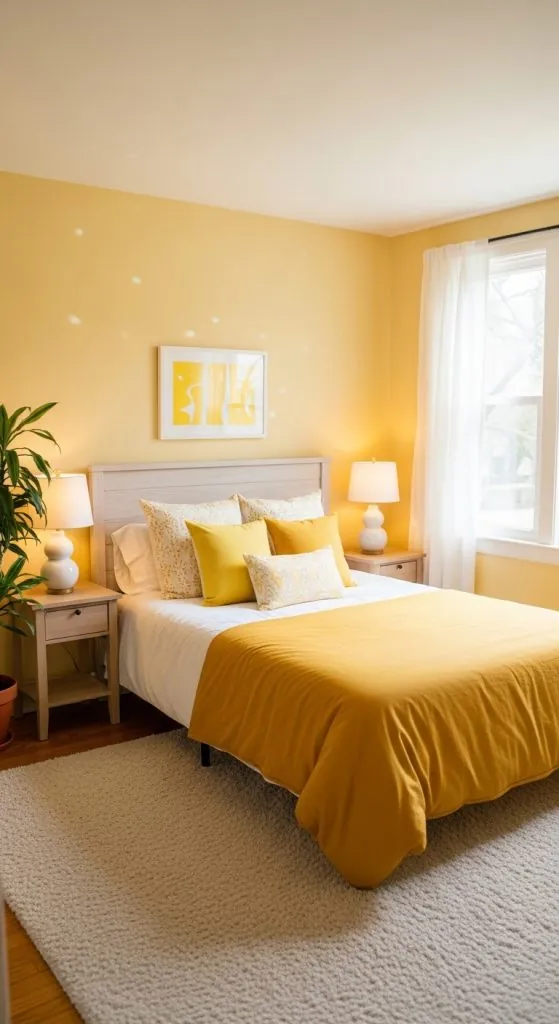
2. Mustard Yellow as an Accent Color Against Neutral Walls
If painting entire walls feels like too bold of a commitment, introducing mustard yellow as an intentional accent color provides all the personality, optimism, and warmth of yellow while keeping your primary foundation calm, modern, and versatile. Mustard features deep ochre, amber, and brown undertones, giving it a sophisticated, grounded depth that pairs flawlessly with crisp gallery white, soft greige, and pale stone wall surfaces.
The secret to mastering accent colors in a bedroom lies in following the classic 60-30-10 interior design rule: dedicate 60% of your room to neutral background surfaces like walls and flooring, 30% to secondary grounding neutrals like light oak furniture and heather gray textiles, and the final 10% to vibrant mustard accents. Distribute these golden accents across varying visual levels—such as an oversized mustard velvet lumbar cushion on the bed, a hand-loomed ochre throw blanket draped over a corner bench, and a small framed piece of abstract artwork on the wall.
This calculated distribution ensures that your eyes travel harmoniously around the bedroom without being overwhelmed by a single concentrated block of color, maintaining a crisp, designer-grade aesthetic that feels cohesive, elevated, and timeless.
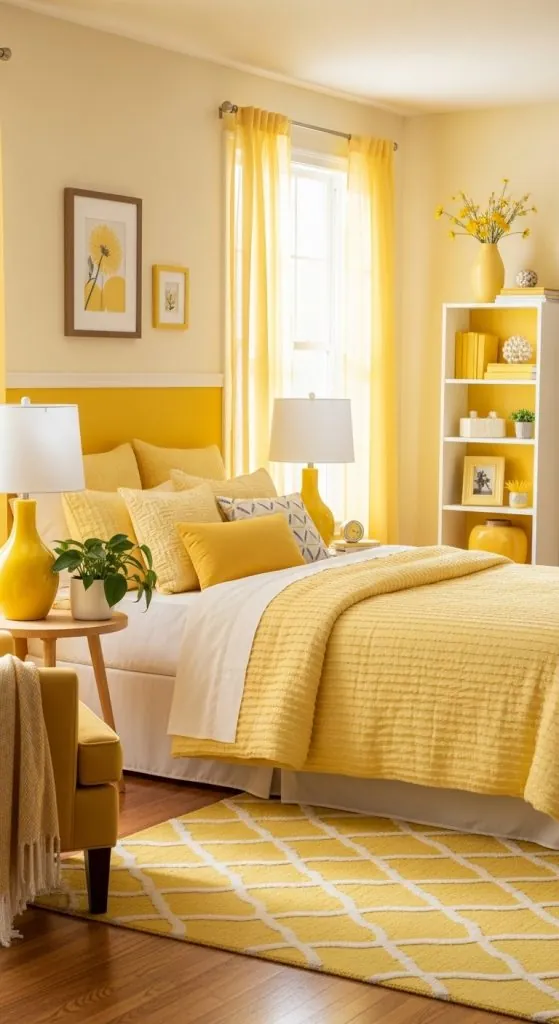
3. Pale, Muted Yellow Bedding for a Soft, Livable Look
Bedding represents the natural visual focal point of any sleeping space, making it the easiest, most tactile canvas for experimenting with color without making permanent paint commitments. Opting for washed, pale yellow bedding in breathable natural fibers—such as French flax linen or organic percale cotton—delivers a breezy, sunshine-kissed feel that invites effortless rest, comfort, and relaxation after a long day.
Muted straw and pale primrose tones carry just enough pigmentation to brighten dark, shadowy bedrooms while remaining tranquil enough to promote deep, undisturbed sleep. To style pale yellow bedding effectively, layer varied neutral tones underneath. Pair a pale yellow duvet cover with crisp white fitted sheets, sand-colored pillowcases, and an ivory waffle-knit coverlet folded neatly at the foot of the bed.
This layered approach breaks up the yellow surface area with soothing textural contrast, ensuring the bed looks inviting and plush rather than flat or monochromatic. Swap in heavier ochre throws during autumn and lighter cotton sheets in spring for effortless seasonal refreshment.
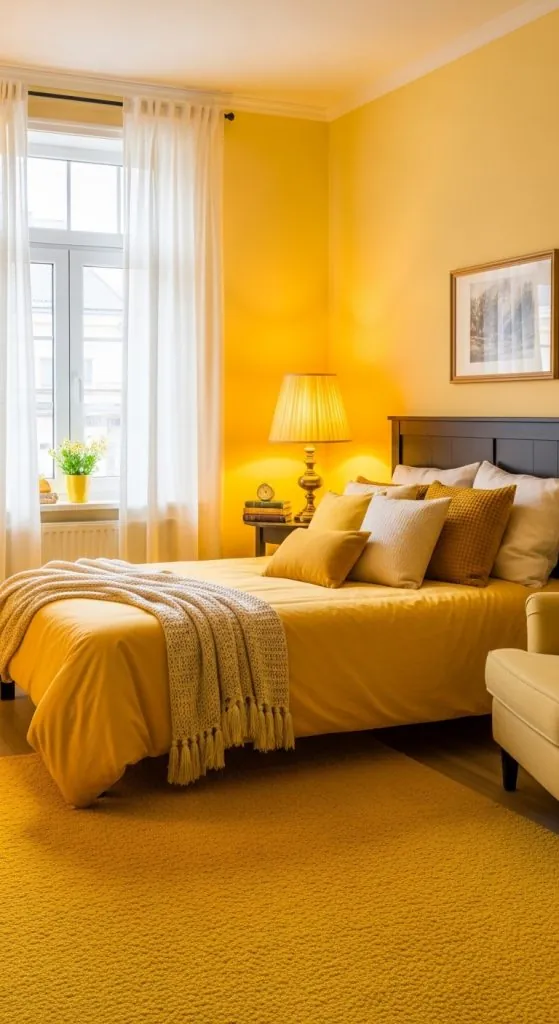
4. Yellow Paired with Warm Gray for a Balanced, Modern Palette
Yellow and gray form one of interior design's most enduring and balanced color partnerships. The cool, steady composure of gray acts as an anchor for yellow's high-energy optimism, creating a contemporary bedroom palette that feels both grounded and uplifting. When executed with warm charcoal, dove gray, or slate tones, this pairing strikes the perfect balance between maturity, style, and playfulness.
To avoid the dated, stark contrasts of previous decades, choose warm grays with subtle beige or taupe undertones rather than icy industrial blues. Paint the wall behind your bed in a comforting mid-tone gray to create architectural depth, then introduce warm marigold and dandelion yellow through bedside task lamps, geometric accent rugs, and decorative ceramic vases.
The dark gray backdrop makes the yellow elements pop with vibrant clarity without demanding that yellow take over the room's overarching mood, resulting in a refined space tailored for modern living and peaceful night routines.
5. A Yellow Accent Wall Behind the Headboard
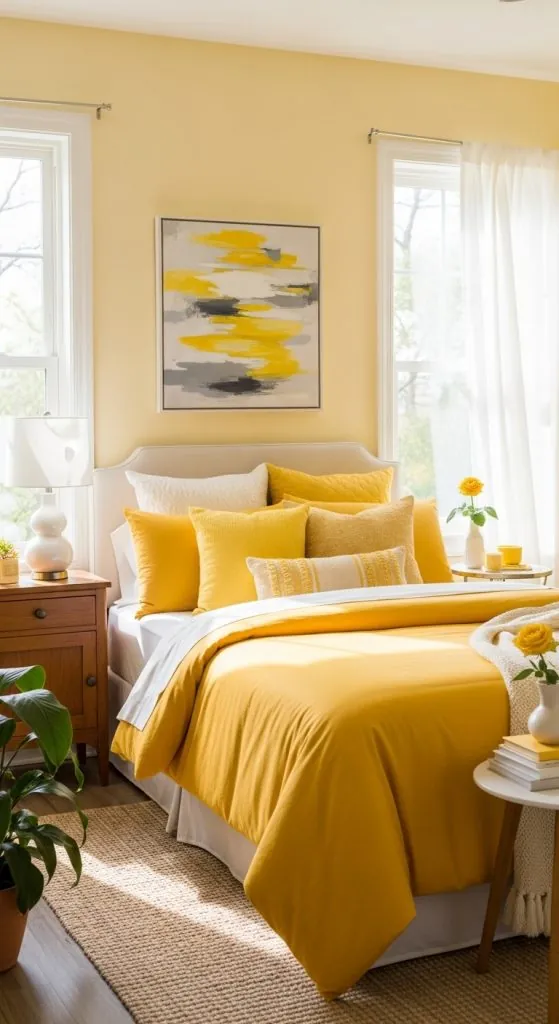
Painting a single accent wall in a saturated yellow shade is an ingenious way to create a striking architectural focal point behind your headboard while keeping the rest of the bedroom light, calm, and tranquil. Because the accent wall sits behind you when lying down in bed, you enjoy the energizing visual impact upon entering the room without looking at bright colors while trying to fall asleep.
Select a rich, nuanced tone like goldenrod, saffron, or warm Dijon mustard to create a sophisticated focal point. Frame the yellow wall by painting adjacent walls in a soft, light-reflecting cream or ivory. Position a dark wood or textured fabric headboard against the yellow wall to provide high-contrast visual definition that anchors the bed squarely in the center of the layout.
Hang a pair of matching minimalist floating shelves or framed black-and-white photography prints against the yellow accent wall to break up the color field, introduce personal style, and add dimensional architectural interest.
6. Yellow Paired with Navy Blue for a Classic, Grounded Contrast
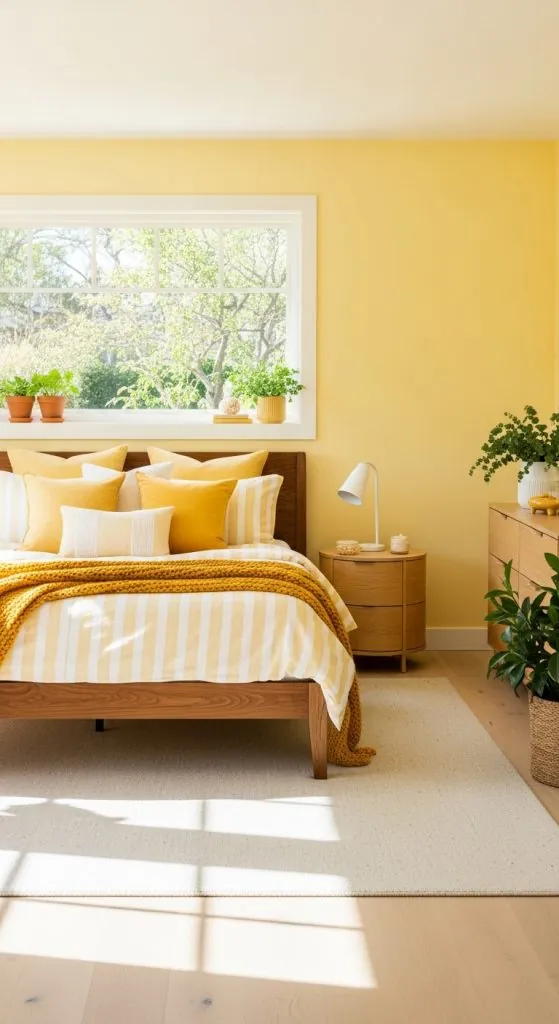
For homeowners drawn to dramatic, high-contrast interiors, pairing vibrant yellow with deep midnight navy blue creates a sophisticated, regal aesthetic. As complementary hues on the color wheel, yellow and blue naturally enhance each other's visual intensity, with deep navy providing a dark, grounding foundation that makes golden accents glow with the brilliance of candlelight.
The key to making this bold palette livable in a bedroom is balancing deep saturation with crisp white architectural borders and balanced accessory scales. Use navy blue on your walls or primary bedding duvet, and layer bright lemon or rich marigold yellow across accent pillows, an upholstered bench at the foot of the bed, or drapery trim.
Incorporate crisp white crown moldings, white linen pillow shams, and polished brass lighting fixtures to bridge the two dominant colors cleanly, preventing the high contrast from feeling heavy, dark, or visually jarring.
7. Warm Gold-Yellow Accents Against a Cream Base
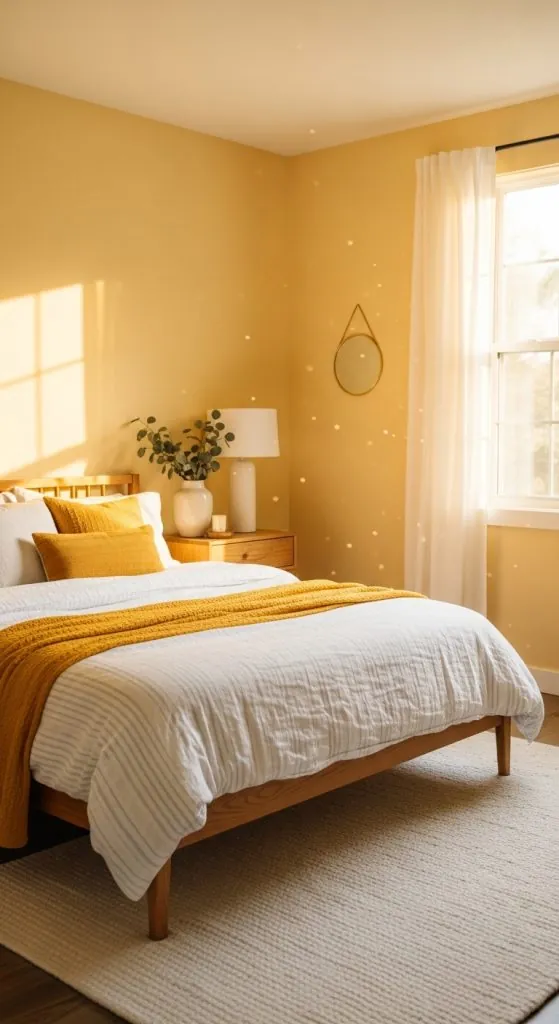
If you crave an ethereal, hotel-worthy bedroom that feels luxurious, relaxing, and serene, layer warm honey-gold accents over an all-cream foundation. This tonal approach creates a soft, sun-drenched atmosphere where yellow acts as a radiant highlighter rather than an aggressive contrasting color.
Start with a canvas of warm ivory, oatmeal, and clotted cream on walls, ceilings, and large furniture pieces. Introduce warmth through amber-toned glassware, antique brass wall lights, honey-yellow silk accent cushions, and golden fringe throws. The gentle gradation from cream to warm gold mimics the natural warmth of late afternoon sunbeams, cultivating an effortlessly peaceful retreat.
Add tactile richness by mixing contrasting matte surfaces—such as lime-washed cream walls and natural boucle fabrics—with reflective gold satin or velvet accents to create subtle visual rhythm, depth, and dimension throughout the space.
8. Yellow Layered in Varied Textures (Linen, Velvet, Wool)
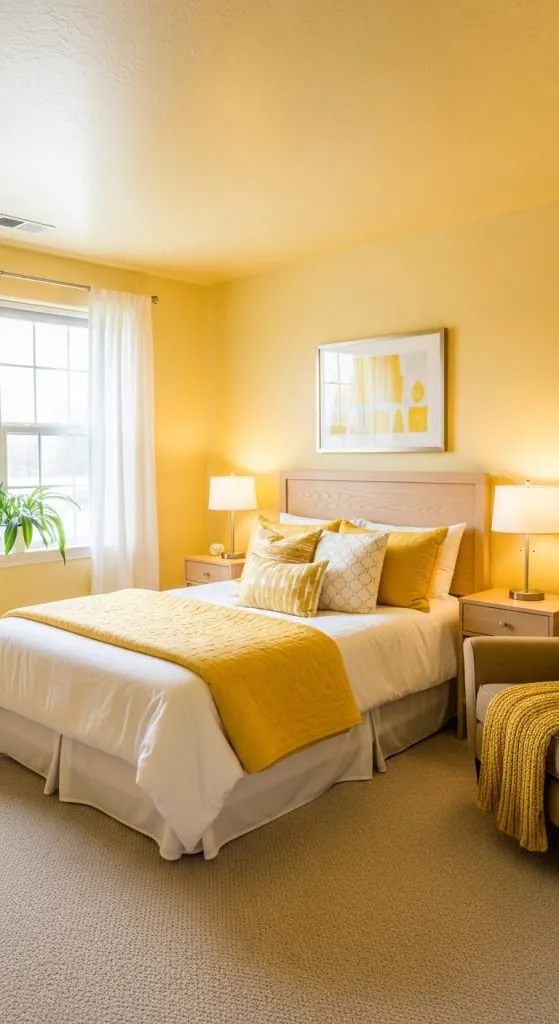
When decorating with a single color family, relying solely on flat cotton fabrics can leave a room feeling one-dimensional or sterile. Layering yellow across varied, high-tactile materials—such as raw flax linen, plush crushed velvet, chunky knit wool, and woven bouclé—transforms the color from a simple visual choice into a rich, immersive sensory experience.
Combine three distinct textural layers on the bed: begin with a base of breathable buttercup linen sheets that offer relaxed everyday comfort, layer a heavy golden-ochre chunky wool throw blanket across the lower third of the mattress for weight, and finish with two structured mustard velvet bolster pillows for plush elegance.
Each material reflects and absorbs bedroom lighting differently; velvet catches light with a radiant sheen, while chunky wool and matte linen absorb it softly. This interplay of light and texture prevents the yellow palette from feeling monotonous, giving your bedroom a bespoke, designer-curated finish.
9. Yellow Paired with Warm Terracotta for an Earthy Combination
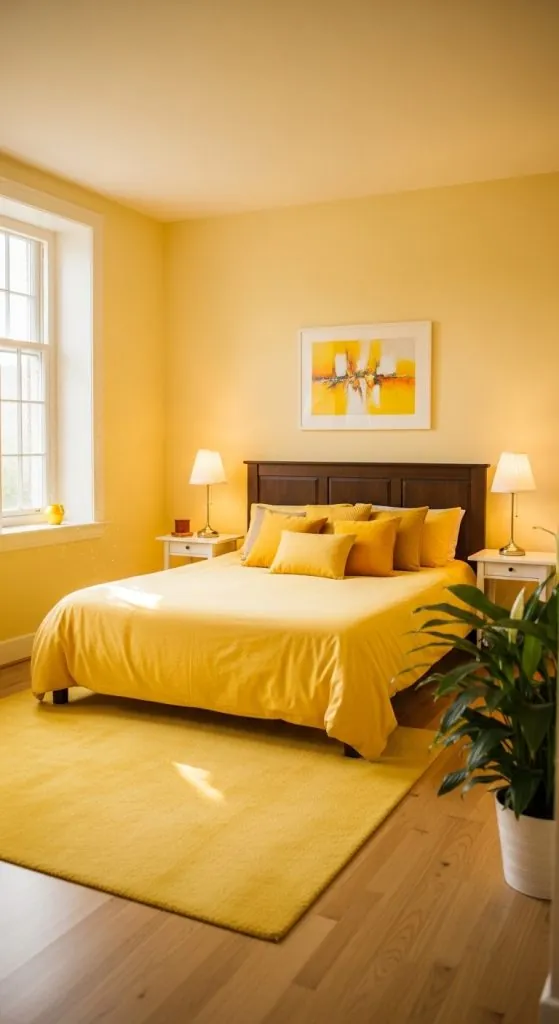
Drawing inspiration from Mediterranean landscapes and desert sunsets, pairing warm ochre yellow with rustic terracotta and burnt orange creates an earthy, grounding color story. Because both shades share warm reddish-golden undertones, they harmonize seamlessly, creating a cocooning atmosphere that feels cozy throughout all four seasons.
Pair muted mustard or straw-yellow walls with a terracotta linen duvet cover, clay-colored ceramic bedside lamps, and natural jute floor rugs. The rich clay tones temper the vibrancy of yellow, transforming what could be an energetic color into a calm, nature-inspired palette.
Introduce leafy green indoor houseplants—such as fiddle-leaf figs or trailing pothos in raw terracotta pots—to provide a fresh organic contrast that balances the rich warmth of the terracotta and yellow backdrop.
10. A Single Yellow Statement Chair Against a Neutral Room
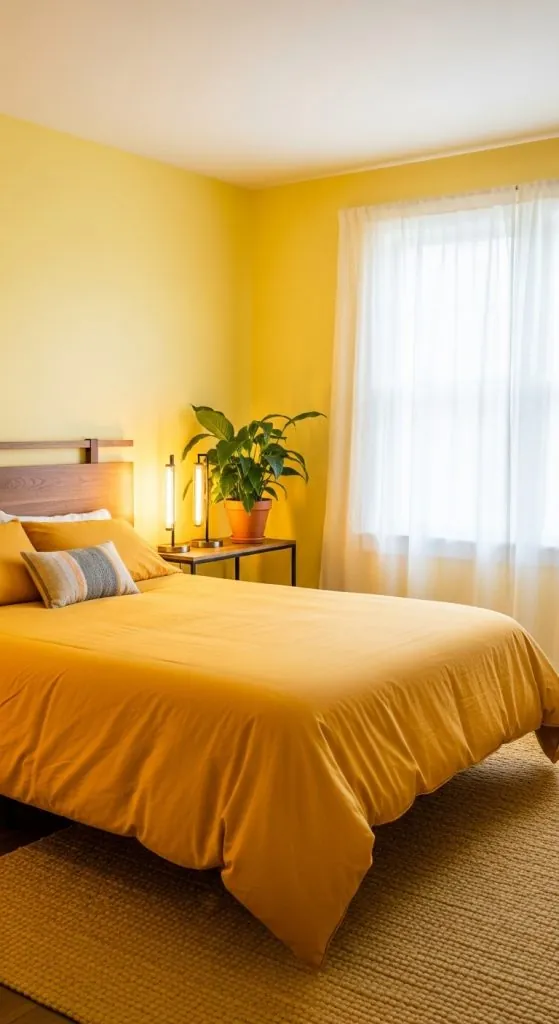
In a calm, monochromatic white, beige, or gray bedroom, introducing a single sculpted yellow statement chair turns an empty bedroom corner into an intentional, high-impact reading nook. This approach gives you all the joyful energy of yellow without altering your primary wall colors or main bedding ensemble.
Choose an armchair with striking architectural lines—such as a curved mid-century modern tub chair, a wingback lounge chair, or a plush velvet swivel chair—in a saturated marigold or saffron shade. Position the chair near a sunlit bedroom window, accompanied by a slim matte-black reading lamp, a small timber side table, and an ivory throw blanket draped over the arm.
The bold yellow chair serves as a vibrant standalone art piece that draws the eye into the corner, adding curated warmth, personality, and character to an otherwise understated neutral room layout.